


![(1R,6R)-6-({[(2-Methyl-2-propanyl)oxy]carbonyl}amino)-3-cyclohexene-1-carboxylic acid structure](https://cnstatic.chemtradehub.com/structs/865/865689-24-3-5fef.webp "(1R,6R)-6-({[(2-Methyl-2-propanyl)oxy]carbonyl}amino)-3-cyclohexene-1-carboxylic acid structure")
Improvement in the assessment of direct and facilitated ion transfers by electrochemically induced redox transformations of common molecular probes
文献信息
发布日期
2011-12-15
DOI
10.1039/C2CP23184K
影响因子
3.676
作者
Min Zhou, Lijie Zhong, Xiandui Dong, Jens Ulstrup, Dongxue Han
查看原文
摘要
A new strategy based on a thick organic film modified electrode allowed us, for the first time, to explore the voltammetric processes for a series of hydrophilic ions by electrochemically induced redox transformations of common molecular probes. During the limited time available for voltammetry, this thick organic film ensured that the generated product of the molecular probe, which is within a limited diffusion layer, was kept far away from the aqueous–organic solvent interface; therefore, regardless of the degree of hydrophobicity, the generated product never participates in ion exchange across the interface and the charge neutrality of the organic film (containing an extremely hydrophobic electrolyte) can only be maintained by the injection of ions from the aqueous phase. Taking advantage of this fact, common redox probes, such as ferrocene (Fc) and 7,7,8,8-tetracyanoquinodimethane (TCNQ), which are almost useless for both three-phase electrode (TPE) and thin-layer cyclic voltammetry (TLCV) methods, can induce the transfer of numerous highly hydrophilic anions and cations. Consequently, the majority of their Gibbs transfer energies have been accurately determined for the first time to the best of our knowledge. With this in mind, using TCNQ as a redox probe to induce facilitated cation transfer, a stategy that is more advantageous than traditional methods has been developed. The main advantages are that: (i) voltammetric experiments performed on this system were free from the polarized potential window (ppw) in the aqueous phase and, as a result, this allowed the assessment of weakly assisted ion transfers, which appear at the terminal of the ppw at single polarized interfaces; (ii) without introducing the tetraphenylarsonium–tetraphenylborate (TPAs–TPB) thermodynamic assumption, one can conveniently evaluate both the association constant and the stoichiometric parameter between the ion and its ionophore by comparison of their direct and facilitated ion transfer voltammograms. These encouraging results illustrated the exciting innovation for assessing direct and facilitated ion transfers based on this new thick organic film modified electrode.
期刊推荐

Biocatalysis and Biotransformation

Atomization and Sprays

Acta Metallurgica Sinica-English Letters

Electroanalysis

Journal of the Indian Institute of Science

Critical Reviews in Solid State and Materials Sciences

Bioorganic & Medicinal Chemistry Letters
Colloid Journal

Main Group Chemistry
Journal of Asian Natural Products Research
相关文献
Co–MnO/C nanoparticles derived from MOFs with improved conductivity and reduced volume change for lithium-ion batteries
Yiting Wang, Jie Zheng, Changjian He, Xiaochun Li, Yichuan Rui, Bohejin Tang
2023-11-21
Paper
DOI: 10.1039/D3NJ04872A
Influence of neutral auxiliary ligands on crystal structure and magnetic behaviour of new [Mn II2Mn III2] clusters supported by p-adamantylcalix[4]arene
Alexander S. Ovsyannikov, Aida I. Samigullina, Daut R. Islamov, Mikhail A. Cherosov, Ruslan G. Batulin, Airat G. Kiiamov, Aidar T. Gubaidullin, Pavel V. Dorovatovskii, Svetlana E. Solovieva, Igor S. Antipin
2023-11-20
Paper
DOI: 10.1039/D3NJ04809H
Rectal delivery of 89Zr-labeled infliximab-loaded nanoparticles enables PET imaging-guided localized therapy of inflammatory bowel disease
Yeli Fan, Xinyu Wang, Ge Yan, Hongfang Gao, Min Yang
2023-11-14
Communication
DOI: 10.1039/D3TB02128A
Chitosan functionalized gold nanostars as a theranostic platform for intracellular microRNA detection and photothermal therapy
Xiaoxue Dong, Zongwei Zhu, Qian Sun, Hongqian Zhang, Chuanxu Yang
2023-11-02
Paper
DOI: 10.1039/D3TB02029K
A specific amino-based fluorescent probe for mercury ion detection in water samples, cells, and zebrafish
Miaohui Yu, Tingting Fu, Wenzhai Li, Yan Zhang, Huayan Wen, Min Zheng, Moran Shi, Caiyun Liu, Meng Jin, Kechun Liu, Baocun Zhu
2023-11-23
Paper
DOI: 10.1039/D3NJ04746F
Physically cross-linked organo-hydrogels for friction interfaces in joint replacements: design, evaluation and potential clinical applications
Zheng Li, Jia Wan, Wanbo Zhu, Yingjie Wang, Yuan Chen, Baoliang Lu, Junchen Zhu, Chen Zhu, Xianzuo Zhang
2023-11-16
Paper
DOI: 10.1039/D3TB01830J
Novel solar-light-driven Z-scheme BiOCl@WS2 nanocomposite photocatalysts for the photocatalytic removal of organic pollutants
Chang-Mou Wu, Kebena Gebeyehu Motora, Pankaj Koinkar, Akihiro Furube
2023-11-06
Paper
DOI: 10.1039/D3NJ04410F
Nitrate anions embedded in rigid and cationic 3D energetic MOFs constructed by the chelating ligand towards insensitive energetic materials
Qin Wang, Jiao-Lin Weng, Ying Huang, Fu Yang, Hao-Hui Xie, Fei Tan
2023-11-28
Paper
DOI: 10.1039/D3NJ04910H
Polymeric engineering of AIEgens for NIR-II fluorescence imaging and detection of abdominal metastases of ovarian cancer in vivo
Xiaobo Zhou, Yuhan Zeng, Shijie Li, Ke Zhang, Lingfeng Zhao, Guo Li, Qi Wang, Haiwei Ji, Mingmin Wu, Jinxia Liu, Yuling Qin, Wei Feng, Li Wu
2023-10-10
Communication
DOI: 10.1039/D3TB01750H
您可能还喜欢
化合物问答
(3-氨苯基)环丙基甲酮(CAS号:162174-75-6)的主要用途是什么?
(3-氨苯基)环丙基甲酮主要用于合成化学中间体,特别是在药物化学领域作为原料。它还可以用于有机合成反应中,作为催化剂或反应物。
162174-75-6(3-Aminophenyl)(cycl...
化合物问答
如何储存亚胺菌(CAS号:136470-79-6)?
亚胺菌应储存在干燥、阴凉处,避免直接暴露于光线下。建议使用密封容器储存,防止吸潮和污染。具体的储存条件应参考产品的安全数据表(MSDS)或药品说明书。
136470-79-6Abacavir EP Impurity...
化合物问答
2-氯-2,2-二氟乙酰胺(CAS号:354-28-9)应用于哪些行业?
2-氯-2,2-二氟乙酰胺在医药、聚合物、传感器、半导体等领域有广泛应用。在医药领域,它作为中间体用于合成其他药物;在聚合物领域,用作聚合引发剂或稳定剂;在传感...
354-28-92-Chloro-2,2-difluor...
化合物问答
处理4-甲基-3-硝基-1,1-联苯(CAS号:53812-68-3)时应注意哪些实验室安全事项?
在处理4-甲基-3-硝基-1,1-联苯时,应佩戴手套、护目镜和实验室外套等个人防护装备(PPE),确保在通风橱中操作以减少吸入风险。若发生泄露,应立即使用沙子或...
53812-68-34'-Methyl-3-nitro-1,...
化合物问答
(2S)-羟基(苯基)乙酸 (2R)-N-苄基-1-(4-甲氧基苯基)丙-2-胺盐(CAS号:188690-84-8)应用于哪些行业?
该化合物广泛应用于医药、聚合物和半导体行业。在医药领域,它是某些药物中间体的重要组成部分;在聚合物领域,可用作增塑剂;在半导体行业,可用于制造光刻胶。
188690-84-8Benzeneacetic acid, ...
化合物问答
在合成中是否有芬苯哒唑砜-D3标准品(CAS号:1228182-49-7)的替代品?
芬苯哒唑砜-D3标准品的替代品可能包括类似的苯并咪唑类化合物,如芬苯哒唑本身或其非同位素标记版本。这些替代品在结构上与芬苯哒唑砜-D3相似,但在具体应用中需进行...
1228182-49-7(~2~H_3_)Methyl [5-(...
化合物问答
2-氟-4-硝基苯乙酸(CAS号:315228-19-4)通常如何合成?
2-氟-4-硝基苯乙酸可以通过一系列化学反应合成,通常是从4-氟苯胺开始,首先进行硝化反应生成4-氟-2-硝基苯胺,然后进行乙酰化反应得到目标产物。具体的合成步...
315228-19-42-(2-fluoro-4-nitrop...
化合物问答
2-氟-4-甲氧基苯乙酸(CAS号:883531-28-0)通常如何合成?
2-氟-4-甲氧基苯乙酸通常通过将4-甲氧基苯乙酸与氟化试剂(如氟化氰)反应来合成。反应通常在无水条件下进行,使用催化剂如六氟磷酸锂或四氟硼酸锂以提高选择性和产...
883531-28-02-Fluoro-4-methoxyph...
化合物问答
什么是4SC 202;4SC202(CAS号:1186222-89-8)?
4SC 202;4SC202是一种化学化合物,其化学名称为(2E)-N-(2-氨基苯基)-3-(1-{[4-(1-甲基-1H-吡唑-4-基)苯基]磺酰基}-1H...
1186222-89-8(2E)-N-(2-Aminopheny...
132980-99-53,5-Difluorobenzamid...
来源期刊
Physical Chemistry Chemical Physics

CiteScore:
5.5
自引率:
10.3%
年发文量:
3036
Physical Chemistry Chemical Physics (PCCP) is an international journal co-owned by 19 physical chemistry and physics societies from around the world. This journal publishes original, cutting-edge research in physical chemistry, chemical physics and biophysical chemistry. To be suitable for publication in PCCP, articles must include significant innovation and/or insight into physical chemistry; this is the most important criterion that reviewers and Editors will judge against when evaluating submissions. The journal has a broad scope and welcomes contributions spanning experiment, theory, computation and data science. Topical coverage includes spectroscopy, dynamics, kinetics, statistical mechanics, thermodynamics, electrochemistry, catalysis, surface science, quantum mechanics, quantum computing and machine learning. Interdisciplinary research areas such as polymers and soft matter, materials, nanoscience, energy, surfaces/interfaces, and biophysical chemistry are welcomed if they demonstrate significant innovation and/or insight into physical chemistry. Joined experimental/theoretical studies are particularly appreciated when complementary and based on up-to-date approaches.
推荐化合物
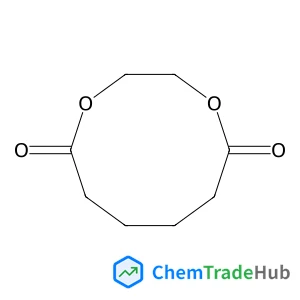
![(3R,4aR,7aS,9aR,10S,11R,13aR,13bS,15aS,15bR)-3,11-Dihydroxy-10-(hydroxymethyl)-4,4,7a,10,13a,15b-hexamethyl-1,2,3,4,4a,7,7a,8,9,9a,10,11,12,13,13a,13b,14,15,15a,15b-icosahydro-5H-naphtho[2',1':4,5]cyc
lohepta[1,2-a]naphthalen-5-one structure](https://cnstatic.chemtradehub.com/structs/538/53800-21-8-9f18.webp "(3R,4aR,7aS,9aR,10S,11R,13aR,13bS,15aS,15bR)-3,11-Dihydroxy-10-(hydroxymethyl)-4,4,7a,10,13a,15b-hexamethyl-1,2,3,4,4a,7,7a,8,9,9a,10,11,12,13,13a,13b,14,15,15a,15b-icosahydro-5H-naphtho[2',1':4,5]cyc
lohepta[1,2-a]naphthalen-5-one structure")
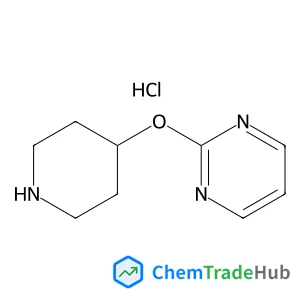
![trans-2-{[(Tert-butoxy)carbonyl]amino}cyclobutane-1-carboxylic acid structure](https://cnstatic.chemtradehub.com/structs/951/951173-25-4-27cd.webp "trans-2-{[(Tert-butoxy)carbonyl]amino}cyclobutane-1-carboxylic acid structure")
推荐供应商




免责声明
本页面提供的学术期刊信息仅供参考和研究使用。我们与任何期刊出版商均无关联,也不处理投稿事宜。如有投稿相关咨询,请直接联系相关期刊出版商。
如发现页面信息有误,请发送邮件至 support@chemtradehub.com 联系我们。我们将及时核实并处理您的问题。