





Co–MnO/C nanoparticles derived from MOFs with improved conductivity and reduced volume change for lithium-ion batteries
文献信息
发布日期
2023-11-21
DOI
10.1039/D3NJ04872A
影响因子
3.591
作者
Yiting Wang, Jie Zheng, Changjian He, Xiaochun Li, Yichuan Rui, Bohejin Tang
查看原文
摘要
MnO, used as an anode material for lithium-ion batteries (LIBs), suffers from severe volume changes, poor conductivity and limited cycle performance. Herein, we applied carbon materials derived from metal–organic frameworks (MOFs) to obtain a considerable specific surface area and fitting aperture, which can be used to physically fix MnO nanoparticles. The ultrafine Co particles further anchor MnO nanoparticles through chemical interaction. The combination of physical and chemical anchoring of MnO alleviated the problem of volume changes during the intercalation reaction of LIBs. The composite of carbon material and the doping of transition metal Co improved the conductivity of MnO. In addition, the convenient channel provided by the porous structure for the diffusion of ions, the slowing down of volume changes during the process of lithiation/delithiation and the improvement in conductivity are propitious to electrochemical performance of LIBs. Therefore, Co–MnO/C delivered an ultrahigh capacity of 1653 mA h g−1 at 100 mA g−1. The specific capacity tested at 100 and 1000 mA g−1 can still reach 1414 and 772 mA h g−1, respectively, after about 300 cycles. Mn-based materials with their outstanding electrochemical performance, environmental friendliness and convenient synthesis strategy demonstrate the feasibility of Co–MnO/C composite materials in practical applications of LIBs.
相关文献
The water-catalyzed mechanism of the ring-opening reaction of glucose
Wojciech Plazinski, Anita Plazinska, Mateusz Drach
2015-07-22
Paper
DOI: 10.1039/C5CP03357H
The charge/discharge mechanism and electrochemical performance of CuV2O6 as a new anode material for Li-ion batteries
Jianjun Ma, Jicheng Zhang
2015-07-29
Paper
DOI: 10.1039/C5CP03435C
CTAB micelles assisted rGO–AgNP hybrids for SERS detection of polycyclic aromatic hydrocarbons
Meng Jiang, Zhijiang Qian, Xufeng Zhou, Xing Xin, Jinghua Wu, Chao Chen, Gongjun Zhang, Gaojie Xu, Yuchuan Cheng
2014-11-28
Paper
DOI: 10.1039/C4CP04888A
Surface-enhanced Raman spectroscopy characterisation of functionalised multi-walled carbon nanotubes
Sabina Botti, Susanna Laurenzi, Luca Mezi, Alessandro Rufoloni, M. Gabriella Santonicola
2015-06-04
Paper
DOI: 10.1039/C4CP05075D
Strength order and nature of the π-hole bond of cyanuric chloride and 1,3,5-triazine with halide
Hui Wang, Chen Li, Weizhou Wang, Wei Jun Jin
2015-07-07
Paper
DOI: 10.1039/C5CP03076E
Direct formation of large-scale multi-layered germanene on Si substrate
Hsu-Sheng Tsai, Yu-Ze Chen, Henry Medina, Teng-Yu Su, Ta-Shun Chou, Yi-Hsuan Chen, Yu-Lun Chueh, Jenq-Horng Liang
2015-07-15
Communication
DOI: 10.1039/C5CP02469B
Nonlinear optical imaging of single plasmonic nanoparticles with 30 nm resolution
Anke Horneber, Kai Braun, Jan Rogalski, Paul Leiderer, Alfred J. Meixner, Dai Zhang
2015-01-23
Paper
DOI: 10.1039/C4CP05342G
Different behaviour of molecules in dark SERS state on colloidal Ag nanoparticles estimated by truncated power law analysis of blinking SERS
Daichi Araki, Tamitake Itoh, Yukihiro Ozaki
2014-12-16
Paper
DOI: 10.1039/C4CP05070C
Electronic structure and conformational flexibility of d-cycloserine
Antonello Filippi, Caterina Fraschetti, Felice Grandinetti, Maurizio Speranza, Aurora Ponzi, Piero Decleva
2015-04-30
Paper
DOI: 10.1039/C5CP01471A
Structural characterization of gas-phase cysteine and cysteine methyl ester complexes with zinc and cadmium dications by infrared multiple photon dissociation spectroscopy
Rebecca A. Coates, Christopher P. McNary, Georgia C. Boles, Giel Berden, P. B. Armentrout
2015-04-09
Paper
DOI: 10.1039/C5CP01500F
您可能还喜欢
化合物问答
(3-氨苯基)环丙基甲酮(CAS号:162174-75-6)的主要用途是什么?
(3-氨苯基)环丙基甲酮主要用于合成化学中间体,特别是在药物化学领域作为原料。它还可以用于有机合成反应中,作为催化剂或反应物。
162174-75-6(3-Aminophenyl)(cycl...
化合物问答
如何储存亚胺菌(CAS号:136470-79-6)?
亚胺菌应储存在干燥、阴凉处,避免直接暴露于光线下。建议使用密封容器储存,防止吸潮和污染。具体的储存条件应参考产品的安全数据表(MSDS)或药品说明书。
136470-79-6Abacavir EP Impurity...
化合物问答
2-氯-2,2-二氟乙酰胺(CAS号:354-28-9)应用于哪些行业?
2-氯-2,2-二氟乙酰胺在医药、聚合物、传感器、半导体等领域有广泛应用。在医药领域,它作为中间体用于合成其他药物;在聚合物领域,用作聚合引发剂或稳定剂;在传感...
354-28-92-Chloro-2,2-difluor...
化合物问答
处理4-甲基-3-硝基-1,1-联苯(CAS号:53812-68-3)时应注意哪些实验室安全事项?
在处理4-甲基-3-硝基-1,1-联苯时,应佩戴手套、护目镜和实验室外套等个人防护装备(PPE),确保在通风橱中操作以减少吸入风险。若发生泄露,应立即使用沙子或...
53812-68-34'-Methyl-3-nitro-1,...
化合物问答
(2S)-羟基(苯基)乙酸 (2R)-N-苄基-1-(4-甲氧基苯基)丙-2-胺盐(CAS号:188690-84-8)应用于哪些行业?
该化合物广泛应用于医药、聚合物和半导体行业。在医药领域,它是某些药物中间体的重要组成部分;在聚合物领域,可用作增塑剂;在半导体行业,可用于制造光刻胶。
188690-84-8Benzeneacetic acid, ...
化合物问答
在合成中是否有芬苯哒唑砜-D3标准品(CAS号:1228182-49-7)的替代品?
芬苯哒唑砜-D3标准品的替代品可能包括类似的苯并咪唑类化合物,如芬苯哒唑本身或其非同位素标记版本。这些替代品在结构上与芬苯哒唑砜-D3相似,但在具体应用中需进行...
1228182-49-7(~2~H_3_)Methyl [5-(...
化合物问答
2-氟-4-硝基苯乙酸(CAS号:315228-19-4)通常如何合成?
2-氟-4-硝基苯乙酸可以通过一系列化学反应合成,通常是从4-氟苯胺开始,首先进行硝化反应生成4-氟-2-硝基苯胺,然后进行乙酰化反应得到目标产物。具体的合成步...
315228-19-42-(2-fluoro-4-nitrop...
化合物问答
2-氟-4-甲氧基苯乙酸(CAS号:883531-28-0)通常如何合成?
2-氟-4-甲氧基苯乙酸通常通过将4-甲氧基苯乙酸与氟化试剂(如氟化氰)反应来合成。反应通常在无水条件下进行,使用催化剂如六氟磷酸锂或四氟硼酸锂以提高选择性和产...
883531-28-02-Fluoro-4-methoxyph...
化合物问答
什么是4SC 202;4SC202(CAS号:1186222-89-8)?
4SC 202;4SC202是一种化学化合物,其化学名称为(2E)-N-(2-氨基苯基)-3-(1-{[4-(1-甲基-1H-吡唑-4-基)苯基]磺酰基}-1H...
1186222-89-8(2E)-N-(2-Aminopheny...
132980-99-53,5-Difluorobenzamid...
来源期刊
New Journal of Chemistry
CiteScore:
5.3
自引率:
3.7%
年发文量:
2153
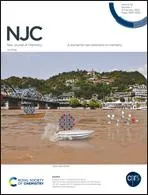
NJC (New Journal of Chemistry) is a broad-based primary journal encompassing all branches of chemistry and its sub-disciplines. It contains full research articles, communications, perspectives and focus articles. This well-established journal, owned by the Centre National de la Recherche Scientifique (CNRS) of France, has been co-published with the Royal Society of Chemistry since January 1998. NJC is the forum for the publication of high-quality, original and significant work that opens new directions in chemistry or other scientific disciplines. In addition to having a significant chemical component, work published in NJC must demonstrate that it will have an impact on areas of research other than that of the reported work.
推荐化合物
推荐供应商







免责声明
本页面提供的学术期刊信息仅供参考和研究使用。我们与任何期刊出版商均无关联,也不处理投稿事宜。如有投稿相关咨询,请直接联系相关期刊出版商。
如发现页面信息有误,请发送邮件至 support@chemtradehub.com 联系我们。我们将及时核实并处理您的问题。