


Poly(glycidyl methacrylate): a highly versatile polymeric building block for post-polymerization modifications
文献信息
发布日期
2012-09-12
DOI
10.1039/C2PY20646C
影响因子
5.582
作者
Massimo Benaglia, Angelo Alberti, Loris Giorgini, Francesco Magnoni, Silvia Tozzi
查看原文
摘要
The treatment of poly(glycidyl methacrylate) with nucleophilic agents yielded new linear homo/co-polymers. The materials obtained have different physicochemical properties depending upon the nucleophiles utilized and thus, by this way, water soluble polymers are easily accessible. This approach is also very convenient for the synthesis of amphiphilic block copolymers. Additional chemical modifications can further transform the obtained polymers after the post-polymerization treatment. Starting from RAFT pre-synthesized/pre-functionalized polymers, the described procedures allow us to obtain a wide variety of chemically diverse materials characterized by controlled structure and specific functions.
期刊推荐
Drug Discovery Today
Journal of Natural Medicines

Chemical Communications
Chemistry Education Research and Practice

Russian Journal of Bioorganic Chemistry
Nature Medicine
Current Opinion in Colloid & Interface Science
New Journal of Chemistry
Current Opinion in Solid State & Materials Science
Russian Journal of Coordination Chemistry
相关文献
A solely biobased strain sensor with an ultra-precision response via a surface graphitization strategy
Zhihao Yang, Ying Yuan, Bin Wang, Xiaojun Shen, Xiluan Wang, Tong-Qi Yuan
2023-11-02
Paper
DOI: 10.1039/D3TA04872A
Pneumatic nano-sieve for CRISPR-based detection of drug-resistant bacteria
Ruonan Peng, Fengjun Xu, Richard Hailstone, Yujie Men, Ke Du
2023-10-18
Communication
DOI: 10.1039/D3NH00365E
Enhanced catalytic performance of Co3O4/Eu2O3 with sulfur-modification in activating peroxymonosulfate for removal of methylene blue
Haili Shen, Ying Wei, Qiang Xia, Jun Shen
2024-01-09
Paper
DOI: 10.1039/D3NJ02953K
Mechanical disassembly of human picobirnavirus like particles indicates that cargo retention is tuned by the RNA–coat protein interaction
Javier M. Rodríguez
2023-10-05
Communication
DOI: 10.1039/D3NH00195D
Building fast and selective Zn ion channels for highly stable quasi-solid-state Zn-ion batteries
Chun-Chuan Kao, Jiahao Liu, Chao Ye, Shao-Jian Zhang, Junnan Hao, Shi-Zhang Qiao
2023-09-30
Paper
DOI: 10.1039/D3TA02866F
Microfluidic synthesis of nanomaterials for biomedical applications
2023-09-05
Review Article
DOI: 10.1039/D3NH00217A
Nitrogen-rich porous organic polymer as a promising adsorbent for iodine capture from organic solvents
Fatemeh Khosravi Esmaeiltarkhani, Mohammad Dinari, Nazanin Mokhtari
2023-12-26
Paper
DOI: 10.1039/D3NJ04674E
您可能还喜欢
化合物问答
2-氨基-2-(5-甲基噻吩-2-基)乙酸(CAS号:89776-66-9)应用于哪些行业?
2-氨基-2-(5-甲基噻吩-2-基)乙酸主要应用于医药、聚合物、传感器和半导体等行业。在医药领域,它作为中间体用于合成各种药物。在聚合物行业,它可以用作稳定剂...
89776-66-9Amino(5-methyl-2-thi...
化合物问答
什么是N-(叔丁氧羰基)-3-碘吲唑(CAS号:290368-00-2)?
N-(叔丁氧羰基)-3-碘吲唑是一种化学化合物,其英文名称为2-Methyl-2-propanyl 3-iodo-1H-indazole-1-carboxyla...
290368-00-22-Methyl-2-propanyl ...
化合物问答
N-芴甲氧羰基-D-谷氨酸(CAS号:104091-09-0)的市场或研究趋势如何?
该化合物作为重要的保护基,广泛应用于生物有机化学合成中,尤其在肽类、蛋白质和寡核苷酸的研究领域。随着合成生物学和药物开发的进展,该化合物的需求持续增长。未来的研...
104091-09-0N-[(9H-Fluoren-9-ylm...
化合物问答
2-乙氧基-1-萘酰氯(CAS号:55150-29-3)的市场或研究趋势如何?
2-乙氧基-1-萘酰氯在研究领域中主要用于合成研究和有机化学反应,随着有机合成技术的发展,其市场应用和研究兴趣可能会有所增长。尤其是在新型药物合成和新材料开发领...
55150-29-32-Ethoxy-1-naphthoyl...
化合物问答
1-甲氧基菜豆素(CAS号:65428-13-9)的主要用途是什么?
1-甲氧基菜豆素主要应用于有机合成、药物化学领域,作为合成其他有机化合物的中间体或前体。此外,由于其特殊的化学性质,也可能用于某些特定的化学研究和实验中。
65428-13-9(6aR,11aR)-1-Methoxy...
化合物问答
small>-2-氨基丁酸(CAS号:106873-99-8)的主要用途是什么?
small>-2-氨基丁酸主要应用于有机合成和化学研究中,作为中间体或试剂使用。此外,它还可能用于某些药物合成过程中。
106873-99-82-Formamidobutanoic ...
化合物问答
什么是5-氨基-2-氯-n-(2-呋喃甲基)苯甲酰胺(CAS号:926216-59-3)?
5-氨基-2-氯-n-(2-呋喃甲基)苯甲酰胺是一种有机化合物,其分子式为C11H9ClN3O。它具有一定的生物活性,在合成化学和药物化学中有一定的应用价值。
926216-59-35-Amino-2-chloro-N-(...
化合物问答
4-(3-溴苯甲酰基)-哌嗪-1-羧酸叔丁酯(CAS号:890153-34-1)适用哪些法规指南?
该化合物根据其化学性质和用途,可能需要符合GHS(全球化学品统一分类和标签制度)的分类标准,包括急性毒性、皮肤腐蚀/刺激、严重眼损伤/眼刺激等类别。此外,根据其...
890153-34-12-Methyl-2-propanyl ...
化合物问答
如何储存(9ci)-2,4-二甲基-1H-吡咯-3-甲腈(CAS号:26187-28-0)?
应将(9ci)-2,4-二甲基-1H-吡咯-3-甲腈存放在阴凉、干燥的地方,避免阳光直射。储存容器应密封良好,防止挥发和污染。建议温度保持在20-25℃之间,湿...
26187-28-02,4-Dimethyl-1H-pyrr...
化合物问答
巨大戟醇-5,20-缩丙酮-3-当归酸酯(CAS号:87980-68-5)通常如何合成?
该化合物通常通过合成当归酸酯的方法制备,具体步骤为将当归酸酯与巨大戟醇-5,20-缩丙酮进行缩合反应,反应条件为温和的酸性环境,通常使用三氟乙酸作为催化剂。该合...
87980-68-5(4S,5S,6R,18R)-5-Hyd...
来源期刊
Polymer Chemistry

CiteScore:
8.6
自引率:
7.3%
年发文量:
457
Polymer Chemistry welcomes submissions in all areas of polymer science that have a strong focus on macromolecular chemistry. Manuscripts may cover a broad range of fields, yet no direct application focus is required.
推荐化合物
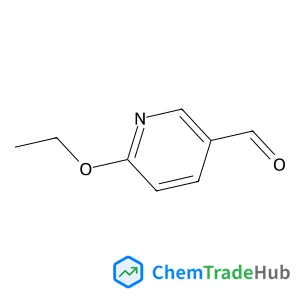
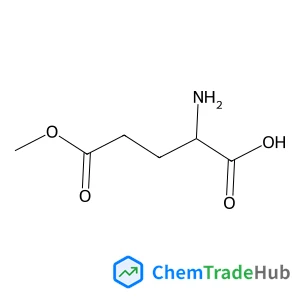
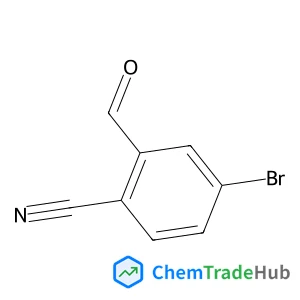
推荐供应商




免责声明
本页面提供的学术期刊信息仅供参考和研究使用。我们与任何期刊出版商均无关联,也不处理投稿事宜。如有投稿相关咨询,请直接联系相关期刊出版商。
如发现页面信息有误,请发送邮件至 support@chemtradehub.com 联系我们。我们将及时核实并处理您的问题。