



Benchmark quantum-chemical calculations on a complete set of rotameric families of the DNA sugar–phosphate backbone and their comparison with modern density functional theory
文献信息
发布日期
2013-03-18
DOI
10.1039/C3CP44383C
影响因子
3.676
作者
Arnošt Mládek, Miroslav Krepl, Michal Otyepka, Pavel Banáš, Marie Zgarbová, Petr Jurečka
查看原文
摘要
The DNA sugar–phosphate backbone has a substantial influence on the DNA structural dynamics. Structural biology and bioinformatics studies revealed that the DNA backbone in experimental structures samples a wide range of distinct conformational substates, known as rotameric DNA backbone conformational families. Their correct description is essential for methods used to model nucleic acids and is known to be the Achilles heel of force field computations. In this study we report the benchmark database of MP2 calculations extrapolated to the complete basis set of atomic orbitals with aug-cc-pVTZ and aug-cc-pVQZ basis sets, MP2(T,Q), augmented by ΔCCSD(T)/aug-cc-pVDZ corrections. The calculations are performed in the gas phase as well as using a COSMO solvent model. This study includes a complete set of 18 established and biochemically most important families of DNA backbone conformations and several other salient conformations that we identified in experimental structures. We utilize an electronically sufficiently complete DNA sugar–phosphate–sugar (SPS) backbone model system truncated to prevent undesired intramolecular interactions. The calculations are then compared with other QM methods. The BLYP and TPSS functionals supplemented with Grimme's D3(BJ) dispersion term provide the best tradeoff between computational demands and accuracy and can be recommended for preliminary conformational searches as well as calculations on large model systems. Among the tested methods, the best agreement with the benchmark database has been obtained for the double-hybrid DSD-BLYP functional in combination with a quadruple-ζ basis set, which is, however, computationally very demanding. The new hybrid density functionals PW6B95-D3 and MPW1B95-D3 yield outstanding results and even slightly outperform the computationally more demanding PWPB95 double-hybrid functional. B3LYP-D3 is somewhat less accurate compared to the other hybrids. Extrapolated MP2(D,T) calculations are not as accurate as the less demanding DFT-D3 methods. Preliminary force field tests using several charge sets reveal an almost order of magnitude larger deviations from the reference QM data compared to modern DFT-D3, underlining the challenges facing force field simulations of nucleic acids. As expected, inclusion of the solvent environment approximated by a continuum approach has a large impact on the relative stabilities of different backbone substates and is important when comparing the QM data with structural bioinformatics and other experimental data.
期刊推荐

Israel Journal of Chemistry

Kinetics and Catalysis

European Journal of Wood and Wood Products

Nature

Journal of Heterocyclic Chemistry

Organic Preparations and Procedures International

Journal of Medicinal Chemistry

Journal of Physics and Chemistry of Solids

Russian Chemical Reviews

Proceedings of the National Academy of Sciences of the United States of America
相关文献
Facile synthesis of N-phenoxycarbonyl amino acids by a two-phase reaction for direct polymerization
2023-12-06
Paper
DOI: 10.1039/D3PY01031G
A dual action coumarin-camptothecin polymer for light responsive drug release and photodynamic therapy
Paige A. Shaw
2023-12-05
Communication
DOI: 10.1039/D3PY01137B
Making photocatalysts screenable – a milliscale multi-batch screening photoreactor as extension for the modular photoreactor
Daniel Kowalczyk, Gergely Knorr, Kalina Peneva, Dirk Ziegenbalg
2023-09-04
Paper
DOI: 10.1039/D3RE00398A
Efficient all polymer active layers with long-range ordered 1D p–n nanoheterojunctions confirmed by TEM tomography
Seon-Mi Jin, Jun Ho Hwang, Jaehyeong Park, Du Hyeon Ryu, BongSoo Kim, Chang Eun Song, Eunji Lee
2023-10-25
Paper
DOI: 10.1039/D3PY00718A
Tailoring molecular weight distribution via polymer degradability
Yeonsu Kim, Cheoljae Kim
2023-12-15
Paper
DOI: 10.1039/D3PY01153D
Efficient and labor-saving Ru/C catalysts for the transformation of levulinic acid into γ-valerolactone under mild reaction conditions
Zaira Ruiz-Bernal, M. Ángeles Lillo-Ródenas, M. Carmen Román-Martínez
2023-11-08
Paper
DOI: 10.1039/D3RE00497J
BF3/HY as a microporous solid acid catalyst for regioselective ring-opening of epoxides
Yi-Xuan Yao, Hong-Wei Zhang, Chang-Bo Lu, Xue Wang, Shi-Dong Zhao, Hong-Yan Shang, Yuan-Yu Tian
2023-08-17
Paper
DOI: 10.1039/D3RE00387F
您可能还喜欢
化合物问答
(5-氨基吡唑-3-基)乙酸(CAS号:174891-10-2)的物理化学性质是什么?
(5-氨基吡唑-3-基)乙酸是一种无色至白色固体,分子量为174.15 g/mol。它在水中具有较好的溶解性,在有机溶剂中的溶解度较低。该化合物具有较好的反应活...
174891-10-2(3-Amino-1H-pyrazol-...
化合物问答
3-氟-4,5-二氯苯胺(CAS号:35754-38-2)适用哪些法规指南?
3-氟-4,5-二氯苯胺受到多项法规指南的约束,包括但不限于GHS(全球化学品统一分类和标签制度)的危险分类标准、欧盟的REACH法规(注册、评估、授权和限制)...
35754-38-23,4-Dichloro-5-fluor...
化合物问答
什么是(R)-(+)-2,2',6,6'-四甲氧基-4,4'-联(二(3,5-二甲苯基基)膦基)-3,3'-二联吡啶(CAS号:442905-33-1)?
这是一种有机化合物,化学名为(R)-(+)-2,2',6,6'-四甲氧基-4,4'-联(二(3,5-二甲苯基基)膦基)-3,3'-二联吡啶,CAS号为44290...
442905-33-14,4'-Bis[bis(3,5-dim...
化合物问答
1-氨基-2-氰基萘(CAS号:3100-67-2)应用于哪些行业?
1-氨基-2-氰基萘在医药、聚合物、传感器和半导体等行业中有应用。在医药领域,它可用作中间体合成某些药物。在聚合物行业,它可以用于制备具有特定性能的聚合物。此外...
3100-67-21-Amino-2-naphthonit...
化合物问答
如何处理含有1-溴-4-(异丙氧基甲基)苯(CAS号:98446-84-5)的废料?
处理含1-溴-4-(异丙氧基甲基)苯的废料时,首先应确保废液收集在防渗漏的容器中,避免泄露。然后,可以考虑采用化学降解法或物理吸附法进行处理。在特定条件下,可通...
98446-84-51-Bromo-4-(isopropox...
化合物问答
6-Chloro-8-(trifluoromethyl)chroman-4-one(CAS号:1344889-75-3)的主要用途是什么?
6-氯-8-三氟甲基-2,3-二氢-4H-色喃-4-酮主要用于有机合成中的中间体,也可作为研究试剂使用。
1344889-75-36-Chloro-8-(trifluor...
化合物问答
7-乙氧基-2-萘酚(CAS号:57944-44-2)通常如何合成?
7-乙氧基-2-萘酚通常通过N-乙氧基化反应合成,首先将2-萘酚与乙醇钠在乙醇中反应生成7-乙氧基-2-萘酚钠盐,再通过酸化进一步得到7-乙氧基-2-萘酚。该合...
57944-44-27-Ethoxy-2-naphthol
化合物问答
4-(1,1-二氧硫代吗啉)丁醇(CAS号:59801-41-1)适用哪些法规指南?
该化合物需遵循一系列的法规指南,包括但不限于GHS全球统一分类和标签制度,其分类可能包括易燃液体和可能危害水生环境。在欧洲,还需遵循REACH法规,确保物质和混...
59801-41-14-(4-Hydroxybutyl)th...
化合物问答
4-甲氧基苄基叠氮甲酸酯(CAS号:25474-85-5)的物理化学性质是什么?
4-甲氧基苄基叠氮甲酸酯是一种无色液体,具有一定的挥发性。其分子量为198.16,熔点为-69°C,沸点为105°C。该化合物在水中溶解度较低,在有机溶剂如乙醇...
25474-85-54-Methoxybenzyl carb...
化合物问答
如何处理含有4-氯-2-氟嘧啶(CAS号:51422-00-5)的废料?
含有4-氯-2-氟嘧啶的废料应按照危险废物处理。首先,应收集并分类这些废料,避免与其他废物混合。然后,可以采用焚烧处理或者交由专业机构进行处置。在处理过程中,需...
51422-00-54-Chloro-2-fluoropyr...
来源期刊
Physical Chemistry Chemical Physics

CiteScore:
5.5
自引率:
10.3%
年发文量:
3036
Physical Chemistry Chemical Physics (PCCP) is an international journal co-owned by 19 physical chemistry and physics societies from around the world. This journal publishes original, cutting-edge research in physical chemistry, chemical physics and biophysical chemistry. To be suitable for publication in PCCP, articles must include significant innovation and/or insight into physical chemistry; this is the most important criterion that reviewers and Editors will judge against when evaluating submissions. The journal has a broad scope and welcomes contributions spanning experiment, theory, computation and data science. Topical coverage includes spectroscopy, dynamics, kinetics, statistical mechanics, thermodynamics, electrochemistry, catalysis, surface science, quantum mechanics, quantum computing and machine learning. Interdisciplinary research areas such as polymers and soft matter, materials, nanoscience, energy, surfaces/interfaces, and biophysical chemistry are welcomed if they demonstrate significant innovation and/or insight into physical chemistry. Joined experimental/theoretical studies are particularly appreciated when complementary and based on up-to-date approaches.
推荐化合物

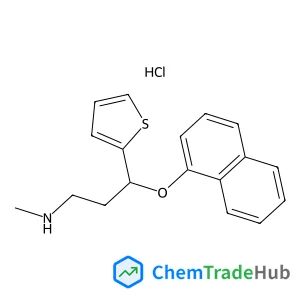
N-Methyl-3-(1-naphthyloxy)-3-(2-thienyl)-1-propanamine hydrochloride (1:1)
CAS号:
1188266-11-6
分子式:
C18H20ClNOS
![5'-Fluoro-[2,3'-biindolinylidene]-2',3-dione structure](https://cnstatic.chemtradehub.com/structs/251/251903-00-1-9cb1.webp "5'-Fluoro-[2,3'-biindolinylidene]-2',3-dione structure")
推荐供应商




免责声明
本页面提供的学术期刊信息仅供参考和研究使用。我们与任何期刊出版商均无关联,也不处理投稿事宜。如有投稿相关咨询,请直接联系相关期刊出版商。
如发现页面信息有误,请发送邮件至 support@chemtradehub.com 联系我们。我们将及时核实并处理您的问题。