


![N-{[(2-Methyl-2-propanyl)oxy]carbonyl}-L-methionylglycine structure](https://cnstatic.chemtradehub.com/structs/234/23446-03-9-e1e5.webp "N-{[(2-Methyl-2-propanyl)oxy]carbonyl}-L-methionylglycine structure")
Molecular dynamics investigation of the disordered crystal structure of hexagonal LiBH4
文献信息
发布日期
2013-01-29
DOI
10.1039/C3CP44520H
影响因子
3.676
作者
Keith Refson
查看原文
摘要
The crystal structure of the hexagonal phase of solid lithium borohydride (LiBH4) is studied by ab initio molecular dynamics simulations of both the low and high-temperature phases. A temperature range of 200–535 K is simulated with the aim of characterising the disorder in the high-temperature structure in detail. The mechanism and kinetics of the reorientational motion of the borohydride units (BH4−) are determined and are consistent with published neutron scattering experiments; it is found that rotational diffusivity increases by an order of magnitude at the phase transition temperature. The average equilibrium orientation is characterised by a broad distribution of orientations, and reorientational jumps do not occur between sharply defined orientations. In addition, split positions with partial occupancy for the lithium and boron atoms are found (in agreement with previous theoretical studies), which, together with the disordered BH4− orientational distribution in equilibrium, lead to the conclusion that the correct crystallographic space group of the high-temperature phase is P63/mmc rather than P63mc.
期刊推荐

Pure and Applied Chemistry

Proceedings of the National Academy of Sciences of the United States of America

Journal of Organometallic Chemistry
Journal of Catalysis

Journal of Physics and Chemistry of Solids

Kinetics and Catalysis

Organic Preparations and Procedures International

Nature

Science

Fibre Chemistry
相关文献
A rapid and highly sensitive paper-based colorimetric device for the on-site screening of ammonia gas
Kawin Khachornsakkul, Kuen-Hau Hung, Jung-Jung Chang, Wijitar Dungchai, Chih-Hsin Chen
2021-03-02
Paper
DOI: 10.1039/D1AN00032B
O species-decorated graphene shell encapsulating iridium–nickel alloy as an efficient electrocatalyst towards hydrogen evolution reaction
Shipeng Gong, Changlai Wang, Peng Jiang, Kang Yang, Jian Lu, Minxue Huang, Shi Chen, Junzheng Wang
2019-06-06
Communication
DOI: 10.1039/C9TA04361F
Simultaneous analysis of dopamine and homovanillic acid by high-performance liquid chromatography with wall-jet/thin-layer electrochemical detection
Yaping Zhou, Hongling Yan, Qingji Xie, Siyu Huang, Jiali Liu, Zou Li, Ming Ma
2013-09-13
Paper
DOI: 10.1039/C3AN01437A
HIV detection from human serum with paper-based isotachophoretic RNA extraction and reverse transcription recombinase polymerase amplification
Andrew T. Bender, Benjamin P. Sullivan, Jane Y. Zhang, David C. Juergens, Lorraine Lillis, David S. Boyle
2021-04-06
Paper
DOI: 10.1039/D0AN02483J
Laminin-511 and recombinant vitronectin supplementation enables human pluripotent stem cell culture and differentiation on conventional tissue culture polystyrene surfaces in xeno-free conditions
Ya-Chu Liu, Lee-Kiat Ban, Hsin-Ting Lee, Yu-Tang Chang, Yun-Ting Lin, Her-Young Su, Shih-Tien Hsu
2021-09-24
Paper
DOI: 10.1039/D1TB01878G
A metal–organic framework with multienzyme activity as a biosensing platform for real-time electrochemical detection of nitric oxide and hydrogen peroxide
Ping-hua Ling, Xiao-na Zang, Cai-hua Qian, Feng Gao
2021-03-02
Paper
DOI: 10.1039/D1AN00142F
Single microbead-based fluorescent aptasensor (SMFA) for direct isolation and in situ quantification of exosomes from plasma
Fangfang Wang, Yi Zhang, Desheng Chen, Zhuoqi Zhang, Zhengping Li
2021-03-23
Paper
DOI: 10.1039/D1AN00463H
Lighting up of carbon dots for copper(ii) detection using an aggregation-induced enhanced strategy
Long Chuan Zhang, Yu Meng Yang, Ling Liang, Yong Jian Jiang, Chun Mei Li, Yuan Fang Li, Lei Zhan, Hong Yan Zou
2021-12-23
Paper
DOI: 10.1039/D1AN02147H
Enhanced electrochemiluminescence of CdS quantum dots capped with mercaptopropionic acid activated by EDC for Zika virus detection
Hui-Jun Zhang, Jin Zhu, Ning Bao, Shou-Nian Ding
2021-02-26
Paper
DOI: 10.1039/D0AN02437F
您可能还喜欢
化合物问答
(5-氨基吡唑-3-基)乙酸(CAS号:174891-10-2)的物理化学性质是什么?
(5-氨基吡唑-3-基)乙酸是一种无色至白色固体,分子量为174.15 g/mol。它在水中具有较好的溶解性,在有机溶剂中的溶解度较低。该化合物具有较好的反应活...
174891-10-2(3-Amino-1H-pyrazol-...
化合物问答
3-氟-4,5-二氯苯胺(CAS号:35754-38-2)适用哪些法规指南?
3-氟-4,5-二氯苯胺受到多项法规指南的约束,包括但不限于GHS(全球化学品统一分类和标签制度)的危险分类标准、欧盟的REACH法规(注册、评估、授权和限制)...
35754-38-23,4-Dichloro-5-fluor...
化合物问答
什么是(R)-(+)-2,2',6,6'-四甲氧基-4,4'-联(二(3,5-二甲苯基基)膦基)-3,3'-二联吡啶(CAS号:442905-33-1)?
这是一种有机化合物,化学名为(R)-(+)-2,2',6,6'-四甲氧基-4,4'-联(二(3,5-二甲苯基基)膦基)-3,3'-二联吡啶,CAS号为44290...
442905-33-14,4'-Bis[bis(3,5-dim...
化合物问答
1-氨基-2-氰基萘(CAS号:3100-67-2)应用于哪些行业?
1-氨基-2-氰基萘在医药、聚合物、传感器和半导体等行业中有应用。在医药领域,它可用作中间体合成某些药物。在聚合物行业,它可以用于制备具有特定性能的聚合物。此外...
3100-67-21-Amino-2-naphthonit...
化合物问答
如何处理含有1-溴-4-(异丙氧基甲基)苯(CAS号:98446-84-5)的废料?
处理含1-溴-4-(异丙氧基甲基)苯的废料时,首先应确保废液收集在防渗漏的容器中,避免泄露。然后,可以考虑采用化学降解法或物理吸附法进行处理。在特定条件下,可通...
98446-84-51-Bromo-4-(isopropox...
化合物问答
6-Chloro-8-(trifluoromethyl)chroman-4-one(CAS号:1344889-75-3)的主要用途是什么?
6-氯-8-三氟甲基-2,3-二氢-4H-色喃-4-酮主要用于有机合成中的中间体,也可作为研究试剂使用。
1344889-75-36-Chloro-8-(trifluor...
化合物问答
7-乙氧基-2-萘酚(CAS号:57944-44-2)通常如何合成?
7-乙氧基-2-萘酚通常通过N-乙氧基化反应合成,首先将2-萘酚与乙醇钠在乙醇中反应生成7-乙氧基-2-萘酚钠盐,再通过酸化进一步得到7-乙氧基-2-萘酚。该合...
57944-44-27-Ethoxy-2-naphthol
化合物问答
4-(1,1-二氧硫代吗啉)丁醇(CAS号:59801-41-1)适用哪些法规指南?
该化合物需遵循一系列的法规指南,包括但不限于GHS全球统一分类和标签制度,其分类可能包括易燃液体和可能危害水生环境。在欧洲,还需遵循REACH法规,确保物质和混...
59801-41-14-(4-Hydroxybutyl)th...
化合物问答
4-甲氧基苄基叠氮甲酸酯(CAS号:25474-85-5)的物理化学性质是什么?
4-甲氧基苄基叠氮甲酸酯是一种无色液体,具有一定的挥发性。其分子量为198.16,熔点为-69°C,沸点为105°C。该化合物在水中溶解度较低,在有机溶剂如乙醇...
25474-85-54-Methoxybenzyl carb...
化合物问答
如何处理含有4-氯-2-氟嘧啶(CAS号:51422-00-5)的废料?
含有4-氯-2-氟嘧啶的废料应按照危险废物处理。首先,应收集并分类这些废料,避免与其他废物混合。然后,可以采用焚烧处理或者交由专业机构进行处置。在处理过程中,需...
51422-00-54-Chloro-2-fluoropyr...
来源期刊
Physical Chemistry Chemical Physics

CiteScore:
5.5
自引率:
10.3%
年发文量:
3036
Physical Chemistry Chemical Physics (PCCP) is an international journal co-owned by 19 physical chemistry and physics societies from around the world. This journal publishes original, cutting-edge research in physical chemistry, chemical physics and biophysical chemistry. To be suitable for publication in PCCP, articles must include significant innovation and/or insight into physical chemistry; this is the most important criterion that reviewers and Editors will judge against when evaluating submissions. The journal has a broad scope and welcomes contributions spanning experiment, theory, computation and data science. Topical coverage includes spectroscopy, dynamics, kinetics, statistical mechanics, thermodynamics, electrochemistry, catalysis, surface science, quantum mechanics, quantum computing and machine learning. Interdisciplinary research areas such as polymers and soft matter, materials, nanoscience, energy, surfaces/interfaces, and biophysical chemistry are welcomed if they demonstrate significant innovation and/or insight into physical chemistry. Joined experimental/theoretical studies are particularly appreciated when complementary and based on up-to-date approaches.
推荐化合物
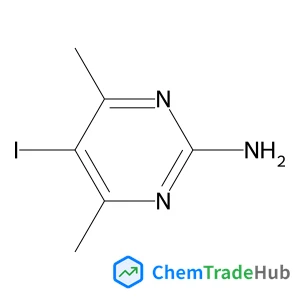
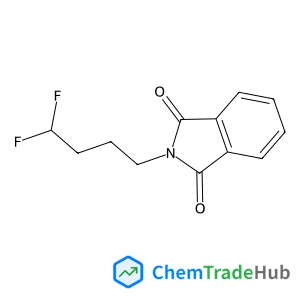
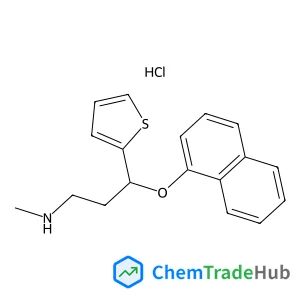
N-Methyl-3-(1-naphthyloxy)-3-(2-thienyl)-1-propanamine hydrochloride (1:1)
CAS号:
1188266-11-6
分子式:
C18H20ClNOS
推荐供应商




免责声明
本页面提供的学术期刊信息仅供参考和研究使用。我们与任何期刊出版商均无关联,也不处理投稿事宜。如有投稿相关咨询,请直接联系相关期刊出版商。
如发现页面信息有误,请发送邮件至 support@chemtradehub.com 联系我们。我们将及时核实并处理您的问题。