










A statistical description of the evolution of cloud condensation nuclei activity during the heterogeneous oxidation of squalane and bis(2-ethylhexyl) sebacate aerosol by hydroxyl radicals
文献信息
发布日期
2013-05-02
DOI
10.1039/C3CP50347J
影响因子
3.676
作者
Christopher W. Harmon, Christopher R. Ruehl, Christopher D. Cappa, Kevin R. Wilson
查看原文
摘要
The heterogeneous reaction of hydroxyl radicals with chemically reduced organic aerosol comprised of either squalane or bis(2-ethylhexyl) sebacate are used as model systems to examine how cloud condensation nuclei (CCN) activity evolves with photochemical oxidation. Over the course of the reaction, the critical super-saturation evolves both by the formation of new oxygen functional groups and by changes in aerosol size through the formation of gas phase reaction products. A statistical model of the heterogeneous reaction reveals that it is the formation, volatilization, solubility, and surface activity of many generations of oxidation products that together control the average changes in aerosol hygroscopicity. The experimental observations and model demonstrate the importance of considering the underlying population or subpopulation of species within a particle and how they each uniquely contribute to the average hygroscopicity of a multi-component aerosol. To accurately predict changes in CCN activity upon oxidation requires a reduction in the surface tension of the activating droplet by a subpopulation of squalane reaction products. These results provide additional evidence that surface tension–concentration parameterizations based on macroscopic data should be modified for microscopic droplets.
相关文献
The correlation between electrical conductivity and second-order Raman modes of laser-reduced graphene oxide
Bing Ma, Raul D. Rodriguez, Alexey Ruban, Sergey Pavlov, Evgeniya Sheremet
2019-04-25
Paper
DOI: 10.1039/C9CP00093C
Surface-mediated spin dynamics probed by optical-pump–probe scanning tunneling microscopy
Zi-Han Wang, Cheul-Hyun Yoon, Shoji Yoshida, Yusuke Arashida, Osamu Takeuchi, Yuzo Ohno, Hidemi Shigekawa
2019-01-28
Communication
DOI: 10.1039/C8CP07786J
A low temperature investigation of the N(2D) + CH4, C2H6 and C3H8 reactions
Michel Dobrijevic
2019-03-06
Paper
DOI: 10.1039/C9CP00798A
Time-resolved radiation chemistry: femtosecond photoelectron spectroscopy of electron attachment and photodissociation dynamics in iodide–nucleobase clusters
Alice Kunin
2019-02-25
Perspective
DOI: 10.1039/C8CP07831A
Resolving local configurational contributions to X-ray and neutron radial distribution functions within solutions of concentrated electrolytes – a case study of concentrated NaOH
David Semrouni, Hsiu-Wen Wang, Carolyn I. Pearce, Katharine Page, David J. Wesolowski, Andrew G. Stack
2018-12-21
Paper
DOI: 10.1039/C8CP06802J
Protein conformational alterations induced by the retinal excited state in proton and sodium pumping rhodopsins
Mihir Ghosh, Kwang-Hwan Jung, Mordechai Sheves
2019-04-09
Paper
DOI: 10.1039/C9CP00681H
Thermodynamic and dynamical properties of the hard sphere system revisited by molecular dynamics simulation
Sławomir Pieprzyk, Marcus N. Bannerman, Arkadiusz C. Brańka, Maciej Chudak, David M. Heyes
2019-03-19
Paper
DOI: 10.1039/C9CP00903E
Theoretical study of C-arylations with aryl halides to determine the reaction mechanism, the effect of substituents and heteroatoms
Rocío Durán, Barbara Herrera
2019-04-29
Paper
DOI: 10.1039/C8CP07752E
Self-assembly and stimuli-responsive behaviours of side-chain liquid crystalline copolymers: a dissipative particle dynamics simulation approach
Yisheng Lv, Liquan Wang, Fangsheng Wu, Shuting Gong, Jie Wei, Shaoliang Lin
2019-03-13
Paper
DOI: 10.1039/C9CP00400A
Ultrafast imaging of laser-controlled non-adiabatic dynamics in NO2 from time-resolved photoelectron emission
Jesús González-Vázquez, Zdeněk Mašín, Danilo S. Brambila, Alex G. Harvey, Felipe Morales
2019-04-08
Paper
DOI: 10.1039/C9CP00649D
您可能还喜欢
化合物问答
什么是2-Bromo-1-(pyrimidin-2-yl)ethanone hydrobromide(CAS号:1588441-02-4)?
2-Bromo-1-(pyrimidin-2-yl)ethanone hydrobromide是一种有机化合物,分子式为C6H5Br2N2O2。它是一种溴代化合...
1588441-02-42-Bromo-1-(2-pyrimid...
化合物问答
在合成中是否有1-正-丁基-3-甲基咪唑鎓三氟甲烷磺酸盐(CAS号:174899-66-2)的替代品?
在合成中,可以考虑使用1-正-丁基-3-甲基咪唑鎓溴酸盐或1-正-丁基-3-甲基咪唑鎓氯酸盐作为替代品。这些化合物在性能上与1-正-丁基-3-甲基咪唑鎓三氟甲烷...
174899-66-21-Butyl-3-methyl-1H-...
化合物问答
2-methyl-5-thiophen-2-ylfuran-3-carboxylic acid(CAS号:651005-90-2)的市场或研究趋势如何?
目前,2-methyl-5-thiophen-2-ylfuran-3-carboxylic acid的研究主要集中在药物化学和新型材料领域。随着生物医药和有机合...
651005-90-22-Methyl-5-(thien-2-...
化合物问答
格列吡嗪杂质H(CAS号:13554-93-3)的主要用途是什么?
格列吡嗪杂质H主要作为药物中间体或副产物存在,并无特定的工业应用。在药物生产中,它可能需要被处理掉以保证最终药物的质量。
13554-93-3Ethyl (2-(4-((cycloh...
化合物问答
如何储存(9ci)-4-甲氧基-1H-苯并咪唑-2-乙腈(CAS号:317817-41-7)?
(9ci)-4-甲氧基-1H-苯并咪唑-2-乙腈应储存在阴凉、干燥、通风良好的地方,避免阳光直射。使用密封的玻璃或塑料容器储存,并确保容器的密封性良好,以防止挥...
317817-41-7(4-Methoxy-1H-benzim...
化合物问答
4,5,9,10-四氢苯芘(CAS号:781-17-9)应用于哪些行业?
4,5,9,10-四氢苯芘在医药行业用于作为某些药物的中间体,在聚合物行业用作添加剂提升材料的热稳定性,在传感器领域作为传感器的敏感材料,在半导体行业中用作掺杂...
781-17-94,5,9,10-Tetrahydrop...
化合物问答
处理叶酸-D4(CAS号:171777-72-3)时应注意哪些实验室安全事项?
处理叶酸-D4时应佩戴个人防护装备(PPE),如手套和实验服。操作应在通风橱内进行,以避免吸入蒸汽或粉尘。如果不慎泄露,应立即用大量清水冲洗,并通知安全人员。参...
171777-72-3Folic Acid-d4
化合物问答
如何处理含有6-溴-2-(三氟乙酰基)-1,2,3,4-四氢异喹啉(CAS号:252331-63-8)的废料?
含有该化合物的废料应收集到专用的容器中,并进行密封以防止挥发和泄漏。在处理前,需进行危险性评估,以确定是否需要进行化学处理。最终处置需遵循当地的危险废物管理规定...
252331-63-81-(6-bromo-3,4-dihyd...
化合物问答
4,5-二氟-2-甲氧基苯甲醛(CAS号:145742-34-3)的主要用途是什么?
4,5-二氟-2-甲氧基苯甲醛主要用作有机合成中的中间体,特别是在制药和农药领域。它可以作为合成其他有机化合物的原料。
145742-34-34,5-difluoro-2-metho...
化合物问答
5-溴-6-三氟甲基吲哚(CAS号:1198475-24-9)安全吗?
5-溴-6-三氟甲基吲哚作为一种化学试剂,具有一定的毒性,需要在通风橱中操作,并采取适当的安全措施以避免吸入、皮肤接触和眼睛刺激。应避免与皮肤和眼睛直接接触,并...
1198475-24-95-bromo-6-(trifluoro...
来源期刊
Physical Chemistry Chemical Physics

CiteScore:
5.5
自引率:
10.3%
年发文量:
3036
Physical Chemistry Chemical Physics (PCCP) is an international journal co-owned by 19 physical chemistry and physics societies from around the world. This journal publishes original, cutting-edge research in physical chemistry, chemical physics and biophysical chemistry. To be suitable for publication in PCCP, articles must include significant innovation and/or insight into physical chemistry; this is the most important criterion that reviewers and Editors will judge against when evaluating submissions. The journal has a broad scope and welcomes contributions spanning experiment, theory, computation and data science. Topical coverage includes spectroscopy, dynamics, kinetics, statistical mechanics, thermodynamics, electrochemistry, catalysis, surface science, quantum mechanics, quantum computing and machine learning. Interdisciplinary research areas such as polymers and soft matter, materials, nanoscience, energy, surfaces/interfaces, and biophysical chemistry are welcomed if they demonstrate significant innovation and/or insight into physical chemistry. Joined experimental/theoretical studies are particularly appreciated when complementary and based on up-to-date approaches.
推荐化合物
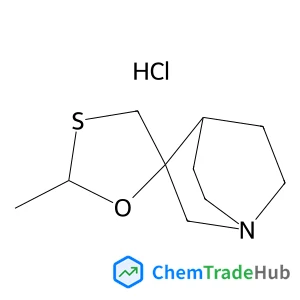
![2-(Methylsulfonyl)-2,4,5,6-tetrahydropyrrolo[3,4-c]pyrazole structure](https://cnstatic.chemtradehub.com/structs/122/1226781-80-1-09d5.webp "2-(Methylsulfonyl)-2,4,5,6-tetrahydropyrrolo[3,4-c]pyrazole structure")
推荐供应商



免责声明
本页面提供的学术期刊信息仅供参考和研究使用。我们与任何期刊出版商均无关联,也不处理投稿事宜。如有投稿相关咨询,请直接联系相关期刊出版商。
如发现页面信息有误,请发送邮件至 support@chemtradehub.com 联系我们。我们将及时核实并处理您的问题。