


Characterization and usage of the EASY-spray technology as part of an online 2D SCX-RP ultra-high pressure system
文献信息
发布日期
2014-09-30
DOI
10.1039/C4AN01568A
影响因子
4.616
作者
Nicolai Bache
查看原文
摘要
Ultra-high pressure liquid chromatography (UHPLC) systems combined with state-of-the-art mass spectrometers have pushed the limit of deep proteome sequencing to new heights making it possible to identify thousands of proteins in a single LC-MS experiment within a few hours. The recently released EASY-spray technology allows one to implement nano-UHPLC with straightforwardness. In this work we initially characterized the EASY-spray containing a 50 cm column containing <2 μm particles and found that the system allowed 3000 proteins to be identified in 90 minutes. We then asked the question whether a fast and sensitive online 2D SCX-RP UHPLC-MS/MS workflow could compete with 1D long gradient analyses, using total analysis time versus proteome coverage and sample usage as benchmark parameters. The 2D LC-MS strategy consisted of the EASY-spray system that had been augmented by the addition of an SCX column. The conversion was made facile since no additional valves were required and by the use of components containing viper fittings. We benchmarked the system using a human cell lysate digest (<10 μg). The 2D SCX-RP UHPLC-MS/MS workflow allowed the identification of almost 37 000 unique peptides and 6000 proteins in a total analysis time of ∼7 hours. On the same system a 1D RP UHPLC-MS/MS workflow plateaued at only 20 000 peptides and 4400 unique proteins and required approx. 8 hours of analysis time. Furthermore, the 2D workflow could continue to increase the proteome coverage with longer analysis times, in fact with a 21 hour analysis we identified 56 600 unique peptides and >7500 proteins. We report, here, that with this fast online SCX-RP UHPLC-MS/MS workflow, the proteome coverage can be substantially extended without significantly compromising the analysis time and sample usage.
期刊推荐
Pure and Applied Chemistry
Molecular Pharmacology
Organic Preparations and Procedures International
Journal of Organometallic Chemistry

Science
Russian Chemical Reviews

Journal of Medicinal Chemistry
Proceedings of the National Academy of Sciences of the United States of America
Journal of Catalysis
Planta Medica
相关文献
Full quadrupolar tensor determination by NMR using a micro-crystal spinning at the magic angle
Suresh Kumar Vasa, Ernst R. H. van Eck, J. W. G. Janssen, Arno P. M. Kentgens
2010-03-22
Paper
DOI: 10.1039/B927449A
Core shell structure for solid gas synthesis of LiBD4
D. Wallacher, A. Hoser, Y. W. Cho, K. H. Oh
2010-03-17
Paper
DOI: 10.1039/B927068J
Direct spectroscopic detection of framework-incorporated vanadium in mesoporous silica materials‡§
Sepideh Zamani, Vera Meynen, Myrjam Mertens, Eveline Popovici, Sabine Van Doorslaer, Pegie Cool
2009-05-08
Paper
DOI: 10.1039/B819442B
Dimerisation of nitrile oxides: a quantum-chemical study
Tibor Pasinszki, Balázs Havasi, Nicholas P. C. Westwood
2009-04-17
Paper
DOI: 10.1039/B823406J
An embedded cluster study of the formation of water on interstellar dust grains
T. P. M. Goumans, C. Richard A. Catlow, Wendy A. Brown, Johannes Kästner, Paul Sherwood
2009-04-23
Paper
DOI: 10.1039/B816905E
Electrochemistry of poly(3,4-ethylenedioxythiophene)-polyaniline/Prussian blue electrochromic devices containing an ionic liquid based gel electrolyte film
Melepurath Deepa, Arvind Awadhia, Shweta Bhandari
2009-05-08
Paper
DOI: 10.1039/B900091G
Understanding microwave heating effects in single mode type cavities—theory and experiment
John Robinson, Sam Kingman, Derek Irvine, Peter Licence, Alastair Smith, Georgios Dimitrakis, David Obermayer, C. Oliver Kappe
2010-03-16
Paper
DOI: 10.1039/B922797K
Electron energy loss spectroscopy and anion formation in gas phase coronene
2009-05-19
Paper
DOI: 10.1039/B904614C
Dynamics of ionic liquid mediated quantised charging of monolayer-protected clusters
Stijn F. L. Mertens, Thomas Wandlowski
2010-04-07
Paper
DOI: 10.1039/B921368F
A wavepacket study of the low-energy charge transfer process in the S3+ + H reaction using time-resolved electronic densities
Marta Łabuda, Jesús González-Vázquez, Leticia González
2010-04-08
Paper
DOI: 10.1039/B926825A
您可能还喜欢
化合物问答
十二烷基磺酸钠(CAS号:2386-53-0)的主要用途是什么?
十二烷基磺酸钠主要用作表面活性剂,广泛应用于洗涤剂、肥皂、化妆品和工业清洁产品中。它能有效去除油脂和污垢,常用于制造洗发水、沐浴露、洗衣粉和金属清洗剂。此外,它...
2386-53-01-Dodecanesulfonic a...
化合物问答
5-羟基异喹啉(CAS号:2439-04-5)适用哪些法规指南?
5-羟基异喹啉作为化学品,主要适用的法规包括GHS全球化学品统一分类和标签制度,REACH法规等。GHS将5-羟基异喹啉分类为皮肤腐蚀/刺激类别2,严重眼损伤/...
2439-04-55-Isoquinolinol
化合物问答
在合成中是否有FIDAS-5 | Wnt(CAS号:1391934-98-7)的替代品?
合成中可以考虑使用类似结构的化合物,如4-[(E)-2-(2-氯-6-氟苯基)乙烯基]-N-甲基苯胺的类似物或衍生物作为替代品。这类化合物可能具有相似的生物活性...
1391934-98-74-[(E)-2-(2-Chloro-6...
化合物问答
(R)-tert-Butyl 2-(5-bromo-1H-imidazol-2-yl)pyrrolidine-1-carboxylate(CAS号:1370600-56-8)通常如何合成?
该化合物通常通过如下步骤合成:首先,将4-溴-1H-咪唑与对甲苯磺酸在乙酸乙酯中反应,得到中间体5-溴-1H-咪唑-2-甲酸乙酯。然后,该中间体与2-甲基-2-...
1370600-56-82-Methyl-2-propanyl ...
化合物问答
处理4-(吡咯烷-1-基)环己酮(CAS号:10421-18-8)时应注意哪些实验室安全事项?
处理4-(吡咯烷-1-基)环己酮时,应佩戴手套、护目镜和实验室外套,以防止直接接触或吸入。在通风橱中操作,确保良好的通风条件。一旦发生泄漏,应立即清理并使用适当...
10421-18-84-(Pyrrolidin-1-yl)c...
化合物问答
如何处理含有异麦芽糖醇(CAS号:534-73-6)的废料?
含有异麦芽糖醇的废液应首先进行分类收集,避免与其他化学品混合。对于小规模的废液,可以通过焚烧或加入特定的化学试剂进行无害化处理。对于大规模的废液,建议联系专业的...
534-73-66-O-alpha-D-Glucopyr...
化合物问答
7-甲基壬酸(CAS号:41653-89-8)的主要用途是什么?
7-甲基壬酸主要用于有机合成领域,作为合成其他化合物的原料。此外,它还可能作为一种中间体用于药品制造和香料合成,但具体用途需要根据其具体的化学结构和反应特性来确...
41653-89-87-Methylnonanoic aci...
化合物问答
N-甲氧基-N-甲基甲基吡啶羧酰胺(CAS号:148493-07-6)应用于哪些行业?
N-甲氧基-N-甲基甲基吡啶羧酰胺在医药领域有一定的应用,作为一种潜在的药物前体或中间体。此外,该化合物也可能应用于聚合物改性剂、传感器材料等。由于其独特的化学...
148493-07-6N-Methoxy-N-methylpi...
化合物问答
什么是惕各酸香叶酯(CAS号:7785-33-3)?
惕各酸香叶酯是一种化合物,化学名称为(2E)-3,7-二甲基-2,6-辛二烯-1-基(2E)-2-甲基-2-丁烯酸酯。它是一种具有香叶香气的化合物,分子式为C1...
7785-33-3(2E)-3,7-Dimethyl-2,...
化合物问答
1-环丁基哌嗪(CAS号:132800-13-6)安全吗?
1-环丁基哌嗪在适当的操作条件下是相对安全的,但如遇明火或高热会释放有毒气体。操作时应佩戴防护眼镜和手套,避免吸入或接触皮肤、眼睛。
132800-13-61-Cyclobutylpiperazi...
来源期刊
Analyst

CiteScore:
7.8
自引率:
5.6%
年发文量:
653
Analyst publishes analytical and bioanalytical research that reports premier fundamental discoveries and inventions, and the applications of those discoveries, unconfined by traditional discipline barriers.
推荐化合物
![(1R)-3-Bromo-1,7,7-trimethylbicyclo[2.2.1]heptan-2-one structure](https://cnstatic.chemtradehub.com/structs/102/10293-06-8-dd8a.webp "(1R)-3-Bromo-1,7,7-trimethylbicyclo[2.2.1]heptan-2-one structure")
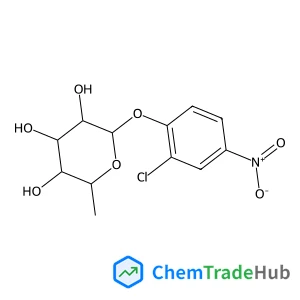
![4-[2-(Trichlorosilyl)ethyl]benzenesulfonyl chloride structure](https://cnstatic.chemtradehub.com/structs/797/79793-00-3-de16.webp "4-[2-(Trichlorosilyl)ethyl]benzenesulfonyl chloride structure")
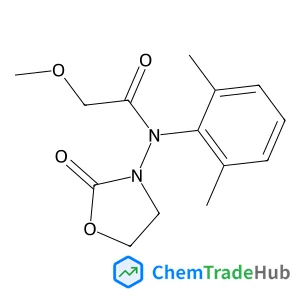
N-(2,6-Dimethylphenyl)-2-methoxy-N-(2-oxo-1,3-oxazolidin-3-yl)acetamide
CAS号:
77732-09-3
分子式:
C14H18N2O4
推荐供应商


免责声明
本页面提供的学术期刊信息仅供参考和研究使用。我们与任何期刊出版商均无关联,也不处理投稿事宜。如有投稿相关咨询,请直接联系相关期刊出版商。
如发现页面信息有误,请发送邮件至 support@chemtradehub.com 联系我们。我们将及时核实并处理您的问题。