


![tert-Butyl N-[(2-chloropyridin-4-yl)methyl]carbamate structure](https://cnstatic.chemtradehub.com/structs/916/916210-27-0-9f95.webp "tert-Butyl N-[(2-chloropyridin-4-yl)methyl]carbamate structure")
Electrochemistry of orthosilicate-based lithium battery cathodes: a perspective
文献信息
发布日期
2014-04-15
DOI
10.1039/C4CP00511B
影响因子
3.676
作者
Stefania Ferrari, Doretta Capsoni, Simone Casino, Matteo Destro, Claudio Gerbaldi, Marcella Bini
查看原文
摘要
Lithium metal orthosilicates are attracting a lot of attention owing to their promising prospects as potential high capacity cathode materials for Li-ion batteries. Currently, great efforts are being made in order to achieve the full theoretical specific capacity of 330 mA h g−1, but many issues remain unsolved (e.g., poor structural and cycling stability), which limit their practical application. The present perspective highlights the importance of assessing the electrochemical behaviour of Li2(Fe,Mn)SiO4 by combining an arsenal of characterization techniques both spectroscopic and structural, in and ex situ. Here, we review the most recent achievements in the investigation of the electrochemical performance of lithium metal orthosilicate cathodes and, through some of our recent results, we attempt to clarify the relationship between the structure and electrochemistry of these compounds.
期刊推荐
Molecules
European Journal of Organic Chemistry
Foundations of Chemistry
Advanced Engineering Materials
Nature Reviews Drug Discovery
Current Pharmaceutical Biotechnology
Journal of Enzyme inhibition and Medicinal Chemistry
Photochemical & Photobiological Sciences
Journal of Medical Biochemistry

Contact Lens & Anterior Eye
相关文献
Dynamical modes of two almost identical chemical oscillators connected via both pulsatile and diffusive coupling
2018-04-03
Paper
DOI: 10.1039/C7CP08032H
Infrared laser dissociation of single megadalton polymer ions in a gated electrostatic ion trap: the added value of statistical analysis of individual events‡
Mohammad A. Halim, Christian Clavier, Xavier Dagany, Michel Kerleroux, Philippe Dugourd, Robert C. Dunbar, Rodolphe Antoine
2018-04-12
Paper
DOI: 10.1039/C8CP00404H
Vibrational spectroscopy of hydrogens in diamond: a quantum mechanical treatment
Francesco Silvio Gentile, Simone Salustro, Anna Maria Ferrari, Philippe D'Arco, Roberto Dovesi
2018-04-04
Paper
DOI: 10.1039/C8CP00596F
Defect evolution in ZnO and its effect on radiation tolerance
Jinpeng Lv, Xingji Li
2018-04-03
Paper
DOI: 10.1039/C8CP01855C
Hittorf's violet phosphorene as a promising candidate for optoelectronic and photocatalytic applications: first-principles characterization
Yi-Lin Lu, Wei Zhou, Shuhua Dai, Baozeng Zhou, Hui Zhao, Ping Wu
2018-03-28
Paper
DOI: 10.1039/C8CP01364K
The influence of the size and symmetry of cations and anions on the physicochemical behavior of organic ionic plastic crystal electrolytes mixed with sodium salts
F. Makhlooghiazad, J. Guazzagaloppa, L. A. O’Dell, R. Yunis, A. Basile, P. C. Howlett, M. Forsyth
2018-01-25
Paper
DOI: 10.1039/C7CP06971E
Gas phase 1H NMR studies and kinetic modeling of dihydrogen isotope equilibration catalyzed by Ru-nanoparticles under normal conditions: dissociative vs. associative exchange
Hans-Heinrich Limbach, Tal Pery, Niels Rothermel, Bruno Chaudret, Torsten Gutmann, Gerd Buntkowsky
2017-12-19
Paper
DOI: 10.1039/C7CP07770J
Structure and dynamics of water at water–graphene and water–hexagonal boron-nitride sheet interfaces revealed by ab initio sum-frequency generation spectroscopy
Tatsuhiko Ohto, Hirokazu Tada, Yuki Nagata
2018-04-20
Paper
DOI: 10.1039/C8CP01351A
A non-tight chemomechanical coupling model for force-dependence of movement dynamics of molecular motors
Hong Chen
2018-01-17
Paper
DOI: 10.1039/C7CP05557A
Conformationally-restricted bicarbazoles with phenylene bridges displaying deep-blue emission and high triplet energies: systematic structure–property relationships
Andrei S. Batsanov, Andrew P. Monkman, Martin R. Bryce
2018-04-17
Paper
DOI: 10.1039/C8CP01636D
您可能还喜欢
化合物问答
3 - (二氟甲基)-1 -氟苯(CAS号:26029-52-7)适用哪些法规指南?
3 - (二氟甲基)-1 -氟苯需遵循联合国全球化学品统一分类和标签制度(GHS),包括急性毒性、皮肤腐蚀/刺激、严重眼损伤/眼刺激等分类。同时,该化合物还需符...
26029-52-71-(Difluoromethyl)-3...
化合物问答
3,5-二甲基苯胺(CAS号:108-69-0)通常如何合成?
3,5-二甲基苯胺通常通过乙苯的氨解反应合成。反应中使用硫酸作为催化剂,反应温度为120-130°C。乙苯在硫酸存在下与氨反应,生成3,5-二甲基苯胺和苯胺副产...
108-69-03,5-Dimethylaniline
化合物问答
3-甲基异噻唑-5-胺(CAS号:24340-76-9)安全吗?
3-甲基异噻唑-5-胺在适当使用和储存条件下是相对安全的,但在操作时应注意防护措施。应避免吸入粉尘,避免与皮肤和眼睛直接接触。在操作过程中,应穿戴适当的防护装备...
24340-76-93-Methyl-1,2-thiazol...
化合物问答
3-(1,3-Thiazol-2-yl)-1H-indole(CAS号:135531-86-1)通常如何合成?
3-(1,3-噻唑-2-基)-1H-吲哚通常通过多步合成方法制备。首先,由噻唑-2-基溴化物和吲哚进行偶联反应,得到中间体。然后,通过还原反应将中间体转化为所需...
135531-86-13-(1,3-Thiazol-2-yl)...
化合物问答
4-溴-2-氟苯甲基氯(CAS号:85510-82-3)的主要用途是什么?
4-溴-2-氟苯甲基氯主要用于有机合成中间体,特别是在医药、农药和染料等领域。作为一种具有特定结构的化合物,它在合成复杂有机分子时扮演重要角色。
85510-82-34-Bromo-1-(chloromet...
化合物问答
处理Fmoc-β-(3-噻吩基)-D-Ala-OH(CAS号:220497-90-5)时应注意哪些实验室安全事项?
处理Fmoc-β-(3-噻吩基)-D-Ala-OH时,应佩戴防护手套、护目镜和实验服。操作应在通风橱内进行。如发生泄露,应立即用大量水冲洗,并通知实验室管理人员...
220497-90-5N-[(9H-Fluoren-9-ylm...
化合物问答
氮化硅(CAS号:12033-89-5)通常如何合成?
氮化硅通常通过氮化硅的直接反应合成,即在高温下将四氯化硅与氨气反应。具体步骤是将四氯化硅和氨气混合并加热至1300-1700℃,在该条件下,四氯化硅与氨气反应生...
12033-89-5Trisilicon tetranitr...
化合物问答
Cetirizine EP Impurity B DiHCl(CAS号:1000690-91-4)通常如何合成?
Cetirizine EP Impurity B DiHCl通常通过一锅法合成,首先将4-氯苯基-苯甲基氯甲酸酯与1-哌嗪乙酸反应,生成相应的酸,然后与盐酸反应...
1000690-91-4{4-[(4-Chlorophenyl)...
化合物问答
如何储存1-哌啶-4-基丁-1-酮(CAS号:3509-15-7)?
1-哌啶-4-基丁-1-酮应储存在阴凉、干燥的地方,避免阳光直射。存储容器应密封,并确保通风良好。建议储存温度不超过25℃,湿度保持在相对较低的水平。
3509-15-71-Piperidin-4-ylbuta...
化合物问答
如何处理含有VORUCICLIB(CAS号:1000023-04-0)的废料?
含有VORUCICLIB的废料应进行专业的收集和处理,包括使用适当的容器进行隔离,避免与其他化学品接触。处理方法通常包括化学中和、沉淀反应或吸附过程,随后进行焚...
1000023-04-02-[2-Chloro-4-(trifl...
来源期刊
Physical Chemistry Chemical Physics

CiteScore:
5.5
自引率:
10.3%
年发文量:
3036
Physical Chemistry Chemical Physics (PCCP) is an international journal co-owned by 19 physical chemistry and physics societies from around the world. This journal publishes original, cutting-edge research in physical chemistry, chemical physics and biophysical chemistry. To be suitable for publication in PCCP, articles must include significant innovation and/or insight into physical chemistry; this is the most important criterion that reviewers and Editors will judge against when evaluating submissions. The journal has a broad scope and welcomes contributions spanning experiment, theory, computation and data science. Topical coverage includes spectroscopy, dynamics, kinetics, statistical mechanics, thermodynamics, electrochemistry, catalysis, surface science, quantum mechanics, quantum computing and machine learning. Interdisciplinary research areas such as polymers and soft matter, materials, nanoscience, energy, surfaces/interfaces, and biophysical chemistry are welcomed if they demonstrate significant innovation and/or insight into physical chemistry. Joined experimental/theoretical studies are particularly appreciated when complementary and based on up-to-date approaches.
推荐化合物
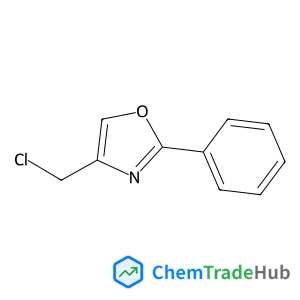
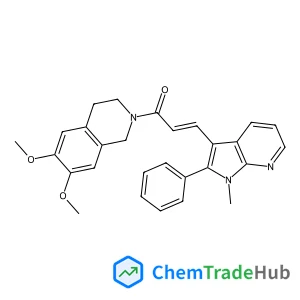
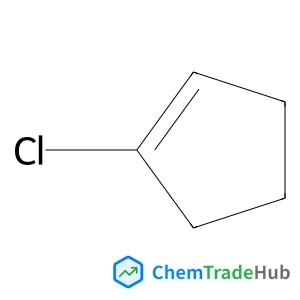
![1-[3-(4-Morpholinylsulfonyl)phenyl]methanamine structure](https://cnstatic.chemtradehub.com/structs/933/933989-32-3-51af.webp "1-[3-(4-Morpholinylsulfonyl)phenyl]methanamine structure")
推荐供应商





免责声明
本页面提供的学术期刊信息仅供参考和研究使用。我们与任何期刊出版商均无关联,也不处理投稿事宜。如有投稿相关咨询,请直接联系相关期刊出版商。
如发现页面信息有误,请发送邮件至 support@chemtradehub.com 联系我们。我们将及时核实并处理您的问题。