


![(1R)-N-((1R)-1-Phenylethyl)-1-[4-(tert-butyldimethylsilyloxymethyl)cyclohexyl]ethan-1-amine structure](https://cnstatic.chemtradehub.com/structs/672/672314-45-3-47ef.webp "(1R)-N-((1R)-1-Phenylethyl)-1-[4-(tert-butyldimethylsilyloxymethyl)cyclohexyl]ethan-1-amine structure")
Small-angle neutron scattering study of micropore collapse in amorphous solid water
文献信息
发布日期
2014-06-17
DOI
10.1039/C4CP00593G
影响因子
3.676
作者
Christian Mitterdorfer, Marion Bauer, Tristan G. A. Youngs, Daniel T. Bowron, Catherine R. Hill, Helen J. Fraser, John L. Finney, Thomas Loerting
查看原文
摘要
Vapor-deposited amorphous solid water (ASW) is the most abundant solid molecular material in space, where it plays a direct role in both the formation of more complex chemical species and the aggregation of icy materials in the earliest stages of planet formation. Nevertheless, some of its low temperature physics such as the collapse of the micropore network upon heating are still far from being understood. Here we characterize the nature of the micropores and their collapse using neutron scattering of gram-quantities of D2O–ASW of internal surface areas up to 230 ± 10 m2 g−1 prepared at 77 K. The model-free interpretation of the small-angle scattering data suggests micropores, which remain stable up to 120–140 K and then experience a sudden collapse. The exact onset temperature to pore collapse depends on the type of flow conditions employed in the preparation of ASW and, thus, the specific surface area of the initial deposit, whereas the onset of crystallization to cubic ice is unaffected by the flow conditions. Analysis of the small-angle neutron scattering signal using the Guinier–Porod model suggests that a sudden transition from three-dimensional cylindrical pores with 15 Å radius of gyration to two-dimensional lamellae is the mechanism underlying the pore collapse. The rather high temperature of about 120–140 K of micropore collapse and the 3D-to-2D type of the transition unraveled in this study have implications for our understanding of the processing and evolution of ices in various astrophysical environments.
期刊推荐

Physical Chemistry Chemical Physics
Mini-Reviews in Medicinal Chemistry

European Journal of Organic Chemistry

Coloration Technology
Current Pharmaceutical Biotechnology
CrystEngComm
Advanced Engineering Materials

Green Chemistry
Environmental Toxicology and Pharmacology
Angewandte Chemie International Edition
相关文献
Asymmetric synthesis of (αS)-polyfluoroalkylated N-Boc-prolinols by the diethyl zinc-induced asymmetric Meerwein–Ponndorf–Verley reduction of perfluoroalkyl N-Boc-pyrrolidyl ketones
Kazumasa Funabiki, Hiroki Iwata, Yosuke Yano, Yasuhiro Kubota, Masaki Matsui
2015-02-11
Research Article
DOI: 10.1039/C5QO00008D
CO-enabled rhenium hydride catalyst for directed C(sp2)–H bond alkylation with olefins‡
Hongming Jin, Zhengbo Zhu, Ning Jin, Jin Xie, Yixiang Cheng
2015-02-03
Research Article
DOI: 10.1039/C4QO00329B
Ni-Catalyzed 1,2-iminoacylation of alkenes via a reductive strategy
Lin Wang, Chuan Wang
2018-10-25
Research Article
DOI: 10.1039/C8QO01044G
Pd/Gorlos-Phos-catalyzed cross-coupling between two different aryl chlorides in the presence of B2Pin2 and cytotoxicity studies of the products
Xinyu Duan, Pengbin Li, Guirong Zhu, Chunling Fu, Qin Chen, Xin Huang
2018-10-11
Research Article
DOI: 10.1039/C8QO00781K
Trichalcogenasumanenes containing various chalcogen atoms: synthesis, structure, properties, and chemical reactivity
Shitao Wang, Jihai Shang, Chaoxian Yan, Wenbo Wang, Chengshan Yuan, Hao-Li Zhang, Xiangfeng Shao
2018-12-05
Research Article
DOI: 10.1039/C8QO01220B
A facile approach to synthesize azaindoline functionalized spirocarbocyclic scaffolds via a Pd-catalyzed cascade cyclization/dearomatization process
Xin-Xing Wu, Hui Tian, Yu Wang, Anjia Liu, Hengfan Chen, Zhixiang Fan, Xuefeng Li, Shufeng Chen
2018-10-09
Research Article
DOI: 10.1039/C8QO00964C
Retracted Article: A miraculous chiral Ir–Rh bimetallic nanocatalyst for asymmetric hydrogenation of activated ketones
Xiuru Xue, Zhaohui Zhao, Yanhua Wang
2018-11-16
Research Article
DOI: 10.1039/C8QO01011K
您可能还喜欢
化合物问答
什么是3-表南美楝属二醇(CAS号:19942-04-2)?
3-表南美楝属二醇是一种具有特定立体化学结构的化合物,其分子式为C31H52O2,属于甾醇类化合物。它具有光学活性,是一种复杂的有机分子,主要存在于一些植物中。
19942-04-2(3S,5R,8R,9R,10R,13R...
化合物问答
3-羧基-5-碘苯甲酸甲酯(CAS号:50765-22-5)应用于哪些行业?
3-羧基-5-碘苯甲酸甲酯主要应用于医药行业,作为合成某些药物中间体的重要原料。此外,它还可能用于聚合物的改性、传感器的制备以及半导体材料的制备等领域。
50765-22-5Methyl 3-hydroxy-5-i...
化合物问答
什么是3-Bromoindolin-2-one(CAS号:22942-87-6)?
3-Bromoindolin-2-one是一种含有溴代基团的吲哚酮衍生物,分子式为C9H7BrNO。它是一种无色固体,具有一定的挥发性,熔点为158-159°C...
22942-87-63-Bromoindolin-2-one
化合物问答
如何处理含有L-Lysyl-L-phenylalanyl-L-isoleucylglycyl-L-leucyl-L-methioninamide(CAS号:2990-43-4)的废料?
对于含有该化合物的废液,应先进行中和处理,然后根据其毒性和活性选择合适的处置方法。可以考虑焚烧处理或由专业的化学品废物处理公司进行无害化处理。处理过程中需注意环...
2990-43-4L-Lysyl-L-phenylalan...
化合物问答
ANGIOTENSIN 1/2 + A (2 - 8)(CAS号:51833-76-2)的物理化学性质是什么?
ANGIOTENSIN 1/2 + A (2 - 8)是一种蛋白质类化合物,具有典型的蛋白质性质。它的分子量约为5900 Da。该化合物在水中具有一定的溶解性,...
51833-76-2ANGIOTENSIN 1/2 + A ...
化合物问答
如何储存2-甲基硫代嘧啶-5-硼酸频那酯(CAS号:940284-18-4)?
应将该化合物存放在阴凉干燥、通风良好的地方,避免阳光直射。建议将化合物密封保存在避光的、干燥的容器中,远离火源和高温环境。
940284-18-42-(Methylthio)-5-(4,...
化合物问答
什么是苏丹红IV氘代物 标准品(CAS号:1014689-18-9)?
苏丹红IV氘代物 标准品是一种含有氘代标记的苏丹红IV化合物,是一种用于化合物分析、结构确证以及代谢研究的标准物质。
1014689-18-91-[(E)-{2-Methyl-4-[...
化合物问答
(+)-2-Amino-6-propionamido-d3-tetrahydrobenzothiazole(CAS号:1217680-69-7)适用哪些法规指南?
该化合物需要遵循《全球化学品统一分类和标签制度》(GHS)中的分类和标签要求,具体分类需依据其毒性和物理化学性质。此外,还需要符合《欧盟化学品注册、评估、授权和...
1217680-69-7(+)-2-Amino-6-propio...
化合物问答
如何储存2-氨基-2-(2-吡啶)乙酸乙酯(CAS号:55243-15-7)?
2-氨基-2-(2-吡啶)乙酸乙酯应储存于阴凉、干燥、通风良好的环境中,避免高温和光照。应使用密封容器储存,并远离易燃物、氧化剂和其他危险化学品。
55243-15-7Ethyl 2-amino-2-(pyr...
化合物问答
3-羟基-4-甲氧基吡啶-2-羧酸(CAS号:210300-09-7)的主要用途是什么?
3-羟基-4-甲氧基吡啶-2-羧酸主要用于合成其他有机化合物,如药物合成、农药合成和染料合成等。此外,它还可用作中间体和试剂,在化学研究领域也有一定的应用。
210300-09-73-Hydroxy-4-methoxy-...
来源期刊
Physical Chemistry Chemical Physics
CiteScore:
5.5
自引率:
10.3%
年发文量:
3036
Physical Chemistry Chemical Physics (PCCP) is an international journal co-owned by 19 physical chemistry and physics societies from around the world. This journal publishes original, cutting-edge research in physical chemistry, chemical physics and biophysical chemistry. To be suitable for publication in PCCP, articles must include significant innovation and/or insight into physical chemistry; this is the most important criterion that reviewers and Editors will judge against when evaluating submissions. The journal has a broad scope and welcomes contributions spanning experiment, theory, computation and data science. Topical coverage includes spectroscopy, dynamics, kinetics, statistical mechanics, thermodynamics, electrochemistry, catalysis, surface science, quantum mechanics, quantum computing and machine learning. Interdisciplinary research areas such as polymers and soft matter, materials, nanoscience, energy, surfaces/interfaces, and biophysical chemistry are welcomed if they demonstrate significant innovation and/or insight into physical chemistry. Joined experimental/theoretical studies are particularly appreciated when complementary and based on up-to-date approaches.
推荐化合物
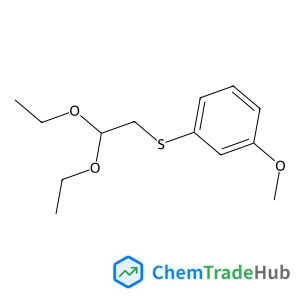
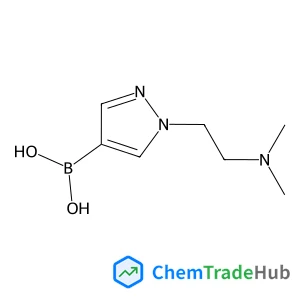
推荐供应商






免责声明
本页面提供的学术期刊信息仅供参考和研究使用。我们与任何期刊出版商均无关联,也不处理投稿事宜。如有投稿相关咨询,请直接联系相关期刊出版商。
如发现页面信息有误,请发送邮件至 support@chemtradehub.com 联系我们。我们将及时核实并处理您的问题。