




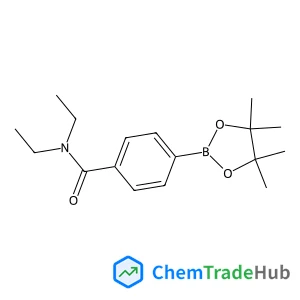
N,N-Diethyl-4-(4,4,5,5-tetramethyl-1,3,2-dioxaborolan-2-yl)benzamide
CAS号:
325142-99-2
分子式:
C17H26BNO3
Attila Táborosi, Róbert Kurdi
Kaolinite as a remarkable industrial raw material has notable structural features despite its simple chemical composition (Al2O3·2SiO2·2H2O). We report here a systematic development of a coordination chemical model for the [6Al-6(OH)] honeycomb-like unit of kaolinite's octahedral sheet, which was proposed to be the adsorption site for small molecules from earlier studies. The coordination environment of the Al3+ ions was completed with outer sphere groups from both octahedral and tetrahedral sheets. Dangling bonds were terminated by additional Al3+ and Si4+ ions with hydroxide and oxide groups from the second coordination sphere versus simple protonation. A cage of Na+ and Mg2+ ions rendered the computational model to be charge neutral. In this exfoliated kaolinite model, the inner hydroxide groups and the adjacent Al3+ ions have compositionally the most complete environments with respect to the crystal structure. Thus, their atomic positions were used as a benchmark for the level of theory dependence of the optimized structures. We evaluated the performance of a representative set of density functionals, basis sets, point-charges, identified pitfalls and caveats. Importantly, the structural changes during optimization of periodic and cluster models suggest pliability for the exfoliated kaolinite layers, which is influenced by the external chemical environment.
Patrick R. Batista, Renan V. Viesser, Cláudio F. Tormena, Roberto Rittner, Paulo R. de Oliveira
DOI: 10.1039/C7CP03572A
J. Ahrens, M. Frank, G. H. Clever, D. Schwarzer
DOI: 10.1039/C7CP02253K
Misaki Kinoshita, Erina Kakimoto, Yuxi Lin, Masatomo So, Toshihiko Sugiki, Yuji Goto, Young-Ho Lee
DOI: 10.1039/C6CP07774A
Aurellia Galliot, Adrià Gil, Maria José Calhorda
DOI: 10.1039/C7CP00532F
Carlos-A Polanco-Ramírez, Paul W. Ayers, José L. Gázquez, Alberto Vela
DOI: 10.1039/C7CP02613G
Xinyu Wang, Jingchao Zhang, Yue Chen, Paddy K. L. Chan
DOI: 10.1039/C7CP01958K
Long Zhao, Tao Yang, Ralf I. Kaiser, Tyler P. Troy, Bo Xu, Musahid Ahmed, Juan Alarcon, Daniel Belisario-Lara, Alexander M. Mebel, Yan Zhang, Chuangchuang Cao, Jiabiao Zou
DOI: 10.1039/C7CP01571B
S. López-Moreno, J. Mazo-Zuluaga, J. Mejía-López
DOI: 10.1039/C7CP01825H
Sung-Sik Lee, Soojin Park, Jae-ung Lee, Jun-Hyeok Kim, Dongkyung Yoon, Sungyul Lee, Han Bin Oh
DOI: 10.1039/C7CP01085K
Johan O. Nilsson, Mikael Leetmaa, Sergei I. Simak
DOI: 10.1039/C6CP06460D
3 - (二氟甲基)-1 -氟苯需遵循联合国全球化学品统一分类和标签制度(GHS),包括急性毒性、皮肤腐蚀/刺激、严重眼损伤/眼刺激等分类。同时,该化合物还需符...
3,5-二甲基苯胺通常通过乙苯的氨解反应合成。反应中使用硫酸作为催化剂,反应温度为120-130°C。乙苯在硫酸存在下与氨反应,生成3,5-二甲基苯胺和苯胺副产...
3-甲基异噻唑-5-胺在适当使用和储存条件下是相对安全的,但在操作时应注意防护措施。应避免吸入粉尘,避免与皮肤和眼睛直接接触。在操作过程中,应穿戴适当的防护装备...
3-(1,3-噻唑-2-基)-1H-吲哚通常通过多步合成方法制备。首先,由噻唑-2-基溴化物和吲哚进行偶联反应,得到中间体。然后,通过还原反应将中间体转化为所需...
4-溴-2-氟苯甲基氯主要用于有机合成中间体,特别是在医药、农药和染料等领域。作为一种具有特定结构的化合物,它在合成复杂有机分子时扮演重要角色。
处理Fmoc-β-(3-噻吩基)-D-Ala-OH时,应佩戴防护手套、护目镜和实验服。操作应在通风橱内进行。如发生泄露,应立即用大量水冲洗,并通知实验室管理人员...
氮化硅通常通过氮化硅的直接反应合成,即在高温下将四氯化硅与氨气反应。具体步骤是将四氯化硅和氨气混合并加热至1300-1700℃,在该条件下,四氯化硅与氨气反应生...
Cetirizine EP Impurity B DiHCl通常通过一锅法合成,首先将4-氯苯基-苯甲基氯甲酸酯与1-哌嗪乙酸反应,生成相应的酸,然后与盐酸反应...
1-哌啶-4-基丁-1-酮应储存在阴凉、干燥的地方,避免阳光直射。存储容器应密封,并确保通风良好。建议储存温度不超过25℃,湿度保持在相对较低的水平。
含有VORUCICLIB的废料应进行专业的收集和处理,包括使用适当的容器进行隔离,避免与其他化学品接触。处理方法通常包括化学中和、沉淀反应或吸附过程,随后进行焚...

Physical Chemistry Chemical Physics (PCCP) is an international journal co-owned by 19 physical chemistry and physics societies from around the world. This journal publishes original, cutting-edge research in physical chemistry, chemical physics and biophysical chemistry. To be suitable for publication in PCCP, articles must include significant innovation and/or insight into physical chemistry; this is the most important criterion that reviewers and Editors will judge against when evaluating submissions. The journal has a broad scope and welcomes contributions spanning experiment, theory, computation and data science. Topical coverage includes spectroscopy, dynamics, kinetics, statistical mechanics, thermodynamics, electrochemistry, catalysis, surface science, quantum mechanics, quantum computing and machine learning. Interdisciplinary research areas such as polymers and soft matter, materials, nanoscience, energy, surfaces/interfaces, and biophysical chemistry are welcomed if they demonstrate significant innovation and/or insight into physical chemistry. Joined experimental/theoretical studies are particularly appreciated when complementary and based on up-to-date approaches.
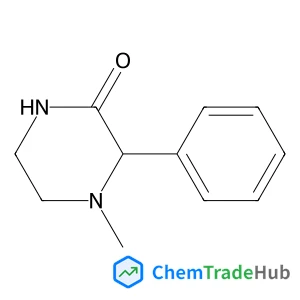
![6-Benzyl-4,5,6,7-tetrahydro-1H-pyrazolo[3,4-c]pyridin-3(2H)-one structure](https://cnstatic.chemtradehub.com/structs/909/909187-64-0-f54f.webp "6-Benzyl-4,5,6,7-tetrahydro-1H-pyrazolo[3,4-c]pyridin-3(2H)-one structure")
![1-[3-(4-Morpholinylsulfonyl)phenyl]methanamine structure](https://cnstatic.chemtradehub.com/structs/933/933989-32-3-51af.webp "1-[3-(4-Morpholinylsulfonyl)phenyl]methanamine structure")