










Investigations into the nature of spontelectrics: nitrous oxide diluted in xenon
文献信息
发布日期
2014-09-24
DOI
10.1039/C4CP03659J
影响因子
3.676
作者
Andrew Cassidy, Oksana Plekan, Jack Dunger, Richard Balog, Nykola C. Jones, Jérôme Lasne, Alexander Rosu-Finsen, Martin R. S. McCoustra, David Field
查看原文
摘要
The recent discovery of a new class of solids displaying bulk spontaneous electric fields as high as 108 V m−1, so-called ‘spontelectrics’, poses fundamental and unresolved problems in solid state physics. The purpose of the present work is to delve more deeply into the nature of the interactions which give rise to the spontelectric effect in films of nitrous oxide (N2O), by observing the variation of the spontaneous field as the N2O molecules are physically removed from one another by dilution in Xe. Data, obtained using the ASTRID storage ring, are presented for films diluted by factors ξ = Xe/N2O of 0.9 to 67, at deposition temperatures of 38 K, 44 K and 48 K, where films are laid down by deposition from a gas mixture. Results show that the spontelectric field decreases as ξ increases and that at ξ = 67 for 44 K deposition, the spontelectric effect is absent. Reflection–absorption infrared spectroscopy (RAIRS) data are also reported, providing insight into the structure of Xe/N2O films and specifically showing that N2O remains dispersed in the Xe/N2O films prepared here. A simplified theoretical model is developed which illustrates that electric fields can be understood in terms of dilution-dependent dipole orientation. This model is used to reproduce experimental data up to an average molecular separation, s, of ≥1.25 nm apart, ∼4 times that associated with pure solid N2O. The disappearance of the spontelectric effect at larger average distances of separation, between s = 1.25 nm and s = 1.75 nm, is a phenomenon which cannot be described by any existing model but which shows that dipole–dipole interactions are an essential ingredient for the creation of the spontelectric state.
相关文献
Nitrogen-rich porous organic polymer as a promising adsorbent for iodine capture from organic solvents
Fatemeh Khosravi Esmaeiltarkhani, Mohammad Dinari, Nazanin Mokhtari
2023-12-26
Paper
DOI: 10.1039/D3NJ04674E
Topology driven and soft phonon mode enabled Na-ion diffusion in quaternary chalcogenides, Na3ZnGaX4 (X = S, and Se)
Santhoshkumar Sundaramoorthy, Amitava Choudhury, Naresh C. Osti, Alexander I. Kolesnikov, Matthew B. Stone, Yongqiang Cheng
2023-10-04
Paper
DOI: 10.1039/D3TA04479C
A solely biobased strain sensor with an ultra-precision response via a surface graphitization strategy
Zhihao Yang, Ying Yuan, Bin Wang, Xiaojun Shen, Xiluan Wang, Tong-Qi Yuan
2023-11-02
Paper
DOI: 10.1039/D3TA04872A
Solar light selective-harvesting eco-friendly colloidal quantum dots for transparent luminescent solar concentrators
Ehsan Hamzehpoor, Jiabin Liu, Xin Liu, Gurpreet Singh Selopal, Dmytro F. Perepichka, Zhiming M. Wang
2023-10-13
Paper
DOI: 10.1039/D3TA05351B
Construction of supramolecular dimer photosensitizers based on triphenylamine derivatives and cucurbit[8]uril for photocatalysis
Xin-Long Li, Dong-Liang Cheng, Kai-Kai Niu, Hui Liu, Sheng-Sheng Yu, Yue-Bo Wang, Ling-Bao Xing
2023-11-09
Paper
DOI: 10.1039/D3TA05523J
Local modulation of Au/MoS2 Schottky barriers using a top ZnO nanowire gate for high-performance photodetection
Yu Xiao, Guisheng Zou, Jinpeng Huo, Jin Peng, Zehua Li, Daozhi Shen, Lei Liu
2023-11-28
Communication
DOI: 10.1039/D3NH00448A
Modulation of the assembly fashion among metal–organic frameworks for enantioretentive epoxide activation
Jun Guo, Xiaomin Xue, Fangfang Li, Meiting Zhao, Youcong Xing, Yanmin Song, Chang Long, Tingting Zhao, Zhiyong Tang
2023-11-19
Communication
DOI: 10.1039/D3NH00419H
A low-self-discharge high-loading polysulfide cathode design for lithium–sulfur cells
Cheng-Che Wu, Yun-Chung Ho
2023-11-01
Paper
DOI: 10.1039/D3TA05632E
您可能还喜欢
化合物问答
什么是2,6-二溴-4,8-双[(2-乙基己基)氧基]苯并[1,2-b:4,5-b']二噻吩(CAS号:1226782-13-3)?
2,6-二溴-4,8-双[(2-乙基己基)氧基]苯并[1,2-b:4,5-b']二噻吩是一种有机化合物,分子式为C23H32Br2O2S2。该化合物具有芳香性和...
1226782-13-32,6-Dibromo-4,8-bis[...
化合物问答
木聚硫钠(CAS号:37319-17-8)的物理化学性质是什么?
木聚硫钠通常为无色或白色结晶性粉末,具有吸湿性。其分子量约为121.11 g/mol。木聚硫钠易溶于水,不溶于醇类和其他非极性溶剂。在酸性或碱性溶液中,木聚硫钠...
37319-17-8Pentosan
化合物问答
2-甲氧基-4-(三氟甲基)苄溴, JRD(CAS号:886500-59-0)适用哪些法规指南?
该化合物在合成、储存和运输过程中需遵循《全球化学品统一分类和标签制度》(GHS)的健康、环境和物理危险分类。在欧洲还需符合《化学品注册、评估、授权和限制》(RE...
886500-59-02-Methoxy-4-(trifluo...
化合物问答
1,4-Diazoniabicyclo[2.2.2]octane-1,4-disulfinate(CAS号:119752-83-9)的主要用途是什么?
1,4-二氮杂双环[2.2.2]辛烷-1,4-二硫酸二酯主要用于有机合成中的保护基团,特别是在保护胺基和硫醇基方面具有广泛应用。此外,它还用于一些特殊化学反应的...
119752-83-91,4-Diazabicyclo[2.2...
化合物问答
如何处理含有4-(Bromomethyl)-2-fluorobenzenesulphonamide(CAS号:1645275-47-3)的废料?
含有4-(Bromomethyl)-2-fluorobenzenesulphonamide的废液应首先进行中和处理,以降低pH值,避免对环境造成腐蚀性影响。随后...
1645275-47-34-(Bromomethyl)-2-fl...
化合物问答
Loureiriol(CAS号:479195-44-3)的物理化学性质是什么?
Loureiriol是一种天然化合物,其分子式为C15H22O4。Loureiriol为无色结晶性粉末,具有较高的熔点和良好的热稳定性。其相对分子质量为262....
479195-44-3Loureiriol
化合物问答
在合成中是否有3-氨基苯甲酰苯胺(CAS号:14315-16-3)的替代品?
在合成过程中,可以考虑使用类似结构的化合物作为3-氨基苯甲酰苯胺的替代品,例如N-苯基-3-氰基苯胺或N-苯基-3-硝基苯胺等,这些化合物具有相似的化学性质,可...
14315-16-33-Amino-N-phenylbenz...
化合物问答
4-异氰酰苯基硼酸频哪醇酯(CAS号:380430-64-8)的市场或研究趋势如何?
4-异氰酰苯基硼酸频哪醇酯主要应用于有机合成、药物化学和材料科学领域。随着绿色化学的发展,该化合物因其高效的官能团转化能力和环境友好性而受到越来越多的关注。近年...
380430-64-82-(4-Isocyanatopheny...
化合物问答
如何储存3β-乙酰氧基-7,25-甘遂二烯-24(R)-醇(CAS号:1352001-09-2)?
3β-乙酰氧基-7,25-甘遂二烯-24(R)-醇应储存在阴凉、干燥、通风良好的地方,避免直接光照。储存容器应密封,防止空气中的水分和氧气影响化合物的稳定性。建...
1352001-09-23β-acetoxy-eupha- 7,...
化合物问答
如何储存4-氟-2-甲基-1H-吲哚(CAS号:1260383-51-4)?
应将4-氟-2-甲基-1H-吲哚存放在阴凉、干燥、通风良好的地方,避免直接暴露在光照下。容器应密封,避免与空气中的水蒸气接触。建议在避光、温度不超过25℃的环境...
1260383-51-44-Fluoro-2-methyl-1H...
来源期刊
Physical Chemistry Chemical Physics

CiteScore:
5.5
自引率:
10.3%
年发文量:
3036
Physical Chemistry Chemical Physics (PCCP) is an international journal co-owned by 19 physical chemistry and physics societies from around the world. This journal publishes original, cutting-edge research in physical chemistry, chemical physics and biophysical chemistry. To be suitable for publication in PCCP, articles must include significant innovation and/or insight into physical chemistry; this is the most important criterion that reviewers and Editors will judge against when evaluating submissions. The journal has a broad scope and welcomes contributions spanning experiment, theory, computation and data science. Topical coverage includes spectroscopy, dynamics, kinetics, statistical mechanics, thermodynamics, electrochemistry, catalysis, surface science, quantum mechanics, quantum computing and machine learning. Interdisciplinary research areas such as polymers and soft matter, materials, nanoscience, energy, surfaces/interfaces, and biophysical chemistry are welcomed if they demonstrate significant innovation and/or insight into physical chemistry. Joined experimental/theoretical studies are particularly appreciated when complementary and based on up-to-date approaches.
推荐化合物
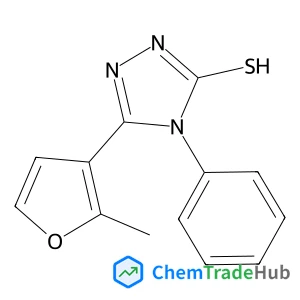
5-(2-Methyl-3-furyl)-4-phenyl-2,4-dihydro-3H-1,2,4-triazole-3-thione
CAS号:
346464-59-3
分子式:
C13H11N3OS
![[(2R)-6,6-Dimethyl-2-morpholinyl]methanol hydrochloride (1:1) structure](https://cnstatic.chemtradehub.com/structs/141/1416444-88-6-e06a.webp "[(2R)-6,6-Dimethyl-2-morpholinyl]methanol hydrochloride (1:1) structure")
![N-[2-(2-Pyridinyl)ethyl]-1-propanamine structure](https://cnstatic.chemtradehub.com/structs/554/55496-57-6-22b4.webp "N-[2-(2-Pyridinyl)ethyl]-1-propanamine structure")
![Benzeneacetic acid, 2-bromo-α-[[(1,1-dimethylethoxy)carbonyl]amino]-, (αS)- structure](https://cnstatic.chemtradehub.com/structs/122/1228547-87-2-f296.webp "Benzeneacetic acid, 2-bromo-α-[[(1,1-dimethylethoxy)carbonyl]amino]-, (αS)- structure")
Benzeneacetic acid, 2-bromo-α-[[(1,1-dimethylethoxy)carbonyl]amino]-, (αS)-
CAS号:
1228547-87-2
分子式:
C13H16BrNO4
推荐供应商





免责声明
本页面提供的学术期刊信息仅供参考和研究使用。我们与任何期刊出版商均无关联,也不处理投稿事宜。如有投稿相关咨询,请直接联系相关期刊出版商。
如发现页面信息有误,请发送邮件至 support@chemtradehub.com 联系我们。我们将及时核实并处理您的问题。