








The structural and energetic aspects of substrate binding and the mechanism of action of the DapE-encoded N-succinyl-l,l-diaminopimelic acid desuccinylase (DapE) investigated using a hybrid QM/MM method
文献信息
发布日期
2014-10-27
DOI
10.1039/C4CP03986F
影响因子
3.676
作者
Debodyuti Dutta, Sabyashachi Mishra
查看原文
摘要
With increasing cases of fatal bacterial infections and growing antibiotic resistance, unrelenting efforts are necessary for identification of novel antibiotic targets and new drug molecules. The dapE-encoded N-succinyl-L,L-diaminopimelic acid desuccinylase (DapE) is a di-nuclear Zn containing enzyme in the lysine biosynthetic pathway which is indispensable for bacterial survival and absent in the human host, thus a potential antibiotic target. The DapE enzyme catalyzes the hydrolysis of N-succinyl-L,L-diaminopimelic acid (SDAP) to give rise to succinic acid and L,L-diaminopimelic acid. The mechanism of action of the DapE catalyzed SDAP hydrolysis is investigated employing a hybrid QM/MM computational method. The DapE side chains, such as, Arg178, Thr325, Asn345, are found to play a role in substrate identification and stabilization of the enzyme active site. Furthermore, a glycine rich loop (Gly322–Ser326) is found to facilitate tight binding of the substrate in the enzyme active site. The catalytic reaction progresses via a general acid–base hydrolysis mechanism where Glu134 first acts as a Lewis base by activating the catalytic water molecule in the active site, followed by guiding the resulting hydroxyl ion for a nucleophilic attack on the substrate, and finally acts as a Lewis acid by donating a proton to the substrate. The intermediates and transition states along the reaction pathway have been structurally and energetically characterized. A conformational change in the side chain of Asp100, which bridges the two Zn centers of the enzyme, is observed which facilitates the enzymatic action by lowering the activation energy and leads to the formation of a new intermediate during the catalytic reaction. The nucleophilic attack is found to be the rate determining step.
相关文献
Rational design of hierarchical ZnO superstructures for efficient charge transfer: mechanistic and photovoltaic studies of hollow, mesoporous, cage-like nanostructures with compacted 1D building blocks
Tridip Ranjan Chetia, Mohammad Shaad Ansari, Mohammad Qureshi
2016-01-19
Paper
DOI: 10.1039/C5CP07687K
Molecular dynamics study on the nucleation of methane + tetrahydrofuran mixed guest hydrate
Jyun-Yi Wu, Li-Jen Chen, Yan-Ping Chen, Shiang-Tai Lin
2015-12-22
Paper
DOI: 10.1039/C5CP06419H
Structural determination of niobium-doped silicon clusters by far-infrared spectroscopy and theory
Xiaojun Li, Pieterjan Claes, Marko Haertelt, Peter Lievens, Ewald Janssens
2016-01-27
Paper
DOI: 10.1039/C5CP07298K
Underlying mechanisms of the synergistic role of Li2MnO3 and LiNi1/3Co1/3Mn1/3O2 in high-Mn, Li-rich oxides
Jin-Myoung Lim, Duho Kim, Maenghyo Cho
2016-03-18
Paper
DOI: 10.1039/C6CP00088F
Insights into the allosteric regulation of Syk association with receptor ITAM, a multi-state equilibrium
Chao Feng, Carol Beth Post
2015-10-08
Paper
DOI: 10.1039/C5CP05417F
Thickness-dependent photocatalytic performance of graphite oxide for degrading organic pollutants under visible light
Junghoon Oh, Yun Hee Chang, Yong-Hyun Kim, Sungjin Park
2016-03-16
Paper
DOI: 10.1039/C6CP00582A
Kinetics of the ClO + HO2 reaction over the temperature range T = 210–298 K
Michael K. M. Ward, David M. Rowley
2016-02-02
Paper
DOI: 10.1039/C5CP07329D
Bistable N–H⋯N hydrogen bonds for reversibly modulating the dynamic motion in an organic co-crystal
Chengmin Ji, Shenhui Li, Feng Deng, Sijie Liu, Muhammad Adnan Asghar, Zhihua Sun, Maochun Hong, Junhua Luo
2016-03-24
Communication
DOI: 10.1039/C6CP01073C
Dynamics of GCN4 facilitate DNA interaction: a model-free analysis of an intrinsically disordered region
R. Andrew Byrd, Arthur G. Palmer, III
2015-11-30
Paper
DOI: 10.1039/C5CP06197K
Heterocarbon nanosheets incorporating iron phthalocyanine for oxygen reduction reaction in both alkaline and acidic media
Koangyong Hyun, Gasidit Panomsuwan
2016-03-29
Communication
DOI: 10.1039/C5CP07739G
您可能还喜欢
化合物问答
3 - (二氟甲基)-1 -氟苯(CAS号:26029-52-7)适用哪些法规指南?
3 - (二氟甲基)-1 -氟苯需遵循联合国全球化学品统一分类和标签制度(GHS),包括急性毒性、皮肤腐蚀/刺激、严重眼损伤/眼刺激等分类。同时,该化合物还需符...
26029-52-71-(Difluoromethyl)-3...
化合物问答
3,5-二甲基苯胺(CAS号:108-69-0)通常如何合成?
3,5-二甲基苯胺通常通过乙苯的氨解反应合成。反应中使用硫酸作为催化剂,反应温度为120-130°C。乙苯在硫酸存在下与氨反应,生成3,5-二甲基苯胺和苯胺副产...
108-69-03,5-Dimethylaniline
化合物问答
3-甲基异噻唑-5-胺(CAS号:24340-76-9)安全吗?
3-甲基异噻唑-5-胺在适当使用和储存条件下是相对安全的,但在操作时应注意防护措施。应避免吸入粉尘,避免与皮肤和眼睛直接接触。在操作过程中,应穿戴适当的防护装备...
24340-76-93-Methyl-1,2-thiazol...
化合物问答
3-(1,3-Thiazol-2-yl)-1H-indole(CAS号:135531-86-1)通常如何合成?
3-(1,3-噻唑-2-基)-1H-吲哚通常通过多步合成方法制备。首先,由噻唑-2-基溴化物和吲哚进行偶联反应,得到中间体。然后,通过还原反应将中间体转化为所需...
135531-86-13-(1,3-Thiazol-2-yl)...
化合物问答
4-溴-2-氟苯甲基氯(CAS号:85510-82-3)的主要用途是什么?
4-溴-2-氟苯甲基氯主要用于有机合成中间体,特别是在医药、农药和染料等领域。作为一种具有特定结构的化合物,它在合成复杂有机分子时扮演重要角色。
85510-82-34-Bromo-1-(chloromet...
化合物问答
处理Fmoc-β-(3-噻吩基)-D-Ala-OH(CAS号:220497-90-5)时应注意哪些实验室安全事项?
处理Fmoc-β-(3-噻吩基)-D-Ala-OH时,应佩戴防护手套、护目镜和实验服。操作应在通风橱内进行。如发生泄露,应立即用大量水冲洗,并通知实验室管理人员...
220497-90-5N-[(9H-Fluoren-9-ylm...
化合物问答
氮化硅(CAS号:12033-89-5)通常如何合成?
氮化硅通常通过氮化硅的直接反应合成,即在高温下将四氯化硅与氨气反应。具体步骤是将四氯化硅和氨气混合并加热至1300-1700℃,在该条件下,四氯化硅与氨气反应生...
12033-89-5Trisilicon tetranitr...
化合物问答
Cetirizine EP Impurity B DiHCl(CAS号:1000690-91-4)通常如何合成?
Cetirizine EP Impurity B DiHCl通常通过一锅法合成,首先将4-氯苯基-苯甲基氯甲酸酯与1-哌嗪乙酸反应,生成相应的酸,然后与盐酸反应...
1000690-91-4{4-[(4-Chlorophenyl)...
化合物问答
如何储存1-哌啶-4-基丁-1-酮(CAS号:3509-15-7)?
1-哌啶-4-基丁-1-酮应储存在阴凉、干燥的地方,避免阳光直射。存储容器应密封,并确保通风良好。建议储存温度不超过25℃,湿度保持在相对较低的水平。
3509-15-71-Piperidin-4-ylbuta...
化合物问答
如何处理含有VORUCICLIB(CAS号:1000023-04-0)的废料?
含有VORUCICLIB的废料应进行专业的收集和处理,包括使用适当的容器进行隔离,避免与其他化学品接触。处理方法通常包括化学中和、沉淀反应或吸附过程,随后进行焚...
1000023-04-02-[2-Chloro-4-(trifl...
来源期刊
Physical Chemistry Chemical Physics

CiteScore:
5.5
自引率:
10.3%
年发文量:
3036
Physical Chemistry Chemical Physics (PCCP) is an international journal co-owned by 19 physical chemistry and physics societies from around the world. This journal publishes original, cutting-edge research in physical chemistry, chemical physics and biophysical chemistry. To be suitable for publication in PCCP, articles must include significant innovation and/or insight into physical chemistry; this is the most important criterion that reviewers and Editors will judge against when evaluating submissions. The journal has a broad scope and welcomes contributions spanning experiment, theory, computation and data science. Topical coverage includes spectroscopy, dynamics, kinetics, statistical mechanics, thermodynamics, electrochemistry, catalysis, surface science, quantum mechanics, quantum computing and machine learning. Interdisciplinary research areas such as polymers and soft matter, materials, nanoscience, energy, surfaces/interfaces, and biophysical chemistry are welcomed if they demonstrate significant innovation and/or insight into physical chemistry. Joined experimental/theoretical studies are particularly appreciated when complementary and based on up-to-date approaches.
推荐化合物
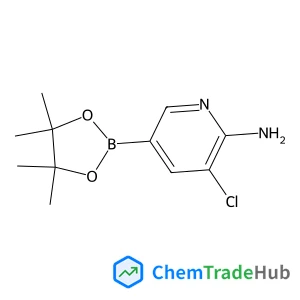
3-Chloro-5-(4,4,5,5-tetramethyl-1,3,2-dioxaborolan-2-yl)-2-pyridinamine
CAS号:
1032758-99-8
分子式:
C11H16BClN2O2
![2,6-Bis({(2R)-2-[hydroxy(diphenyl)methyl]-1-pyrrolidinyl}methyl)-4-methylphenol structure](https://cnstatic.chemtradehub.com/structs/877/877395-58-9-70bf.webp "2,6-Bis({(2R)-2-[hydroxy(diphenyl)methyl]-1-pyrrolidinyl}methyl)-4-methylphenol structure")
推荐供应商







免责声明
本页面提供的学术期刊信息仅供参考和研究使用。我们与任何期刊出版商均无关联,也不处理投稿事宜。如有投稿相关咨询,请直接联系相关期刊出版商。
如发现页面信息有误,请发送邮件至 support@chemtradehub.com 联系我们。我们将及时核实并处理您的问题。