


Expanding the scope of enzymatic carboligation reactions in flow-mode: production of optically active tertiary alcohols with packed-bed micro-bioreactors
文献信息
发布日期
2014-06-09
DOI
10.1039/C4GC00838C
影响因子
10.182
作者
P. P. Giovannini, O. Bortolini, A. Cavazzini, R. Greco, G. Fantin, A. Massi
查看原文
摘要
Acetylacetoin synthase (AAS) from Bacillus licheniformis has been partially purified and immobilized on a silica support and its activity was tested under batch conditions in the homo-coupling of a set of α-diketones leading to valuable α-hydroxy ketone derivatives displaying a chiral tertiary alcohol functionality at the α-position. Next, the effectiveness of AAS heterogeneous catalysis has been evaluated under continuous-flow conditions by fabricating the corresponding packed-bed microreactors (pressure-resistant stainless-steel columns). It has been demonstrated that the covalent immobilization on a silica support and the flow regime synergistically contribute to preserve the enzyme activity over time, thus permitting the long-term operation (up to 15 days) of the prepared bioreactors for the production of the chiral targets via the umpolung strategy.
期刊推荐

Helvetica Chimica Acta

Planta Medica

Journal of Organometallic Chemistry
Pure and Applied Chemistry
Pharmacological Reviews

Proceedings of the National Academy of Sciences of the United States of America
Journal of Catalysis
European Journal of Wood and Wood Products

Journal of Heterocyclic Chemistry
Journal of Physics and Chemistry of Solids
相关文献
First principles study of oxygen adsorption and dissociation on the Pd/Au surface alloys
Jianhui Yang, Hong Chen, Liang Chen
2011-03-16
Paper
DOI: 10.1039/C0CP02007A
Structures and electronic properties of silicene clusters: a promising material for FET and hydrogen storage
Deepthi Jose, Ayan Datta
2011-02-28
Paper
DOI: 10.1039/C0CP02580A
Multi-beam single-molecule defocused fluorescence imaging reveals local anisotropic nature of polymer thin films
Satoshi Habuchi, Tatsuya Oba, Martin Vacha
2011-03-11
Paper
DOI: 10.1039/C0CP02825H
Coupling microscopic and mesoscopic scales to simulate chemical equilibrium between a nanometric carboncluster and detonation products fluid
Emeric Bourasseau, Jean-Bernard Maillet
2011-03-11
Paper
DOI: 10.1039/C0CP02622K
Elasticity of cardiac cells on the polymer substrates with different stiffness: an atomic force microscopy study
Xiaoli Shi, Lei Qin, Xuejie Zhang, Chunyang Xiong, Jing Fang, Xiaohong Fang, Youyi Zhang
2011-03-18
Paper
DOI: 10.1039/C1CP20154A
Reply to the ‘Comment on “Multiconfigurational perturbation theory can predict a false ground state”’ by J. Soto, F. Avila, J. C. Otero and J. F. Arenas, Phys. Chem. Chem. Phys., 2011, DOI: 10.1039/C0CP01917H
Cristopher Camacho, Renzo Cimiraglia, Henryk A. Witek
2011-03-11
Comment
DOI: 10.1039/C1CP20177H
Self-assembly of mixed Pt and Aunanoparticles on PDDA-functionalized graphene as effective electrocatalysts for formic acid oxidation of fuelcells
Shuangyin Wang, Xin Wang, San Ping Jiang
2011-03-16
Paper
DOI: 10.1039/C0CP02495C
Catalysis by metal–organic frameworks: fundamentals and opportunities
Marco Ranocchiari
2011-01-14
Perspective
DOI: 10.1039/C0CP02394A
您可能还喜欢
化合物问答
N-2,2-丙烯基-2-丙烯酰胺(CAS号:2555-13-7)通常如何合成?
N-2,2-丙烯基-2-丙烯酰胺通常通过丙烯酰胺与丙烯基卤化物的缩合反应合成。该反应通常在温和的条件下进行,使用适量的碱如吡啶作为催化剂。反应的选择性良好,产率...
2555-13-7N-Allylacrylamide
化合物问答
什么是1,2-二碘四氟代乙烷(CAS号:354-65-4)?
1,2-二碘四氟代乙烷是一种有机化合物,化学式为C2F4I2,CAS号为354-65-4。它是一种无色透明液体,具有特殊的化学性质和物理性质,包括高沸点、低挥发...
354-65-41,1,2,2-Tetrafluoro-...
化合物问答
3-溴-1H-吡咯[3,2-c]吡啶-4-碳腈(CAS号:1000341-71-8)适用哪些法规指南?
根据GHS(全球化学品统一分类和标签制度),3-溴-1H-吡咯[3,2-c]吡啶-4-碳腈被归类为第2类易燃液体。在欧盟,该化合物需要符合REACH法规的要求,...
1000341-71-83-Bromo-1H-pyrrolo[3...
化合物问答
1-氯甲基萘磺酸(CAS号:87491-79-0)安全吗?
1-氯甲基萘磺酸在使用时需要谨慎,因为它具有一定的刺激性和腐蚀性。操作时应佩戴适当的防护装备,如防化服、手套、护目镜等,避免直接接触皮肤和吸入其蒸汽。
87491-79-01-((Chloromethyl)sul...
化合物问答
二氯(二环戊二烯)铂(CAS号:12083-92-0)的主要用途是什么?
该化合物主要用于催化剂领域,特别是在有机合成中的催化氧化反应以及作为某些药物合成的中间体。此外,它还被研究用于纳米材料的制备。
12083-92-0(1S,7R)-Tricyclo[5.2...
化合物问答
3-溴-7-氯噻吩并[3,2-b]吡啶-6-甲腈(CAS号:798574-82-0)安全吗?
3-溴-7-氯噻吩并[3,2-b]吡啶-6-甲腈在处理时需要谨慎,因其含有溴和氯等强卤素,可能具有一定的刺激性和腐蚀性。使用时应佩戴适当的个人防护装备,避免皮肤...
798574-82-03-Bromo-7-chlorothie...
化合物问答
(R)-1-((R)-2-(2’-二环己基膦苯基)三戊铁基]乙基(双-3,5-三氟甲基苯基)膦(CAS号:494227-32-6)的主要用途是什么?
该化合物主要用于有机合成领域,特别是作为催化剂或配体,在有机合成反应中发挥重要作用。此外,它还可能应用于催化加氢反应、偶联反应等。
494227-32-6Walphos SL-W008-1
化合物问答
3-[6-(Diphenylphosphoryl)-2-naphthyl]-1,10-phenanthroline(CAS号:1480371-38-7)安全吗?
3-[6-(Diphenylphosphoryl)-2-naphthyl]-1,10-phenanthroline在正常使用条件下相对安全,但在操作时应穿戴适当...
1480371-38-73-[6-(Diphenylphosph...
化合物问答
在合成中是否有ETHYL 2-(4-(4,4,5,5-TETRAMETHYL-1,3,2-DIOXABOROLAN-2-YL)CYCLOHEX-3-ENYL)ACETATE(CAS号:1166829-70-4)的替代品?
可以考虑使用类似结构的化合物作为替代品,如2-(4-环戊基环己烯基)乙酸酯,这种化合物在结构上相似,可能在某些合成路径中作为替代品。
1166829-70-4Ethyl [4-(4,4,5,5-te...
化合物问答
如何处理含有3-(3-氨基丙基)丙酮缩甘油(CAS号:131606-42-3)的废料?
处理含有3-(3-氨基丙基)丙酮缩甘油的废料时,首先应确保遵守当地的环保法规。对于危险废物,应进行分类收集,然后送至专业的废物处理设施进行焚烧或安全填埋。在处理...
131606-42-33-[(2,2-Dimethyl-1,3...
来源期刊
Green Chemistry

CiteScore:
16.1
自引率:
7.5%
年发文量:
944
Green Chemistry provides a unique forum for the publication of innovative research on the development of alternative green and sustainable technologies. The scope of Green Chemistry is based on, but not limited to, the definition proposed by Anastas and Warner (Green Chemistry: Theory and Practice, P T Anastas and J C Warner, Oxford University Press, Oxford, 1998). Green chemistry is the utilisation of a set of principles that reduces or eliminates the use or generation of hazardous substances in the design, manufacture and application of chemical products. Green Chemistry is at the frontiers of this continuously-evolving interdisciplinary science and publishes research that attempts to reduce the environmental impact of the chemical enterprise by developing a technology base that is inherently non-toxic to living things and the environment. Submissions on all aspects of research relating to the endeavour are welcome. The journal publishes original and significant cutting-edge research that is likely to be of wide general appeal. To be published, work must present a significant advance in green chemistry. Papers must contain a comparison with existing methods and demonstrate advantages over those methods before publication can be considered. For more information please see this Editorial. Coverage includes the following, but is not limited to: Design (e.g. biomimicry, design for degradation/recycling/reduced toxicity…) Reagents & Feedstocks (e.g. renewables, CO2, solvents, auxiliary agents, waste utilization…) Synthesis (e.g. organic, inorganic, synthetic biology…) Catalysis (e.g. homogeneous, heterogeneous, enzyme, whole cell…) Process (e.g. process design, intensification, separations, recycling, efficiency…) Energy (e.g. renewable energy, fuels, photovoltaics, fuel cells, energy storage, energy carriers…) Applications (e.g. electronics, dyes, consumer products, coatings, pharmaceuticals, preservatives, building materials, chemicals for industry/agriculture/mining…) Impact (e.g. safety, metrics, LCA, sustainability, (eco)toxicology…) Green chemistry is, by definition, a continuously-evolving frontier. Therefore, the inclusion of a particular material or technology does not, of itself, guarantee that a paper is suitable for the journal. To be suitable, the novel advance should have the potential for reduced environmental impact relative to the state of the art. Green Chemistry does not normally deal with research associated with 'end-of-pipe' or remediation issues.
推荐化合物
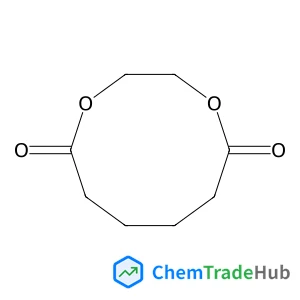
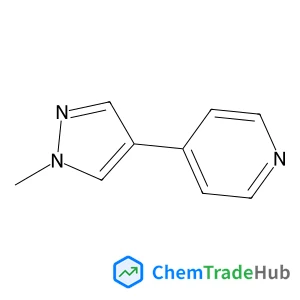
推荐供应商




免责声明
本页面提供的学术期刊信息仅供参考和研究使用。我们与任何期刊出版商均无关联,也不处理投稿事宜。如有投稿相关咨询,请直接联系相关期刊出版商。
如发现页面信息有误,请发送邮件至 support@chemtradehub.com 联系我们。我们将及时核实并处理您的问题。