


![2-{3-[4-(3-Chlorophenyl)-1-piperazinyl]propyl}[1,2,4]triazolo[4,3-a]pyridin-3(2H)-one hydrochloride (1:1) structure](https://cnstatic.chemtradehub.com/structs/253/25332-39-2-496e.webp "2-{3-[4-(3-Chlorophenyl)-1-piperazinyl]propyl}[1,2,4]triazolo[4,3-a]pyridin-3(2H)-one hydrochloride (1:1) structure")
Short peptide based self-assembled nanostructures: implications in drug delivery and tissue engineering
文献信息
发布日期
2014-04-23
DOI
10.1039/C4PY00173G
影响因子
5.582
作者
Virander Singh Chauhan
查看原文
摘要
Self-assembly of biomolecules facilitates the creation of a diverse range of hierarchical nanostructures from a wide range of polymeric and non-polymeric materials. Peptides and specifically short peptides are very attractive in this respect due to their unmatched biocompatibility, ease of synthesis, functionability as well as tunable bioactivity along with the availability of rich chemistry for fine-tuning the structure and function of peptides according to environmental conditions. Self-assembled peptide based nanostructures such as tubes, filaments, fibrils, hydrogels, vesicles, and monolayers have been studied by many research groups and found application as three-dimensional cell growing scaffolds, dental implants, neural tissue engineering scaffolds and as carriers for drugs, proteins and genes, and nucleotides. Nanostructures are also being developed from designed or modified amino acids to have enhanced cellular as well as in vivo stability. These modified nanostructures showed enhanced drug delivery properties both under in vivo and in vitro conditions.
期刊推荐

Chemistry Education Research and Practice
Crystallography Reports
Russian Journal of Coordination Chemistry

Russian Chemical Bulletin

Russian Journal of Applied Chemistry

Chemical Communications

Journal of Peptide Science

Russian Journal of General Chemistry

Russian Journal of Bioorganic Chemistry

Current Opinion in Colloid & Interface Science
相关文献
Hydrodeoxygenation of isoeugenol in continuous mode using bifunctional Pt-Beta 25-binder catalysts for renewable jet fuel production
Mark E. Martínez-Klimov, Olha Yevdokimova, Päivi Mäki-Arvela, Jennifer Cueto, Nataliya Shcherban, Zuzana Vajglová, Kari Eränen, Dmitry Yu. Murzin
2023-11-21
Paper
DOI: 10.1039/D3SE01061A
Degradation of NTO induced by superoxide and hydroperoxyl radicals: a comprehensive DFT study
Liudmyla K. Sviatenko, Jerzy Leszczynski
2023-11-29
Paper
DOI: 10.1039/D3CP05603A
Polystyrene-based catalysts with simultaneous Brønsted and Lewis acidity for hydroxymethylfurfural production from starch: molecular weight and solvent effects
Ibeh S. Omodolor, Nkem O. Ofole, Sarah A. Walz, Maria R. Coleman, Ravikumar Gogar, Sridhar Viamajala, Francielle C. F. Marcos
2023-12-05
Paper
DOI: 10.1039/D3SE01164J
Synthesis of hierarchical MFI zeolite by interzeolite conversion of spent FAU zeolite for the methanol-to-olefins reaction
Chao Yang, Zhenhao Wen, Zhenbao Zhang, Pifeng Wei, Xiaobo Wang, Qiang Li
2023-12-27
Paper
DOI: 10.1039/D3SE01528A
A rational guide to improve the activity of a hydrogen-evolving polymeric carbon nitride photocatalyst
Tomoharu Maeda, Chomponoot Suppaso, Shunta Nishioka, Yoshinobu Kamakura, Shuhei Yasuda, Toshiyuki Yokoi
2023-11-21
Paper
DOI: 10.1039/D3SE00996C
Halogen bond catalysis of the [4+2] cycloaddition reaction of 2-alkenylindoles: catalytic modes and stereoselectivity
Ying Li, Chang Zhao, Huaiyu Zhang, Yanli Zeng
2023-12-04
Paper
DOI: 10.1039/D3CP05479A
The formation energy, phase transition, and negative thermal expansion of Fe2−xScxW3O12
Gaojie Zeng, Xi Zhen, Qilong Gao, Juan Guo, Mingju Chao, Xiansheng Liu, Erjun Liang
2023-11-24
Paper
DOI: 10.1039/D3CP04816K
Flexible piezo-resistive strain sensors using all-polydimethylsiloxane based hybrid nanocomposites for wearable electronics
Rajib Mahato, Gaurav Purohit
2023-11-22
Paper
DOI: 10.1039/D3CP04158A
AgInS2/CdSe type-II core/shell quantum dot-sensitized solar cells with an efficiency of 11.75% under 0.1 sun
Yu-Rou Wang, Jen-Bin Shi, Ming-Way Lee
2023-11-27
Paper
DOI: 10.1039/D3SE01249B
Development of a QM/MM(ABEEM) method for the deprotonation of neutral and cation radicals in the G-tetrad and GGX(8-oxo-G) tetrad
Yue Wang, Linlin Liu, Yue Gao, Jiayue Zhao, Cui Liu, Lidong Gong, Zhongzhi Yang
2023-11-28
Paper
DOI: 10.1039/D3CP04357F
您可能还喜欢
化合物问答
4-[4-三氟甲基苯基]恶唑(CAS号:1126636-40-5)通常如何合成?
4-[4-三氟甲基苯基]恶唑通常通过将4-三氟甲基苯酚与异硫氰酸苯酯在有机溶剂中进行酯化反应合成。该反应可在无水条件下,使用适当的催化剂,如四丁基氢氧化铵,以提...
1126636-40-54-(4-(Trifluoromethy...
59729-32-71-[3-(Dimethylamino)...
化合物问答
RockPhos Pd G3(CAS号:2009020-38-4)通常如何合成?
RockPhos Pd G3 通常通过钯催化偶联反应合成,使用配体 (2'-Amino-2-biphenylyl)(methanesulfonato-kappa...
2009020-38-4(2'-Amino-2-biphenyl...
化合物问答
1-哌啶甲酰胺(CAS号:2158-03-4)的市场或研究趋势如何?
1-哌啶甲酰胺作为有机合成中的重要中间体,其市场需求主要受医药、农药、染料等行业推动。近年来,随着新药开发和绿色化学的发展,该化合物的研究趋势集中在开发更高效、...
2158-03-41-Piperidinecarboxam...
化合物问答
2-(二苯基膦基)乙胺(CAS号:4848-43-5)适用哪些法规指南?
2-(二苯基膦基)乙胺适用于多种法规指南,包括但不限于《全球化学品统一分类和标签制度》(GHS),欧盟《化学品注册、评估、授权和限制》法规(REACH),以及美...
4848-43-52-(Diphenylphosphino...
化合物问答
如何储存间苯二甲酸二烯丙酯(CAS号:1087-21-4)?
间苯二甲酸二烯丙酯应储存在阴凉、干燥、通风良好的地方,远离火源和热源。储存容器应密封,避免光照和高温。储存温度应控制在25℃以下,相对湿度应低于80%。避免与其...
1087-21-4Diallyl isophthalate
化合物问答
什么是间甲苯异硫代异氰酸酯(CAS号:621-30-7)?
间甲苯异硫代异氰酸酯是一种有机化合物,分子式为C7H7NO2S,具有刺激性气味。它是一种重要的有机合成中间体,在合成其他化合物时广泛应用。
621-30-71-Isothiocyanato-3-m...
化合物问答
在合成中是否有N-Boc-D-苯丙氨醇(CAS号:106454-69-7)的替代品?
在合成中,可以考虑使用N-Cbz-D-苯丙氨醇或N-Fmoc-D-苯丙氨醇作为替代品。这些化合物同样具有保护氨基的功能,且在合成过程中表现出良好的反应性能。
106454-69-72-Methyl-2-propanyl ...
化合物问答
3-羟甲基-2-氧异丙基吡啶(CAS号:954240-50-7)的主要用途是什么?
3-羟甲基-2-氧异丙基吡啶主要用于有机合成领域,可以作为合成其他药物、农药或精细化学品的中间体。此外,它还可能在实验室研究中作为特定反应的前体或溶剂。
954240-50-7(2-Isopropoxy-3-pyri...
化合物问答
6-氨基-9-甲基嘌呤(CAS号:700-00-5)应用于哪些行业?
6-氨基-9-甲基嘌呤目前主要应用于医药行业,作为某些药物的中间体。此外,它还可能用于聚合物、传感器和半导体的某些领域,作为功能性单体或掺杂剂。
700-00-59-Methyl-9H-purin-6-...
来源期刊
Polymer Chemistry

CiteScore:
8.6
自引率:
7.3%
年发文量:
457
Polymer Chemistry welcomes submissions in all areas of polymer science that have a strong focus on macromolecular chemistry. Manuscripts may cover a broad range of fields, yet no direct application focus is required.
推荐化合物

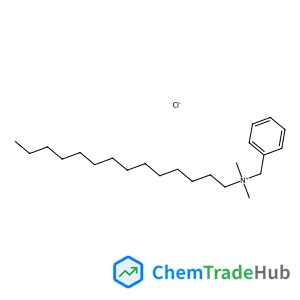

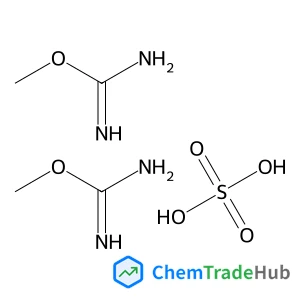
推荐供应商






免责声明
本页面提供的学术期刊信息仅供参考和研究使用。我们与任何期刊出版商均无关联,也不处理投稿事宜。如有投稿相关咨询,请直接联系相关期刊出版商。
如发现页面信息有误,请发送邮件至 support@chemtradehub.com 联系我们。我们将及时核实并处理您的问题。