


Enhancing the melt stability of polylactide stereocomplexes using a solid-state cross-linking strategy during a melt-blending process
文献信息
发布日期
2014-06-19
DOI
10.1039/C4PY00700J
影响因子
5.582
作者
Huili Liu, Dongyu Bai, Qin Zhang, Ke Wang, Hua Deng, Feng Chen, Qiang Fu
查看原文
摘要
Stereocomplexation between poly(L-lactide) (PLLA) and poly(D-lactide) (PDLA) provides a feasible route for improving the performance of polylactide (PLA), including mechanical strength, thermal stability and hydrolysis resistance. In recent years, several effective methods have been developed to prepare polylactide stereocomplexes (sc-PLA) from commercially available, linear, high-molecular-weight PLLA and PDLA. However, it is still a big challenge to attain pure sc-PLA in the melt-processed products because the prepared sc-PLA has a very poor melt stability, that is the ability to trigger the reformulation of stereocomplex (sc) crystallites after complete melting is significantly depressed, resulting in the formation of mixed homochiral (hc) and sc crystallites. Here we present a facile strategy to fabricate sc-PLA with good melt stability by low-temperature (180 °C) melt-blending of equimolar PLLA and PDLA in the presence of a trace amount (0.1–0.5 wt%) of a cross-linker. During the blending process, sc crystallites form rapidly, followed by a slight cross-linking of PLLA and PDLA chain couples in the mobile amorphous phase, whereas the chain couples in the crystalline phase hardly participate in the cross-linking reaction. The exclusive cross-linking of PLA chains in the amorphous phase not only allows for the introduction of abundant cross-linking points at the ends of the chain couples to prevent them from completely decoupling upon melting but also retains large amounts of long crystallizable PLA segments existing in the initially formed sc crystallites to impart the resulting sc-PLA with an excellent recrystallization ability upon cooling. The formation or reformulation of sc crystallites in the continuous melting and recrystallization process is found to be perfectly reversible, without any trace of hc crystallites.
期刊推荐
Current Opinion in Solid State & Materials Science
Crystallography Reports
Russian Journal of Organic Chemistry
Russian Journal of Bioorganic Chemistry
Russian Journal of Coordination Chemistry
Russian Journal of Applied Chemistry
Russian Chemical Bulletin
Chemistry Education Research and Practice

New Journal of Chemistry
Organic Process Research & Development
相关文献
Charge transport characteristics of a high-mobility diketopyrrolopyrrole-based polymer
Dae Sung Chung, Il Kang, Yun-Hi Kim, Soon-Ki Kwon
2013-07-08
Paper
DOI: 10.1039/C3CP52422A
Practical applications of small-angle neutron scattering
Martin J. Hollamby
2013-03-25
Perspective
DOI: 10.1039/C3CP50293G
Conformational preferences of furan- and thiophene-based arylamides: a combined computational and experimental study
Jhenny F. Galan, Chi Ngong Tang, Shubhashis Chakrabarty, Zhiwei Liu, Vojislava Pophristic
2013-05-08
Paper
DOI: 10.1039/C3CP50353D
Structure and Li+ dynamics of Sb-doped Li7La3Zr2O12 fast lithium ion conductors
S. Ramakumar, L. Satyanarayana, Sunkara V. Manorama, Ramaswamy Murugan
2013-05-15
Paper
DOI: 10.1039/C3CP50991E
Facile synthesis of novel Si nanoparticles–graphene composites as high-performance anode materials for Li-ion batteries
Min Zhou, Fan Pu, Zhao Wang, Tingwei Cai, Hao Chen, Haiyong Zhang, Shiyou Guan
2013-05-20
Paper
DOI: 10.1039/C3CP51276B
QM/MM surface-hopping dynamics of a bridged azobenzene derivative
2013-07-08
Paper
DOI: 10.1039/C3CP50606A
Biopolymer coated gold nanocrystals prepared using the green chemistry approach and their shape-dependent catalytic and surface-enhanced Raman scattering properties
Hui-Hsuan Hsieh, You-Cheng Hseu, Ko-Shao Chen, Gou-Jen Wang, Yi-Syuan Wei, Ko Hsin Chang, Yeu-Wei Harn
2013-05-07
Paper
DOI: 10.1039/C3CP50956G
Superior power density solid oxidefuel cells by enlarging the three-phase boundary region of a NiO–Ce0.8Gd0.2O1.9 composite anode through optimized surface structure
Daeil Yoon, Qing Su, Haiyan Wang, Arumugam Manthiram
2013-07-09
Paper
DOI: 10.1039/C3CP52679H
Extending the distance range accessed with continuous wave EPR with Gd3+spin probes at high magnetic fields
Devin T. Edwards, Zhidong Ma, Daniella Goldfarb
2013-05-15
Paper
DOI: 10.1039/C3CP43787F
Donor–acceptor–donor thienyl/bithienyl-benzothiadiazole/quinoxaline model oligomers: experimental and theoretical studies
João Pina, J. Seixas de Melo, D. Breusov, Ullrich Scherf
2013-08-08
Paper
DOI: 10.1039/C3CP52056K
您可能还喜欢
化合物问答
4,5-二甲基-2-硝基苯甲酸(CAS号:4315-14-4)的市场或研究趋势如何?
4,5-二甲基-2-硝基苯甲酸主要应用于制药、染料和农药等行业。由于其潜在的毒性,其市场趋势可能受到法规限制和环保考量的影响,推动了替代产品的研发。在研究领域,...
4315-14-44,5-Dimethyl-2-nitro...
化合物问答
处理直接黑22(CAS号:6473-13-8)时应注意哪些实验室安全事项?
处理直接黑22时应穿戴适当的个人防护装备(PPE),包括实验服、手套、护目镜和口罩。操作应在通风橱内进行,以避免吸入有害气体。如果发生泄漏,应立即清理,并使用大...
6473-13-82-Naphthalenesulfoni...
化合物问答
处理2,1,3-苯并噻二唑-4-基异氰酸酯(CAS号:342411-14-7)时应注意哪些实验室安全事项?
处理2,1,3-苯并噻二唑-4-基异氰酸酯时应注意以下安全事项:穿戴个人防护装备,如实验室外套、防护眼镜和手套;在通风橱中操作,确保良好的通风;保持实验室环境干...
342411-14-74-Isocyanato-2,1,3-b...
化合物问答
如何处理含有Δ-8,9-脱氢雌酮(CAS号:204077-66-7)的废料?
含有Δ-8,9-脱氢雌酮的废料需要进行适当的处理以确保环境和人体安全。首先,收集废液并存放于密封容器中,避免泄漏。其次,可以考虑将其转化为无害物质或通过专业处理...
204077-66-7Thioquinapiperifil d...
化合物问答
如何储存5-溴戊酸(CAS号:2067-33-6)?
5-溴戊酸应储存在阴凉、干燥、通风良好的环境中,避免阳光直射。建议在室温(约15-25°C)下保存,保持相对湿度低于60%。应使用密封的玻璃或塑料容器,并远离热...
2067-33-65-Bromopentanoic aci...
化合物问答
4-(甲基亚磺酰基)苯胺(CAS号:22865-62-9)应用于哪些行业?
4-(甲基亚磺酰基)苯胺在医药、聚合物和传感器等领域有一定的应用。在医药方面,它可以用作合成药物的中间体;在聚合物领域,可以作为合成特殊性能高分子材料的单体;在...
22865-62-94-Methylsulfinylanil...
化合物问答
什么是1-(2-FLUOROPHENYL)-5-METHYL-1H-PYRAZOLE-4-CARBOHYDRAZIDE(CAS号:618092-58-3)?
1-(2-氟苯基)-5-甲基-1H-吡唑-4-亚甲基肼是一种有机化合物,其分子式为C9H9FN3O。该化合物具有特定的物理化学性质,如熔点、沸点等,但具体值需查...
618092-58-31-(2-Fluorophenyl)-5...
化合物问答
Dauricumine(CAS号:345641-00-1)通常如何合成?
Dauricumine通常通过复杂的合成路线制备,涉及多个步骤,包括环化、氧化、卤化等反应。合成过程中使用了多种催化剂和试剂,例如金属催化剂、氧化剂等。产率通常...
345641-00-1(1R,1'S,5R,6'S,8'S)-...
化合物问答
5-氰基苯酞(CAS号:82104-74-3)安全吗?
5-氰基苯酞在正常使用条件下相对安全,但其具有一定的毒性,需谨慎操作。在实验或工业应用中,应采取适当的防护措施,如佩戴防护手套、护目镜和实验服,确保通风良好。误...
82104-74-31-Oxo-1,3-dihydro-2-...
化合物问答
2-Methyl-1-(phenylsulfonyl)-1H-pyrrolo[2,3-b]pyridin-5-amine(CAS号:1186502-59-9)安全吗?
该化合物在使用时需要谨慎操作。虽然其毒性和健康风险尚未完全明确,但建议在通风良好的环境中操作,并穿戴适当的个人防护装备,如手套和防护眼镜。
1186502-59-92-Methyl-1-(phenylsu...
来源期刊
Polymer Chemistry

CiteScore:
8.6
自引率:
7.3%
年发文量:
457
Polymer Chemistry welcomes submissions in all areas of polymer science that have a strong focus on macromolecular chemistry. Manuscripts may cover a broad range of fields, yet no direct application focus is required.
推荐化合物
![[4-(Isobutyrylamino)phenyl]boronic acid structure](https://cnstatic.chemtradehub.com/structs/874/874219-50-8-6ab5.webp "[4-(Isobutyrylamino)phenyl]boronic acid structure")
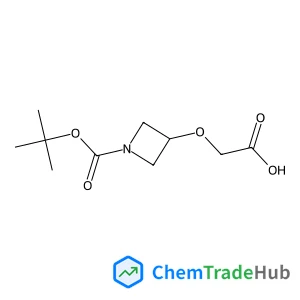
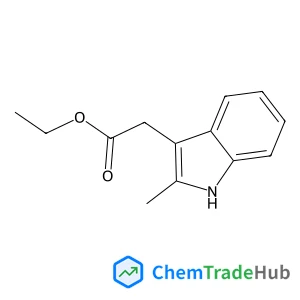
推荐供应商




免责声明
本页面提供的学术期刊信息仅供参考和研究使用。我们与任何期刊出版商均无关联,也不处理投稿事宜。如有投稿相关咨询,请直接联系相关期刊出版商。
如发现页面信息有误,请发送邮件至 support@chemtradehub.com 联系我们。我们将及时核实并处理您的问题。