


![3-(benzotriazol-1-yl)-N-[[2-[(3-bromophenyl)methoxy]phenyl]methylideneamino]propanamide structure](https://cnstatic.chemtradehub.com/structs/559/5595-78-8-0a32.webp "3-(benzotriazol-1-yl)-N-[[2-[(3-bromophenyl)methoxy]phenyl]methylideneamino]propanamide structure")
Solution processible hyperbranched inverse-vulcanized polymers as new cathode materials in Li–S batteries
文献信息
发布日期
2014-10-22
DOI
10.1039/C4PY01055H
影响因子
5.582
作者
Yangyang Wei, Xiang Li, Zhen Xu, Haiyan Sun, Li Peng, Zheng Liu, Chao Gao, Mingxia Gao
查看原文
摘要
Soluble inverse-vulcanized hyperbranched polymers (SIVHPs) were synthesized via thiol–ene addition of polymeric sulfur (S8) radicals to 1,3-diisopropenylbenzene (DIB). Benefiting from their branched molecular architecture, SIVHPs presented excellent solubility in polar organic solvents with an ultrahigh concentration of 400 mg mL−1. After end-capping by sequential click chemistry of thiol–ene and Menschutkin quaternization reactions, we obtained water soluble SIVHPs for the first time. The sulfur-rich SIVHPs were employed as solution processible cathode-active materials for Li–S batteries, by facile fluid infiltration into conductive frameworks of graphene-based ultralight aerogels (GUAs). The SIVHPs-based cells showed high initial specific capacities of 1247.6 mA h g−1 with 400 charge–discharge cycles. The cells also demonstrated an excellent rate capability and a considerable depression of shuttle effect with stable coulombic efficiency of around 100%. The electrochemical performance of SIVHP in Li–S batteries overwhelmed the case of neat sulfur, due to the chemical fixation of sulfur. The combination of high solubility, structure flexibility, and superior electrochemical performance opens a door for the promising application of SIVHPs.
期刊推荐

Colloid Journal

Heteroatom Chemistry
Acta Metallurgica Sinica-English Letters
Journal of Asian Natural Products Research

Topics in Catalysis

Herald of the Russian Academy of Sciences

Critical Reviews in Solid State and Materials Sciences

Bioorganic & Medicinal Chemistry Letters
Biocatalysis and Biotransformation

Journal of the Indian Institute of Science
相关文献
Thermolysis of fluorinated cycloalkylidene fulgides yields a new class of photochromic compounds
Mason A. Wolak, Nathan B. Gillespie, Robert R. Birge, Watson J. Lees
2003-03-27
Communication
DOI: 10.1039/B300010A
Versatile synthesis of nanometer sized hollow silica spheres
Jeroen J. L. M. Cornelissen, Eric. F. Connor, Ho-Cheol Kim, Victor Y. Lee, Teddie Magibitang, Philip M. Rice, Willi Volksen, Linda K. Sundberg, Robert D. Miller
2003-03-21
Communication
DOI: 10.1039/B212811J
CuCl catalyst heterogenized on diamide immobilized SBA-15 for efficient oxidative carbonylation of methanol to dimethylcarbonate
Yong Cao, Jun-Cheng Hu, Ping Yang, Wei-Lin Dai, Kang-Nian Fan
2003-03-10
Communication
DOI: 10.1039/B301375H
A reductive recycle strategy for the facile synthesis of molybdenum(VI) alkylidyne catalysts for alkyne metathesis
Wei Zhang, Stefan Kraft, Jeffrey S. Moore
2003-02-27
Communication
DOI: 10.1039/B212405J
An efficient synthesis of new fluorinated uracil derivatives
Santos Fustero, Esther Salavert, Juan F. Sanz-Cervera, Julio Piera, Amparo Asensio
2003-02-27
Communication
DOI: 10.1039/B300796K
Bromobis(triphenylphosphine)(N-succinimide)palladium(ii) as a novel catalyst for Stille cross-coupling reactions
Catherine M. Crawforth, Suzanne Burling, Ian J. S. Fairlamb, Richard J. K. Taylor, Adrian C. Whitwood
2003-07-28
Communication
DOI: 10.1039/B304960D
A mono-TTF-annulated porphyrin as a fluorescence switch
Hongchao Li, Jan O. Jeppesen, Eric Levillain, Jan Becher
2003-02-27
Communication
DOI: 10.1039/B212456D
Pentapyrrolic calix[4]pyrrole
Colin N. Warriner, Philip A. Gale, Mark E. Light, Michael B. Hursthouse
2003-06-25
Communication
DOI: 10.1039/B303959E
Solvent-dependent 44 square grid and 64.82 NbO frameworks formed by Cu(Pyac)2 (bis[3-(4-pyridyl)pentane-2,4-dionato]copper(ii))
Banglin Chen, Frank R. Fronczek, Andrew W. Maverick
2003-07-28
Communication
DOI: 10.1039/B305457H
Synthesis of protein–nucleic acid conjugates by expressed protein ligation
Marina Lovrinovic, Ralf Seidel, Hendrik Schroeder, Oliver Seitz, Martin Engelhard, Roger S. Goody, Christof M. Niemeyer
2003-03-10
Communication
DOI: 10.1039/B212294D
您可能还喜欢
化合物问答
甲基双烯双酮(CAS号:5173-46-6)通常如何合成?
甲基双烯双酮可以通过多种途径合成。一种常见的合成方法是通过甲基化和环化反应,先由4-甲基-9-烯-1,3-二酮合成,然后进行环化反应得到目标产物。具体的合成路线...
5173-46-6Estra-4,9-diene-3,17...
化合物问答
如何处理含有tert-butyl 3,5-difluorobenzoate(CAS号:467442-11-1)的废料?
处理含有tert-butyl 3,5-difluorobenzoate(CAS号:467442-11-1)的废液时,应首先收集并密封,避免泄漏。随后,建议通过焚...
467442-11-12-Methyl-2-propanyl ...
化合物问答
4-二甲氧基甲基-2-(三氟甲基)嘧啶(CAS号:878760-47-5)通常如何合成?
4-二甲氧基甲基-2-(三氟甲基)嘧啶通常通过三氟甲基化反应合成。首先,将2-氯嘧啶与三氟甲基锂在惰性溶剂中反应,然后将得到的三氟甲基化中间体与二甲氧基甲基化试...
878760-47-54-(Dimethoxymethyl)-...
化合物问答
WRW4(CAS号:878557-55-2)的主要用途是什么?
WRW4主要应用于科学研究领域,尤其是在合成化学和有机合成方面。由于其特殊的化学性质,它可能被用于特定的化学反应或合成过程。
878557-55-2WRW4
化合物问答
什么是6-O-(三异丙基硅基)-D-葡萄烯糖(CAS号:137915-37-8)?
6-O-(三异丙基硅基)-D-葡萄烯糖是一种有机化合物,化学名为1,5-Anhydro-2-deoxy-6-O-(triisopropylsilyl)-D-ar...
137915-37-81,5-Anhydro-2-deoxy-...
化合物问答
N-Benzyl-N,N-dimethyl-2-phenoxyethanaminium(CAS号:7181-73-9)的主要用途是什么?
N-Benzyl-N,N-dimethyl-2-phenoxyethanaminium在有机合成中被用作保护基团,可以用于保护氨基,提高反应的选择性和产率。此外...
7181-73-9N-Benzyl-N,N-dimethy...
化合物问答
什么是3-(Cyclohex-1-en-1-yl)acrylic acid(CAS号:56453-88-4)?
3-(Cyclohex-1-en-1-yl)acrylic acid,简称3-环己烯-1-烯丙酸,是一种含有环己烯基团的丙烯酸衍生物,用于合成其他化合物或作为有...
56453-88-43-(Cyclohex-1-en-1-y...
化合物问答
如何储存(1R)-7-fluoro-1,2,3,4-tetrahydronaphthalen-1-amine(CAS号:1055949-62-6)?
应将(1R)-7-氟-1,2,3,4-四氢萘胺储存于阴凉、干燥、通风良好的地方,远离火源和热源。避免与氧化剂、酸类接触。使用合适的容器,密封保存。
1055949-62-6(1R)-7-Fluoro-1,2,3,...
化合物问答
3-甲基苯并呋喃-2-羧酸(CAS号:24673-56-1)的主要用途是什么?
3-甲基苯并呋喃-2-羧酸主要用作合成其他化合物的中间体,如药物合成、有机合成等领域。此外,该化合物在某些领域作为化学试剂或分析试剂使用。
24673-56-13-Methyl-1-benzofura...
化合物问答
孕烷醇酮(CAS号:128-20-1)适用哪些法规指南?
孕烷醇酮(CAS号:128-20-1)需遵守GHS(全球化学品统一分类和标签制度)的相关分类和标签要求,主要涉及健康危害、环境危害和物理化学危害。此外,还需要遵...
128-20-1(3alpha,5beta)-3-Hyd...
来源期刊
Polymer Chemistry

CiteScore:
8.6
自引率:
7.3%
年发文量:
457
Polymer Chemistry welcomes submissions in all areas of polymer science that have a strong focus on macromolecular chemistry. Manuscripts may cover a broad range of fields, yet no direct application focus is required.
推荐化合物
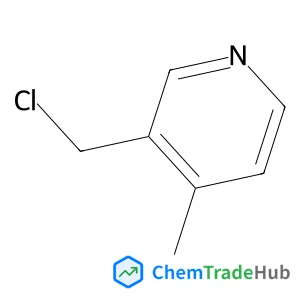
![1-{[5-(4,4,5,5-Tetramethyl-1,3,2-dioxaborolan-2-yl)-2-thienyl]methyl}piperidine structure](https://cnstatic.chemtradehub.com/structs/121/1218790-44-3-baef.webp "1-{[5-(4,4,5,5-Tetramethyl-1,3,2-dioxaborolan-2-yl)-2-thienyl]methyl}piperidine structure")
推荐供应商



免责声明
本页面提供的学术期刊信息仅供参考和研究使用。我们与任何期刊出版商均无关联,也不处理投稿事宜。如有投稿相关咨询,请直接联系相关期刊出版商。
如发现页面信息有误,请发送邮件至 support@chemtradehub.com 联系我们。我们将及时核实并处理您的问题。