


Synthesis of poly(spirosilabifluorene) copolymers and their improved stability in blue emitting polymer LEDs over non-spiro analogs
文献信息
发布日期
2015-04-01
DOI
10.1039/C4PY01418A
影响因子
5.582
作者
Jeffrey J. McDowell, Dong Gao, Dwight S. Seferos, Geoffrey Ozin
查看原文
摘要
We report herein a unique deep blue emitting copolymer, poly(3,6-dimethoxy-9.9′-dihexylsilafluorene-co-3.6-dimethoxy-2′,3′,6′,7′-tetrahexyloxy-9,9-spiro-9-silabifluorene) (PHSSF-co-PDHSF), which exhibits brilliant solid state blue luminescence, high quantum efficiency, excellent solubility and thermal stability. We have found that using PHSSF-co-PDHSF copolymers with large volume fractions of spirosilabifluorene as the emissive layer in OLEDs correlates to more stable EL intensity and have improved lifetimes over non-spiro poly(silafluorene) devices. The HSSF monomer is prepared via a two-part procedure, with each part resulting in one of two biphenyl segments which combines in a final cyclization step involving tetrachlorosilane. One segment possesses two bromide groups necessary for the polymerization. We utilized an efficient nickel catalyzed polymerization based on diarylmagnesate monomers to create PHSSF-co-PDHSF in good yield with number average molecular weights exceeding 50 kg mol−1 with a PDI = 1.8. The polymerization was complete in less than 30 min. For PHSSF-co-PDHSF OLED devices, the maximum irradiance of the device was 40 W m−2 at a current density of 60 mA cm−2 and EL maximum centered at 410 nm. The maximum device external quantum efficiency was 2.9% when operating at 38 mA cm−2. To measure OLED stability, we monitored normalized EL intensity for both PHSSF-co-PDHSF and PDHSF devices. Over the course of 10 h, the EL intensity of the PDHSF device drops 20% more than the PHSSF-co-PDHSF device when operating at 6 mA cm−2
期刊推荐

Coloration Technology
Journal of Enzyme inhibition and Medicinal Chemistry
Molecular Diversity

Photochemical & Photobiological Sciences

Physical Chemistry Chemical Physics
Current Pharmaceutical Biotechnology
Faraday Discussions

Angewandte Chemie International Edition
Journal of Medical Biochemistry
Mini-Reviews in Medicinal Chemistry
相关文献
Recent advances in metal–organic framework-based photoelectrochemical and electrochemiluminescence biosensors
Jiao Qin, Jinjin Li, Haisen Zeng, Juan Tang, Dianping Tang
2023-03-22
Critical Review
DOI: 10.1039/D3AN00222E
Determination of vitamin D3 conjugated metabolites: a complementary view on hydroxylated metabolites
Roger Bouillon
2022-12-20
Paper
DOI: 10.1039/D2AN01982E
Highly sensitive and specific detection of silver ions using a dual-color fluorescence co-localization strategy
Chenhui Hao, Jinxiu Wei, Shenfei Zong, Zhuyuan Wang, Hong Wang, Yiping Cui
2023-01-06
Paper
DOI: 10.1039/D2AN01662A
A regenerable electrochemical sensor for electro-inactive cyclovirobuxine D detection in biological samples
Yongliang Dong, Jiali Zhai, Ziwei Zhang, Can Peng, Yunjing Zhang, Zipin Zhang
2023-01-27
Paper
DOI: 10.1039/D2AN01859D
Target-activated T7 transcription circuit-mediated multiple cycling signal amplification for monitoring of flap endonuclease 1 activity in cancer cells
Jin-zhi Zhang, Ning-ning Zhao, Zi-yue Wang, Juan Hu
2023-05-12
Paper
DOI: 10.1039/D3AN00604B
An aptamer array for discriminating tetracycline antibiotics based on binding-enhanced intrinsic fluorescence
Yichen Zhao, Biwen Gao, Yijing Chen, Juewen Liu
2023-03-06
Paper
DOI: 10.1039/D3AN00154G
Reflective epoxy resin/chitosan/PAA composite-functionalized fiber-optic interferometric probe sensor for sensitive heavy metal ion detection
Minglu Yan, Yang Li, Xin Kang, Zaikun Zhang, Yangyang Li, Man Jiang
2023-01-21
Paper
DOI: 10.1039/D2AN01740G
The facile activation of graphite for the improved determination of dopamine, rutin and acetamidophenol
Yanxue Xu, Guihua Chen, Yunting Qin
2023-02-02
Paper
DOI: 10.1039/D2AN02074B
Smartphone-based microplate reader for high-throughput quantitation of disease markers in serum
Rong Deng, Xiaoxin Chao, Haiqin Li, Xiaochun Li, Zehua Yang
2022-12-14
Paper
DOI: 10.1039/D2AN01571D
您可能还喜欢
化合物问答
如何储存1,2-环己二酮环乙缩醛(CAS号:4746-96-7)?
1,2-环己二酮环乙缩醛应储存在阴凉、干燥、通风良好的地方,避免阳光直射。建议使用密封容器保存,并保持环境温度在室温范围内,远离火源和热源。
4746-96-71,4-Dioxaspiro[4.5]d...
化合物问答
Ecopladib(CAS号:381683-92-7)的市场或研究趋势如何?
Ecopladib作为一种新型的药物,主要应用于治疗高胆固醇等疾病。目前,市场和研究趋势显示,Ecopladib因其独特的药理作用而受到关注。随着对心血管疾病治...
381683-92-7Ecopladib
化合物问答
2,3-Dimethyl-3H-imidazo[4,5-c]pyridine(CAS号:52538-09-7)通常如何合成?
2,3-二甲基-3H-咪唑[4,5-c]吡啶通常通过咪唑和2,3-二甲基吡啶的缩合反应合成。具体来说,将咪唑和2,3-二甲基吡啶在适当的溶剂中进行加热或加压反应...
52538-09-72,3-Dimethyl-3H-imid...
化合物问答
2,3,4,5-tetrahydro-1H-3-苯并氮杂环;盐酸盐(CAS号:17379-01-0)的市场或研究趋势如何?
该化合物在药物化学和有机合成中有一定的应用。近年来,随着对新型药物化合物的需求增加,该化合物的研究趋势主要集中在探索其生物活性,尤其是其在神经系统疾病治疗中的潜...
17379-01-02,3,4,5-Tetrahydro-1...
68-90-6(2-Ethyl-1-benzofura...
化合物问答
如何储存盐酸甘氨酸丁酯(CAS号:13048-99-2)?
盐酸甘氨酸丁酯应储存在阴凉、干燥、通风良好的地方,避免阳光直射和高温环境,温度应控制在25℃以下。储存容器应密封,避免与空气中的水分和酸性物质接触,以防发生水解...
13048-99-2Butyl glycinate hydr...
化合物问答
什么是2-Iodo-N,N-dimethylbenzamide(CAS号:54616-46-5)?
2-碘-N,N-二甲基苯胺是一种有机化合物,化学名为2-Iodo-N,N-dimethylbenzamide。其分子式为C<sub>9</sub>H<sub>1...
54616-46-52-Iodo-N,N-dimethylb...
16817-90-6N-Cyclohexylglycinam...
化合物问答
5-溴-2-(4H-1,2,4-三唑-4-基)吡啶(CAS号:959240-99-4)的市场或研究趋势如何?
随着医药、农药和新材料领域的发展,该化合物作为关键中间体的应用日益增多。特别是在药物合成中,由于其独特的化学性质,可以用于合成多种药物分子。未来的研究趋势可能集...
959240-99-45-Bromo-2-(4H-1,2,4-...
化合物问答
2,4-二溴-6-三氟甲基嘧啶(CAS号:785778-00-9)通常如何合成?
2,4-二溴-6-三氟甲基嘧啶通常通过溴化反应合成。首先,将6-三氟甲基嘧啶与溴化剂(如液溴)在适当的溶剂(如二氯甲烷、四氢呋喃)中反应,加入适当的催化剂(如四...
785778-00-92,4-Dibromo-6-(trifl...
来源期刊
Polymer Chemistry

CiteScore:
8.6
自引率:
7.3%
年发文量:
457
Polymer Chemistry welcomes submissions in all areas of polymer science that have a strong focus on macromolecular chemistry. Manuscripts may cover a broad range of fields, yet no direct application focus is required.
推荐化合物
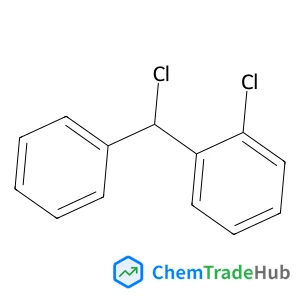
推荐供应商





免责声明
本页面提供的学术期刊信息仅供参考和研究使用。我们与任何期刊出版商均无关联,也不处理投稿事宜。如有投稿相关咨询,请直接联系相关期刊出版商。
如发现页面信息有误,请发送邮件至 support@chemtradehub.com 联系我们。我们将及时核实并处理您的问题。