


Preparation and evaluation of nanocellulose–gold nanoparticle nanocomposites for SERS applications
文献信息
发布日期
2015-06-09
DOI
10.1039/C5AN00606F
影响因子
4.616
作者
查看原文
摘要
Nanocellulose is of research interest due to its extraordinary optical, thermal, and mechanical properties. The incorporation of guest nanoparticles into nanocellulose substrates enables production of novel nanocomposites with a broad range of applications. In this study, gold nanoparticle/bacterial cellulose (AuNP/BC) nanocomposites were prepared and evaluated for their applicability as surface-enhanced Raman scattering (SERS) substrates. The nanocomposites were prepared by citrate mediated in situ reduction of Au3+ in the presence of a BC hydrogel at 303 K. Both the size and morphology of the AuNPs were functions of the HAuCl4 and citrate concentrations. At high HAuCl4 concentrations, Au nanoplates form within the nanocomposites and are responsible for high SERS enhancements. At lower HAuCl4 concentrations, uniform nanospheres form and the SERS enhancement is dependent on the nanosphere size. The time-resolved increase in the SERS signal was probed as a function of drying time with SERS ‘hot-spots’ primarily forming in the final minutes of nanocomposite drying. The application of the AuNP/BC nanocomposites for detection of the SERS active dyes MGITC and R6G as well as the environmental contaminant atrazine is illustrated as is its use under low and high pH conditions. The results indicate the broad applicability of this nanocomposite for analyte detection.
期刊推荐

Science Progress

Pharmacological Reviews

Journal of Organometallic Chemistry

European Journal of Wood and Wood Products

Journal of Heterocyclic Chemistry
Journal of Medicinal Chemistry

Proceedings of the National Academy of Sciences of the United States of America

Israel Journal of Chemistry

Journal of Physics and Chemistry of Solids

Pure and Applied Chemistry
相关文献
Elastic and electronic origins of strain stabilized photovoltaic γ-CsPbI3
Zhigang Li, Yan Qin, Liyuan Dong, Kai Li, Yang Qiao, Wei Li
2020-05-22
Paper
DOI: 10.1039/D0CP01649G
Interfacial solvation and slow transport of hydrated excess protons in non-ionic reverse micelles
Zhefu Li, Gregory A. Voth
2020-03-04
Paper
DOI: 10.1039/D0CP00378F
Biomolecule–polymer hybrid compartments: combining the best of both worlds
Claire E. Meyer, Sarah-Luise Abram, Ioana Craciun, Cornelia G. Palivan
2020-04-14
Perspective
DOI: 10.1039/D0CP00693A
Mixed uranyl and neptunyl cation–cation interaction-driven clusters: structures, energetic stability, and nuclear quadrupole interactions
Paweł Tecmer, Frank Schindler, Aleksandra Leszczyk, Katharina Boguslawski
2020-05-02
Paper
DOI: 10.1039/D0CP01068E
Direct imaging of direction-controlled molecular rotational wave packets created by a polarization-skewed double-pulse
Kenta Mizuse, Naoya Sakamoto, Romu Fujimoto, Yasuhiro Ohshima
2020-04-22
Paper
DOI: 10.1039/D0CP01084G
UV-visible absorption spectrum of FAD and its reduced forms embedded in a cryptochrome protein
Karno Schwinn, Nicolas Ferré, Miquel Huix-Rotllant
2020-05-07
Paper
DOI: 10.1039/D0CP01714K
Role of image charges in ionic liquid confined between metallic interfaces
Samuel Ntim, Marialore Sulpizi
2020-03-20
Paper
DOI: 10.1039/D0CP00409J
Correlation effects in parallel tempering and the role of the swapping frequency
2020-04-15
Paper
DOI: 10.1039/C9CP06772H
X-ray photoelectron spectroscopy of piperidinium ionic liquids: a comparison to the charge delocalised pyridinium analogues
Peter Licence, Chi-Linh Do-Thanh, Huimin Luo, Sheng Dai
2020-05-06
Paper
DOI: 10.1039/D0CP01454K
您可能还喜欢
化合物问答
如何储存1,2-环己二酮环乙缩醛(CAS号:4746-96-7)?
1,2-环己二酮环乙缩醛应储存在阴凉、干燥、通风良好的地方,避免阳光直射。建议使用密封容器保存,并保持环境温度在室温范围内,远离火源和热源。
4746-96-71,4-Dioxaspiro[4.5]d...
化合物问答
Ecopladib(CAS号:381683-92-7)的市场或研究趋势如何?
Ecopladib作为一种新型的药物,主要应用于治疗高胆固醇等疾病。目前,市场和研究趋势显示,Ecopladib因其独特的药理作用而受到关注。随着对心血管疾病治...
381683-92-7Ecopladib
化合物问答
2,3-Dimethyl-3H-imidazo[4,5-c]pyridine(CAS号:52538-09-7)通常如何合成?
2,3-二甲基-3H-咪唑[4,5-c]吡啶通常通过咪唑和2,3-二甲基吡啶的缩合反应合成。具体来说,将咪唑和2,3-二甲基吡啶在适当的溶剂中进行加热或加压反应...
52538-09-72,3-Dimethyl-3H-imid...
化合物问答
2,3,4,5-tetrahydro-1H-3-苯并氮杂环;盐酸盐(CAS号:17379-01-0)的市场或研究趋势如何?
该化合物在药物化学和有机合成中有一定的应用。近年来,随着对新型药物化合物的需求增加,该化合物的研究趋势主要集中在探索其生物活性,尤其是其在神经系统疾病治疗中的潜...
17379-01-02,3,4,5-Tetrahydro-1...
68-90-6(2-Ethyl-1-benzofura...
化合物问答
如何储存盐酸甘氨酸丁酯(CAS号:13048-99-2)?
盐酸甘氨酸丁酯应储存在阴凉、干燥、通风良好的地方,避免阳光直射和高温环境,温度应控制在25℃以下。储存容器应密封,避免与空气中的水分和酸性物质接触,以防发生水解...
13048-99-2Butyl glycinate hydr...
化合物问答
什么是2-Iodo-N,N-dimethylbenzamide(CAS号:54616-46-5)?
2-碘-N,N-二甲基苯胺是一种有机化合物,化学名为2-Iodo-N,N-dimethylbenzamide。其分子式为C<sub>9</sub>H<sub>1...
54616-46-52-Iodo-N,N-dimethylb...
16817-90-6N-Cyclohexylglycinam...
化合物问答
5-溴-2-(4H-1,2,4-三唑-4-基)吡啶(CAS号:959240-99-4)的市场或研究趋势如何?
随着医药、农药和新材料领域的发展,该化合物作为关键中间体的应用日益增多。特别是在药物合成中,由于其独特的化学性质,可以用于合成多种药物分子。未来的研究趋势可能集...
959240-99-45-Bromo-2-(4H-1,2,4-...
化合物问答
2,4-二溴-6-三氟甲基嘧啶(CAS号:785778-00-9)通常如何合成?
2,4-二溴-6-三氟甲基嘧啶通常通过溴化反应合成。首先,将6-三氟甲基嘧啶与溴化剂(如液溴)在适当的溶剂(如二氯甲烷、四氢呋喃)中反应,加入适当的催化剂(如四...
785778-00-92,4-Dibromo-6-(trifl...
来源期刊
Analyst

CiteScore:
7.8
自引率:
5.6%
年发文量:
653
Analyst publishes analytical and bioanalytical research that reports premier fundamental discoveries and inventions, and the applications of those discoveries, unconfined by traditional discipline barriers.
推荐化合物
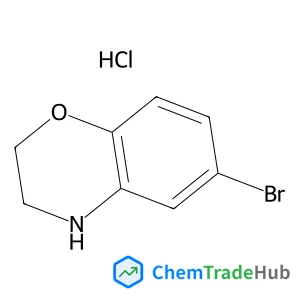
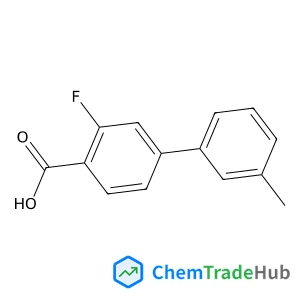
推荐供应商


免责声明
本页面提供的学术期刊信息仅供参考和研究使用。我们与任何期刊出版商均无关联,也不处理投稿事宜。如有投稿相关咨询,请直接联系相关期刊出版商。
如发现页面信息有误,请发送邮件至 support@chemtradehub.com 联系我们。我们将及时核实并处理您的问题。