


Improvement of the gas cluster ion beam-(GCIB)-based molecular secondary ion mass spectroscopy (SIMS) depth profile with O2+ cosputtering
文献信息
发布日期
2016-03-08
DOI
10.1039/C5AN02677F
影响因子
4.616
作者
Hua-Yang Liao, Kang-Yi Lin, Hsun-Yun Chang, Ding-Yuan Kuo, Yun-Wen You
查看原文
摘要
Over the last decade, cluster ion beams have displayed their capability to analyze organic materials and biological specimens. Compared with atomic ion beams, cluster ion beams non-linearly enhance the sputter yield, suppress damage accumulation and generate high mass fragments during sputtering. These properties allow successful Secondary Ion Mass Spectroscopy (SIMS) analysis of soft materials beyond the static limit. Because the intensity of high mass molecular ions is intrinsically low, enhancing the intensity of these secondary ions while preserving the sample in its original state is the key to highly sensitive molecular depth profiles. In this work, bulk poly(ethylene terephthalate) (PET) was used as a model material and analyzed using Time-of-Flight SIMS (ToF-SIMS) with a pulsed Bi32+ primary ion. The optimized hardware of a 10 kV Ar2500+ Gas Cluster Ion Beam (GCIB) with a low kinetic energy (200–500 V) oxygen ion (O2+) as a cosputter beam was employed for generating depth profiles and for examining the effect of beam parameters. The results were then quantitatively analyzed using an established erosion model. It was found that the ion intensity of the PET monomer ([M + H]+) and its large molecular fragment ([M − C2H4O + H]+) steadily declined during single GCIB sputtering, with distortion of the distribution information. However, under an optimized GCIB-O2+ cosputter, the secondary ion intensity quickly reached a steady state and retained >95% intensity with respect to the pristine surface, although the damage cross-section was larger than that of single GCIB sputtering. This improvement was due to the oxidation of molecules and the formation of –OH groups that serve as proton donors to particles emitted from the surface. As a result, the ionization yield was enhanced and damage to the chemical structure was masked. Although O2+ is known to alter the chemical structure and cause damage accumulation, the concurrently used GCIB could sufficiently remove the surface layer and allow the damage to be masked by the enhanced ionization yield when the ion-solid interaction volume was kept shallow with a low O2+ energy. This low O2+ energy (200 V) cosputtering also produced a smoother surface than a single GCIB. Because the oxidized species were produced by O2+ and removed by GCIB simultaneously, a sufficiently high O2+ current density was required to produce adequate enhancements. Therefore, it was found that 10 kV with 2 × 10⁻⁶ A per cm2 Ar2500+ and 200 V with 3.2 × 10⁻⁴ A per cm2 O2+ produced the best profile.
期刊推荐
Journal of Enzyme inhibition and Medicinal Chemistry
Journal of Medical Biochemistry
Faraday Discussions

Physical Chemistry Chemical Physics

Contact Lens & Anterior Eye
Molecules
Foundations of Chemistry
Current Pharmaceutical Biotechnology
Environmental Toxicology and Pharmacology
Nature Reviews Drug Discovery
相关文献
The phenomenon of “dead” metal in heterogeneous catalysis: opportunities for increasing the efficiency of carbon-supported metal catalysts
Roman M. Mironenko
2023-11-20
Review Article
DOI: 10.1039/D3SC04691E
13Ccarbene nuclear magnetic resonance chemical shift analysis confirms CeIVC double bonding in cerium(iv)–diphosphonioalkylidene complexes
Cameron F. Baker, John A. Seed, Ralph W. Adams, Daniel Lee, Stephen T. Liddle
2023-12-06
Edge Article
DOI: 10.1039/D3SC04449A
O–H bond activation of β,γ-unsaturated oximes via hydrogen atom transfer (HAT) and photoredox dual catalysis
Chen Zhu, Xiangyu Chen, Huifeng Yue, Tengfei Ji, Yiqiao Ma, Yuanyuan Cao, Rajesh Kancherla, Magnus Rueping
2023-11-30
Edge Article
DOI: 10.1039/D3SC04410F
Cu-based catalyst designs in CO2 electroreduction: precise modulation of reaction intermediates for high-value chemical generation
Liangyiqun Xie, Yujing Jiang, Wenlei Zhu, Shichao Ding, Yang Zhou, Jun-Jie Zhu
2023-10-16
Review Article
DOI: 10.1039/D3SC04353C
Ultrasensitive detection of aromatic water pollutants through protein immobilization driven organic electrochemical transistors
Subhankar Sahu, Lokesh Kumar, Sumita Das, Dipti Gupta, Ruchi Anand
2023-12-13
Edge Article
DOI: 10.1039/D3SC03509C
Dipyrrolonaphthyridinedione – (still) a mysterious cross-conjugated chromophore
Bartłomiej Sadowski, Daniel T. Gryko
2023-11-10
Perspective
DOI: 10.1039/D3SC05272A
Hydrogen spillover and substrate–support hydrogen bonding mediate hydrogenation of phenol catalyzed by palladium on reducible metal oxides
Yeongseo An, Sayak Banerjee
2023-11-24
Edge Article
DOI: 10.1039/D3SC02913A
EnzymeMap: curation, validation and data-driven prediction of enzymatic reactions
Daniel Probst, William H. Green, Georg K. H. Madsen
2023-11-22
Edge Article
DOI: 10.1039/D3SC02048G
From non-conductive MOF to proton-conducting metal-HOFs: a new class of reversible transformations induced by solvent-free mechanochemistry
Marcin Oszajca, Dariusz Matoga
2023-11-27
Edge Article
DOI: 10.1039/D3SC04401G
您可能还喜欢
化合物问答
6-氯-2H-1,4-苯并噁嗪-3(4H)-酮(CAS号:7652-29-1)应用于哪些行业?
6-氯-2H-1,4-苯并噁嗪-3(4H)-酮主要应用于医药、农药和聚合物等领域。在医药领域,该化合物可用于合成抗菌药物;在农药领域,可用作杀虫剂的中间体;在聚...
7652-29-16-Chloro-2H-1,4-benz...
化合物问答
活性氧化铝(CAS号:1302-74-5)应用于哪些行业?
活性氧化铝广泛应用于医药、聚合物、传感器、半导体和催化等领域。在医药行业,活性氧化铝用作吸附剂和干燥剂,有助于去除杂质和水分。在聚合物行业,它用作增白剂和抗结块...
1302-74-5aluminum;trihydrate
化合物问答
什么是硅胶(CAS号:112926-00-8)?
硅胶(Silica gel, pptd.,cryst.-free)是一种无定形、多孔的硅酸盐材料,主要成分为二氧化硅(SiO₂)。其结构由硅氧四面体构成,通过酸...
112926-00-8Silica gel, pptd.,cr...
化合物问答
二乙基甲基一氢硅烷(CAS号:760-32-7)的主要用途是什么?
二乙基甲基一氢硅烷主要用于有机合成、表面处理以及作为溶剂。它还被用作合成其他硅烷化合物的原料,以及在涂料、粘合剂和密封剂中的应用。
760-32-7Diethyl(methyl)silan...
化合物问答
在合成中是否有N-花生四烯酰基甘氨酸(CAS号:179113-91-8)的替代品?
在合成过程中,可以考虑使用类似结构的化合物作为替代品,例如N-亚油酰基甘氨酸或N-花生二烯酰基甘氨酸。这些替代品在结构上有类似的双键位置,但可能具有不同的物理化...
179113-91-8Glycine, N-[(5Z,8Z,1...
化合物问答
在合成中是否有1-(4-甲氧基苯基)丙烷-1,2-二酮(CAS号:10557-27-4)的替代品?
在合成过程中,可以考虑使用类似结构的化合物作为替代品,例如1-(3-甲氧基苯基)丙烷-1,2-二酮或1-(4-羟基苯基)丙烷-1,2-二酮。这些替代品具有相似的...
10557-27-41-(4-Methoxyphenyl)p...
化合物问答
N-(4-氨基-1-苄基-3-羟基-5-苯基戊基)-3-甲基-2-(2-氧代四氢嘧啶-1-基)-丁酰胺 5-氧代吡咯烷-2-甲酸(CAS号:192726-06-0)通常如何合成?
该化合物通常通过一系列复杂的有机合成步骤获得。首先,通过芳香族化合物的羟基化反应获得羟基化产物,然后通过酰化反应形成酰胺中间体,最后通过环化反应得到目标产物。常...
192726-06-05-Oxo-L-proline - (2...
化合物问答
(S)-2-氨基-3-喹啉-2-丙酸(CAS号:161513-46-8)的市场或研究趋势如何?
该化合物作为生物活性化合物,尤其是在药物化学领域表现出色。近年来,随着对新型抗炎、抗病毒和抗癌药物的研究增加,其市场和研究趋势持续增长。此外,其在神经科学领域的...
161513-46-8(S)-2-Amino-3-quinol...
化合物问答
核黄素磷酸钠(CAS号:130-40-5)安全吗?
核黄素磷酸钠在常规使用条件下安全,但高剂量可能引起刺激性反应。操作时需佩戴防护手套和护目镜,避免吸入粉尘。若接触皮肤或眼睛,应立即用大量清水冲洗。急救时需根据接...
130-40-5Sodium 1-deoxy-1-(7,...
化合物问答
盐酸丙胺卡因杂质A(EP) 标准品(CAS号:19281-31-3)通常如何合成?
盐酸丙胺卡因杂质A(EP) 标准品可通过重氮化反应和随后的酰胺化反应合成。首先,利用氯化反应将苯环上的氢原子转化为氯原子,然后通过芳香族重氮化反应引入氨基,最后...
19281-31-32-Chloro-N-(2-methyl...
来源期刊
Analyst

CiteScore:
7.8
自引率:
5.6%
年发文量:
653
Analyst publishes analytical and bioanalytical research that reports premier fundamental discoveries and inventions, and the applications of those discoveries, unconfined by traditional discipline barriers.
推荐化合物
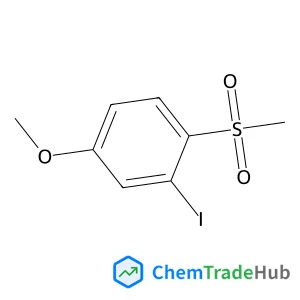
![1-[3-(4-Morpholinylsulfonyl)phenyl]methanamine structure](https://cnstatic.chemtradehub.com/structs/933/933989-32-3-51af.webp "1-[3-(4-Morpholinylsulfonyl)phenyl]methanamine structure")
推荐供应商






免责声明
本页面提供的学术期刊信息仅供参考和研究使用。我们与任何期刊出版商均无关联,也不处理投稿事宜。如有投稿相关咨询,请直接联系相关期刊出版商。
如发现页面信息有误,请发送邮件至 support@chemtradehub.com 联系我们。我们将及时核实并处理您的问题。