






Vibronic energy relaxation approach highlighting deactivation pathways in carotenoids
文献信息
发布日期
2015-06-30
DOI
10.1039/C5CP00856E
影响因子
3.676
作者
Vytautas Balevičius, Jr., Arpa Galestian Pour, Janne Savolainen, Craig N. Lincoln, Vladimír Lukeš, Eberhard Riedle, Darius Abramavicius, Jürgen Hauer
查看原文
摘要
Energy relaxation between two electronic states of a molecule is mediated by a set of relevant vibrational states. We describe this fundamental process in a fully quantum mechanical framework based on first principles. This approach explains population transfer rates as well as describes the entire transient absorption signal as vibronic transitions between electronic states. By applying this vibronic energy relaxation approach to carotenoids, we show that β-carotene's transient absorption signal can be understood without invoking the intensely debated S* electronic state. For a carotenoid with longer chain length, we find that vibronic energy relaxation does not suffice to explain all features in the transient absorption spectra, which we relate to an increased ground state structural inhomogeneity. Our modeling approach is generally applicable to photophysical deactivation processes in molecules. As such, it represents a well-founded alternative to data fitting techniques such as global target analysis.
相关文献
Low temperature aging in a molecular glass: the case of cis-methyl formate
Andrew Cassidy, Artur Glavic, Valeria Lauter, Oksana Plekan, David Field
2021-07-19
Paper
DOI: 10.1039/D1CP01332G
Tailoring long-range superlattice chirality in molecular self-assemblies via weak fluorine-mediated interactions
Mykola Telychko, Lulu Wang, Guangwu Li, Xinnan Peng, Shaotang Song, Jie Su, Jishan Wu, Ming Wah Wong
2021-09-07
Communication
DOI: 10.1039/D1CP02996G
Enhanced resistive switching performance in yttrium-doped CH3NH3PbI3 perovskite devices
Feifei Luo, Liuxia Ruan, Junwei Tong, Yanzhao Wu, Caixiang Sun, Gaowu Qin, Fubo Tian, Xianmin Zhang
2021-09-04
Paper
DOI: 10.1039/D1CP02878B
Multipole-moment effects in ion–molecule reactions at low temperatures: part I – ion-dipole enhancement of the rate coefficients of the He+ + NH3 and He+ + ND3 reactions at collisional energies Ecoll/kB near 0 K
Valentina Zhelyazkova, Fernanda B. V. Martins, Josef A. Agner, Hansjürg Schmutz, Frédéric Merkt
2021-09-27
Paper
DOI: 10.1039/D1CP03116C
High-performance lithium–sulfur batteries enabled by regulating Li2S deposition
Ling Huang, Wenhua Liu, Zejian Li, Ruopian Fang, Da-Wei Wang, Quan-Hong Yang, Wei Lv
2021-09-22
Perspective
DOI: 10.1039/D1CP03030B
Correction: A first-principles study of the stability, electronic structure, and optical properties of halide double perovskite Rb2Sn1−xTexI6 for solar cell applications
Muhammad Faizan, Jiahao Xie, Ghulam Murtaza, Carlos Echeverría-Arrondo, Thamraa Alshahrani, Kailash Chandra Bhamu, Amel Laref, Iván Mora-Seró, Shah Haidar Khan
2021-07-07
Correction
DOI: 10.1039/D1CP90137K
您可能还喜欢
化合物问答
奥美沙坦酯杂质4(CAS号:95579-71-8)的主要用途是什么?
奥美沙坦酯杂质4在药物工业中并无特定用途,主要作为生产和质量控制中的监控指标,以确保产品质量和符合相关规范。它具有一定的化学活性,因此在生产过程中需要严格控制其...
95579-71-84-Chloro-4-methyl-5-...
化合物问答
如何储存C3bot (154-182)(CAS号:1246280-79-4)?
C3bot (154-182)应储存在干燥、阴凉、通风良好的环境中,避免阳光直射。具体储存条件需要参考其相关安全数据表(SDS)中的储存信息。建议使用密闭容器存...
1246280-79-4C3bot (154-182)
化合物问答
在合成中是否有4-吡唑甲酸乙酯(CAS号:37622-90-5)的替代品?
在合成过程中,可以考虑使用类似结构的化合物作为替代品,例如4-吡唑甲酸甲酯或其他吡唑类化合物。这些替代品在性质上相似,可以用于相似的合成反应中,但需根据具体应用...
37622-90-5Ethyl 1H-pyrazole-4-...
化合物问答
(2-溴乙基)三甲基硅烷(CAS号:18156-67-7)的主要用途是什么?
(2-溴乙基)三甲基硅烷主要用作有机合成中的溴代试剂,特别是在硅化学领域中,用于制备硅烷衍生物和硅基功能材料。它也用于表面改性、催化剂合成、医药中间体合成以及分...
18156-67-7(2-Bromoethyl)(trime...
化合物问答
如何处理含有2-(4-broMophenyl)-1,1,1-trifluoropropan-2-ol(CAS号:122243-28-1)的废料?
含该化合物的废料需按照危险废物管理规定进行分类和处理。首先,应尽量减少废料的产生,通过改进生产工艺实现废物最小化。对于不可避免的废料,建议采用安全的收集方法,避...
122243-28-12-(4-bromophenyl)-1,...
化合物问答
什么是1,1,1-三氟-6-苯基-5-(e)-己烯-2,4-二酮(CAS号:18931-64-1)?
1,1,1-三氟-6-苯基-5-(e)-己烯-2,4-二酮是一种有机化合物,化学式为C14H8F3O2。它是一种具有特定立体结构的芳香族化合物,属于酮类。
18931-64-1(5E)-1,1,1-Trifluoro...
化合物问答
2-(2-甲基哌啶-1-基)-2-氧代-乙酸(CAS号:77654-61-6)的主要用途是什么?
2-(2-甲基哌啶-1-基)-2-氧代-乙酸主要用于药物合成、有机合成及作为化学试剂。它在医药领域有一定的应用,可用于合成某些药物中间体。此外,它还用于实验室研...
77654-61-6(2-Methyl-1-piperidi...
化合物问答
如何储存(R)-1-(3-Chlorophenyl)-2,2,2-trifluoroethanamine(CAS号:1213627-66-7)?
应将(R)-1-(3-氯苯基)-2,2,2-三氟乙胺储存在阴凉、干燥、通风良好的地方,远离火源和热源。应使用密封的容器储存,并避免光照。储存温度应控制在室温范围...
1213627-66-7(1R)-1-(3-Chlorophen...
化合物问答
N-亚硝基-N,N-二壬基胺(CAS号:84424-96-4)的市场或研究趋势如何?
N-亚硝基-N,N-二壬基胺目前主要应用于有机合成和药物化学领域。市场趋势显示,随着有机合成技术的进步,该化合物在新药研发中的应用将更加广泛。新兴研究领域包括其...
84424-96-4N-Nitroso-N-nonyl-1-...
化合物问答
5-Chloro-2-methoxy-3-(2,2,2-trifluoroethoxy)pyridine(CAS号:1280786-68-6)的市场或研究趋势如何?
该化合物在医药、农药等领域有潜在应用价值,但市场需求较小。目前研究趋势主要集中在探索其在特定领域的应用潜力,如作为药物合成中的中间体。随着研究的深入,预计未来市...
1280786-68-65-Chloro-2-methoxy-3...
来源期刊
Physical Chemistry Chemical Physics

CiteScore:
5.5
自引率:
10.3%
年发文量:
3036
Physical Chemistry Chemical Physics (PCCP) is an international journal co-owned by 19 physical chemistry and physics societies from around the world. This journal publishes original, cutting-edge research in physical chemistry, chemical physics and biophysical chemistry. To be suitable for publication in PCCP, articles must include significant innovation and/or insight into physical chemistry; this is the most important criterion that reviewers and Editors will judge against when evaluating submissions. The journal has a broad scope and welcomes contributions spanning experiment, theory, computation and data science. Topical coverage includes spectroscopy, dynamics, kinetics, statistical mechanics, thermodynamics, electrochemistry, catalysis, surface science, quantum mechanics, quantum computing and machine learning. Interdisciplinary research areas such as polymers and soft matter, materials, nanoscience, energy, surfaces/interfaces, and biophysical chemistry are welcomed if they demonstrate significant innovation and/or insight into physical chemistry. Joined experimental/theoretical studies are particularly appreciated when complementary and based on up-to-date approaches.
推荐化合物
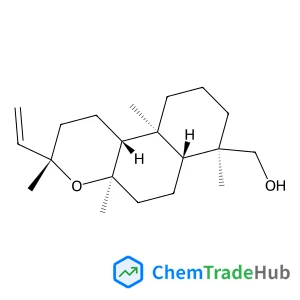
![N-[(1R,2R)-2-Amino-1,2-diphenylethyl]-1,1,1-trifluoromethanesulfonamide structure](https://cnstatic.chemtradehub.com/structs/852/852212-89-6-5ef9.webp "N-[(1R,2R)-2-Amino-1,2-diphenylethyl]-1,1,1-trifluoromethanesulfonamide structure")
N-[(1R,2R)-2-Amino-1,2-diphenylethyl]-1,1,1-trifluoromethanesulfonamide
CAS号:
852212-89-6
分子式:
C15H15F3N2O2S
推荐供应商





免责声明
本页面提供的学术期刊信息仅供参考和研究使用。我们与任何期刊出版商均无关联,也不处理投稿事宜。如有投稿相关咨询,请直接联系相关期刊出版商。
如发现页面信息有误,请发送邮件至 support@chemtradehub.com 联系我们。我们将及时核实并处理您的问题。