


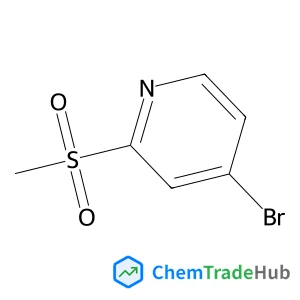
The water-catalyzed mechanism of the ring-opening reaction of glucose
文献信息
发布日期
2015-07-22
DOI
10.1039/C5CP03357H
影响因子
3.676
作者
Wojciech Plazinski, Anita Plazinska, Mateusz Drach
查看原文
摘要
The hexopyranose mutarotation is an important focus for carbohydrate chemistry for more than 150 years. The paper describes the results of advanced computational studies aimed at elucidating the ring-opening reaction of glucose. Molecular simulations based on the combination of the DFT method with the molecular dynamics formalism allowed for a detailed insight into the mechanism of the process accompanied by the information of the kinetic and dynamic nature. The results indicate that the process is initiated by deprotonation of the anomeric hydroxyl group by water molecules and the subsequent proton transfer to the ring oxygen atom. The latter event has been identified as a ‘bottleneck’ of the process triggering the ring cleavage. The most time-consuming steps of the ring-opening reaction are the orientational rearrangements of water molecule(s) participating in the proton transfer(s) and the final extension of the newly-formed aldehyde chain. The orientational preferences of the aldehyde group present in the acyclic form of D-hexopyranoses are responsible for the anomeric equilibrium characteristics.
期刊推荐

Current Opinion in Colloid & Interface Science

Journal of Saudi Chemical Society

Russian Journal of Organic Chemistry
Drug Discovery Today

Journal of Natural Medicines
Russian Journal of Coordination Chemistry

Acta Materialia
Russian Chemical Bulletin

Saudi Pharmaceutical Journal

Current Opinion in Solid State & Materials Science
相关文献
Seeking minimum entropy production for a tree-like flow-field in a fuel cell
Marco Sauermoser, Signe Kjelstrup, Bruno G. Pollet, Eirik G. Flekkøy
2020-03-18
Paper
DOI: 10.1039/C9CP05394H
Probing molecular interactions of PEGylated chitosan in aqueous solutions using a surface force apparatus
Li Xiang, Lu Gong, Jiawen Zhang, Ling Zhang, Wenjihao Hu, Wenda Wang, Qingye Lu, Hongbo Zeng
2019-07-22
Paper
DOI: 10.1039/C9CP03189H
Velocity map imaging study of the photodissociation dynamics of the allyl radical
Marta G. González, Luis Rubio-Lago
2020-02-18
Paper
DOI: 10.1039/C9CP04758A
Gauging stability and reactivity of carbonyl O-oxide Criegee intermediates
J. Philipp Wagner
2019-09-13
Paper
DOI: 10.1039/C9CP03790J
Bio-mimetic self-assembled computationally designed catalysts of Mo and W for hydrogenation of CO2/dehydrogenation of HCOOH inspired by the active site of formate dehydrogenase
Bilal Ahmad Shiekh, Damanjit Kaur, Sourav Kumar
2019-09-10
Paper
DOI: 10.1039/C9CP03406D
Water binding to FeIII hemes studied in a cooled ion trap: characterization of a strong ‘weak’ ligand
Mohammad Aarabi, Satchin Soorkia, Gilles Grégoire, Aurélien de la Lande, Benoît Soep, Reza Omidyan, Niloufar Shafizadeh
2019-09-02
Paper
DOI: 10.1039/C9CP03608C
Novel inorganic aromatic mixed-valent superalkali electride CaN3Ca: an alkaline-earth-based high-sensitivity multi-state nonlinear optical molecular switch
Yin-Feng Wang, Tian Qin, Jia-Min Tang, Yan-Jiao Liu, Miao Xie, Jia Li, Jiangen Huang, Zhi-Ru Li
2020-02-19
Paper
DOI: 10.1039/C9CP06848A
您可能还喜欢
化合物问答
(3-氨苯基)环丙基甲酮(CAS号:162174-75-6)的主要用途是什么?
(3-氨苯基)环丙基甲酮主要用于合成化学中间体,特别是在药物化学领域作为原料。它还可以用于有机合成反应中,作为催化剂或反应物。
162174-75-6(3-Aminophenyl)(cycl...
化合物问答
如何储存亚胺菌(CAS号:136470-79-6)?
亚胺菌应储存在干燥、阴凉处,避免直接暴露于光线下。建议使用密封容器储存,防止吸潮和污染。具体的储存条件应参考产品的安全数据表(MSDS)或药品说明书。
136470-79-6Abacavir EP Impurity...
化合物问答
2-氯-2,2-二氟乙酰胺(CAS号:354-28-9)应用于哪些行业?
2-氯-2,2-二氟乙酰胺在医药、聚合物、传感器、半导体等领域有广泛应用。在医药领域,它作为中间体用于合成其他药物;在聚合物领域,用作聚合引发剂或稳定剂;在传感...
354-28-92-Chloro-2,2-difluor...
化合物问答
处理4-甲基-3-硝基-1,1-联苯(CAS号:53812-68-3)时应注意哪些实验室安全事项?
在处理4-甲基-3-硝基-1,1-联苯时,应佩戴手套、护目镜和实验室外套等个人防护装备(PPE),确保在通风橱中操作以减少吸入风险。若发生泄露,应立即使用沙子或...
53812-68-34'-Methyl-3-nitro-1,...
化合物问答
(2S)-羟基(苯基)乙酸 (2R)-N-苄基-1-(4-甲氧基苯基)丙-2-胺盐(CAS号:188690-84-8)应用于哪些行业?
该化合物广泛应用于医药、聚合物和半导体行业。在医药领域,它是某些药物中间体的重要组成部分;在聚合物领域,可用作增塑剂;在半导体行业,可用于制造光刻胶。
188690-84-8Benzeneacetic acid, ...
化合物问答
在合成中是否有芬苯哒唑砜-D3标准品(CAS号:1228182-49-7)的替代品?
芬苯哒唑砜-D3标准品的替代品可能包括类似的苯并咪唑类化合物,如芬苯哒唑本身或其非同位素标记版本。这些替代品在结构上与芬苯哒唑砜-D3相似,但在具体应用中需进行...
1228182-49-7(~2~H_3_)Methyl [5-(...
化合物问答
2-氟-4-硝基苯乙酸(CAS号:315228-19-4)通常如何合成?
2-氟-4-硝基苯乙酸可以通过一系列化学反应合成,通常是从4-氟苯胺开始,首先进行硝化反应生成4-氟-2-硝基苯胺,然后进行乙酰化反应得到目标产物。具体的合成步...
315228-19-42-(2-fluoro-4-nitrop...
化合物问答
2-氟-4-甲氧基苯乙酸(CAS号:883531-28-0)通常如何合成?
2-氟-4-甲氧基苯乙酸通常通过将4-甲氧基苯乙酸与氟化试剂(如氟化氰)反应来合成。反应通常在无水条件下进行,使用催化剂如六氟磷酸锂或四氟硼酸锂以提高选择性和产...
883531-28-02-Fluoro-4-methoxyph...
化合物问答
什么是4SC 202;4SC202(CAS号:1186222-89-8)?
4SC 202;4SC202是一种化学化合物,其化学名称为(2E)-N-(2-氨基苯基)-3-(1-{[4-(1-甲基-1H-吡唑-4-基)苯基]磺酰基}-1H...
1186222-89-8(2E)-N-(2-Aminopheny...
132980-99-53,5-Difluorobenzamid...
来源期刊
Physical Chemistry Chemical Physics

CiteScore:
5.5
自引率:
10.3%
年发文量:
3036
Physical Chemistry Chemical Physics (PCCP) is an international journal co-owned by 19 physical chemistry and physics societies from around the world. This journal publishes original, cutting-edge research in physical chemistry, chemical physics and biophysical chemistry. To be suitable for publication in PCCP, articles must include significant innovation and/or insight into physical chemistry; this is the most important criterion that reviewers and Editors will judge against when evaluating submissions. The journal has a broad scope and welcomes contributions spanning experiment, theory, computation and data science. Topical coverage includes spectroscopy, dynamics, kinetics, statistical mechanics, thermodynamics, electrochemistry, catalysis, surface science, quantum mechanics, quantum computing and machine learning. Interdisciplinary research areas such as polymers and soft matter, materials, nanoscience, energy, surfaces/interfaces, and biophysical chemistry are welcomed if they demonstrate significant innovation and/or insight into physical chemistry. Joined experimental/theoretical studies are particularly appreciated when complementary and based on up-to-date approaches.
推荐化合物
![5-Bromo-3-isopropyl-1H-pyrrolo[2,3-b]pyridine structure](https://cnstatic.chemtradehub.com/structs/125/1256819-54-1-8620.webp "5-Bromo-3-isopropyl-1H-pyrrolo[2,3-b]pyridine structure")
推荐供应商





免责声明
本页面提供的学术期刊信息仅供参考和研究使用。我们与任何期刊出版商均无关联,也不处理投稿事宜。如有投稿相关咨询,请直接联系相关期刊出版商。
如发现页面信息有误,请发送邮件至 support@chemtradehub.com 联系我们。我们将及时核实并处理您的问题。