






Fmoc–RGDS based fibrils: atomistic details of their hierarchical assembly
文献信息
发布日期
2015-11-24
DOI
10.1039/C5CP04269K
影响因子
3.676
作者
David Zanuy, Jordi Poater, Miquel Solà, Ian W. Hamley
查看原文
摘要
We describe the 3D supramolecular structure of Fmoc–RGDS fibrils, where Fmoc and RGDS refer to the hydrophobic N-(fluorenyl-9-methoxycarbonyl) group and the hydrophilic Arg-Gly-Asp-Ser peptide sequence, respectively. For this purpose, we performed atomistic all-atom molecular dynamics simulations of a wide variety of packing modes derived from both parallel and antiparallel β-sheet configurations. The proposed model, which closely resembles the cross-β core structure of amyloids, is stabilized by π–π stacking interactions between hydrophobic Fmoc groups. More specifically, in this organization, the Fmoc-groups of β-strands belonging to the same β-sheet form columns of π-stacked aromatic rings arranged in a parallel fashion. Eight of such columns pack laterally forming a compact and dense hydrophobic core, in which two central columns are surrounded by three adjacent columns on each side. In addition to such Fmoc⋯Fmoc interactions, the hierarchical assembly of the constituent β-strands involves a rich variety of intra- and inter-strand interactions. Accordingly, hydrogen bonding, salt bridges and π–π stacking interactions coexist in the highly ordered packing network proposed for the Fmoc–RGDS amphiphile. Quantum mechanical calculations, which have been performed to quantify the above referred interactions, confirm the decisive role played by the π–π stacking interactions between the rings of the Fmoc groups, even though both inter-strand and intra-strand hydrogen bonds and salt bridges also play a non-negligible role. Overall, these results provide a solid reference to complement the available experimental data, which are not precise enough to determine the fibril structure, and reconcile previous independent observations.
相关文献
Molecular tweezers with a rotationally restricted linker and freely rotating porphyrin moieties
Rhys B. Murphy, Duc-Truc Pham, Jonathan M. White, Stephen F. Lincoln, Martin R. Johnston
2018-08-14
Paper
DOI: 10.1039/C8OB00944A
Facile synthesis of triphenylenes and triphenylene/phenanthrene fused heteroaromatics
Vijay Gupta, Satish K. Pandey, Ravi P. Singh
2018-09-14
Communication
DOI: 10.1039/C8OB01930D
Fluorinated triazole-containing sphingosine analogues. Syntheses and in vitro evaluation as SPHK inhibitors
Margarita Escudero-Casao, Adrià Cardona, Raúl Beltrán-Debón, Yolanda Díaz, M. Isabel Matheu, Sergio Castillón
2018-09-24
Paper
DOI: 10.1039/C8OB01867G
Metal- and base-free synthesis of functionalized α,α-difluoroimines via electrophilic fluorination of N-substituted enamines
Fangyi Li, Changfu Qiu, Guangwei Yin, Chunhua Wang, Zheng Li
2018-09-13
Communication
DOI: 10.1039/C8OB01941J
l-Dopa and dopamine conjugated naphthalenediimides modulate amyloid β toxicity
Madhu Ramesh, Pandeeswar Makam, Chandrashekhar Voshavar, Harshavardhan Khare, Kolla Rajasekhar, Suryanarayanarao Ramakumar, Thimmaiah Govindaraju
2018-09-28
Paper
DOI: 10.1039/C8OB01691G
One-pot synthesis of natural-product inspired spiroindolines with anti-cancer activities
Shi-Qiang Li, Liu-Jun He, Ming Zhang, Dian-Yong Tang, Hong-yu Li, Zhong-Zhu Chen, Zhi-Gang Xu
2021-12-15
Research Article
DOI: 10.1039/D1QO01694F
Differential effects of bromination on substrates and inhibitors of kynureninase from Pseudomonas fluorescens
Christian Heiss, Jay Anderson
2002-12-09
Paper
DOI: 10.1039/B208910F
Aminative Umpolung cyclization for synthesis of chiral exocyclic vicinal diamines
Feng Liu, Guoqing Zhao, Weiqi Cai, Dongfang Xu, Baoguo Zhao
2018-09-26
Paper
DOI: 10.1039/C8OB02000K
Catalytic asymmetric Tamura cycloaddition of homophthalic anhydrides with 2-arylidene-1,3-diones
Han Xu, Feng Sha, Qiong Li, Xin-Yan Wu
2018-09-19
Paper
DOI: 10.1039/C8OB01970C
您可能还喜欢
化合物问答
(3-氨苯基)环丙基甲酮(CAS号:162174-75-6)的主要用途是什么?
(3-氨苯基)环丙基甲酮主要用于合成化学中间体,特别是在药物化学领域作为原料。它还可以用于有机合成反应中,作为催化剂或反应物。
162174-75-6(3-Aminophenyl)(cycl...
化合物问答
如何储存亚胺菌(CAS号:136470-79-6)?
亚胺菌应储存在干燥、阴凉处,避免直接暴露于光线下。建议使用密封容器储存,防止吸潮和污染。具体的储存条件应参考产品的安全数据表(MSDS)或药品说明书。
136470-79-6Abacavir EP Impurity...
化合物问答
2-氯-2,2-二氟乙酰胺(CAS号:354-28-9)应用于哪些行业?
2-氯-2,2-二氟乙酰胺在医药、聚合物、传感器、半导体等领域有广泛应用。在医药领域,它作为中间体用于合成其他药物;在聚合物领域,用作聚合引发剂或稳定剂;在传感...
354-28-92-Chloro-2,2-difluor...
化合物问答
处理4-甲基-3-硝基-1,1-联苯(CAS号:53812-68-3)时应注意哪些实验室安全事项?
在处理4-甲基-3-硝基-1,1-联苯时,应佩戴手套、护目镜和实验室外套等个人防护装备(PPE),确保在通风橱中操作以减少吸入风险。若发生泄露,应立即使用沙子或...
53812-68-34'-Methyl-3-nitro-1,...
化合物问答
(2S)-羟基(苯基)乙酸 (2R)-N-苄基-1-(4-甲氧基苯基)丙-2-胺盐(CAS号:188690-84-8)应用于哪些行业?
该化合物广泛应用于医药、聚合物和半导体行业。在医药领域,它是某些药物中间体的重要组成部分;在聚合物领域,可用作增塑剂;在半导体行业,可用于制造光刻胶。
188690-84-8Benzeneacetic acid, ...
化合物问答
在合成中是否有芬苯哒唑砜-D3标准品(CAS号:1228182-49-7)的替代品?
芬苯哒唑砜-D3标准品的替代品可能包括类似的苯并咪唑类化合物,如芬苯哒唑本身或其非同位素标记版本。这些替代品在结构上与芬苯哒唑砜-D3相似,但在具体应用中需进行...
1228182-49-7(~2~H_3_)Methyl [5-(...
化合物问答
2-氟-4-硝基苯乙酸(CAS号:315228-19-4)通常如何合成?
2-氟-4-硝基苯乙酸可以通过一系列化学反应合成,通常是从4-氟苯胺开始,首先进行硝化反应生成4-氟-2-硝基苯胺,然后进行乙酰化反应得到目标产物。具体的合成步...
315228-19-42-(2-fluoro-4-nitrop...
化合物问答
2-氟-4-甲氧基苯乙酸(CAS号:883531-28-0)通常如何合成?
2-氟-4-甲氧基苯乙酸通常通过将4-甲氧基苯乙酸与氟化试剂(如氟化氰)反应来合成。反应通常在无水条件下进行,使用催化剂如六氟磷酸锂或四氟硼酸锂以提高选择性和产...
883531-28-02-Fluoro-4-methoxyph...
化合物问答
什么是4SC 202;4SC202(CAS号:1186222-89-8)?
4SC 202;4SC202是一种化学化合物,其化学名称为(2E)-N-(2-氨基苯基)-3-(1-{[4-(1-甲基-1H-吡唑-4-基)苯基]磺酰基}-1H...
1186222-89-8(2E)-N-(2-Aminopheny...
132980-99-53,5-Difluorobenzamid...
来源期刊
Physical Chemistry Chemical Physics

CiteScore:
5.5
自引率:
10.3%
年发文量:
3036
Physical Chemistry Chemical Physics (PCCP) is an international journal co-owned by 19 physical chemistry and physics societies from around the world. This journal publishes original, cutting-edge research in physical chemistry, chemical physics and biophysical chemistry. To be suitable for publication in PCCP, articles must include significant innovation and/or insight into physical chemistry; this is the most important criterion that reviewers and Editors will judge against when evaluating submissions. The journal has a broad scope and welcomes contributions spanning experiment, theory, computation and data science. Topical coverage includes spectroscopy, dynamics, kinetics, statistical mechanics, thermodynamics, electrochemistry, catalysis, surface science, quantum mechanics, quantum computing and machine learning. Interdisciplinary research areas such as polymers and soft matter, materials, nanoscience, energy, surfaces/interfaces, and biophysical chemistry are welcomed if they demonstrate significant innovation and/or insight into physical chemistry. Joined experimental/theoretical studies are particularly appreciated when complementary and based on up-to-date approaches.
推荐化合物
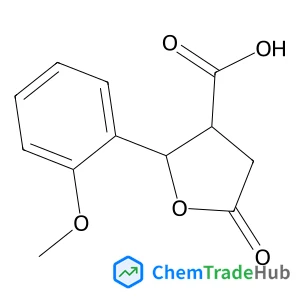
![2-[({[(2-Methyl-2-propanyl)oxy]carbonyl}amino)methyl]isonicotinic acid structure](https://cnstatic.chemtradehub.com/structs/473/473924-63-9-973b.webp "2-[({[(2-Methyl-2-propanyl)oxy]carbonyl}amino)methyl]isonicotinic acid structure")
2-[({[(2-Methyl-2-propanyl)oxy]carbonyl}amino)methyl]isonicotinic acid
CAS号:
473924-63-9
分子式:
C12H16N2O4
推荐供应商




免责声明
本页面提供的学术期刊信息仅供参考和研究使用。我们与任何期刊出版商均无关联,也不处理投稿事宜。如有投稿相关咨询,请直接联系相关期刊出版商。
如发现页面信息有误,请发送邮件至 support@chemtradehub.com 联系我们。我们将及时核实并处理您的问题。