





![4-Chloro-N-{[4-(dimethylamino)phenyl]carbamoyl}benzenesulfonamide structure](https://cnstatic.chemtradehub.com/structs/558/5581-42-0-7dcb.webp "4-Chloro-N-{[4-(dimethylamino)phenyl]carbamoyl}benzenesulfonamide structure")
DFT+U studies of Cu doping and p-type compensation in crystalline and amorphous ZnS
文献信息
发布日期
2015-09-03
DOI
10.1039/C5CP04623H
影响因子
3.676
作者
Hieu H. Pham, Gerard T. Barkema, Lin-Wang Wang
查看原文
摘要
Zinc sulfide is an excellent candidate for the development of a p-type transparent conducting material that has great demands in solar energy and optoelectronic applications. Doping with Cu is one potential way to make ZnS p-type while preserving its optical transparency for the solar spectrum; however, this is limited by the extremely low solubility of Cu in ZnS and charge compensation mechanisms that eliminate the p-type characteristics. These mechanisms are different in crystalline (c-ZnS) and amorphous structures (a-ZnS), leading to different tendencies of doping Cu in these two ZnS phases, as well as the feasibility to form the p-type material. In this work, we have carried out fundamental studies of Cu doping in both c-ZnS and a-ZnS, using the continuous random network model and density functional theory with Hubbard's energy correction (DFT+U). The formation of a complex that contains two CuZn and one S vacancy is highly favorable in both phases. The local environment of this charge-compensated Cu complex obtained by DFT calculations agrees well with the previous EXAFS measurements. The incorporation of Cu into a-ZnS, on the one hand, is more tolerable compared to its crystal counterparts (zincblende), indicating possible higher Cu concentration. On the other hand, there is also another intrinsic mechanism to compensate the p-type characteristics in a-ZnS: the formation of the covalent S–S “dumbbell” units. This reconstruction of the local structure to form a S–S bond could occur spontaneously, thus making the p-type doping for ZnS challenging even in the amorphous phase.
相关文献
Non-Covalent Interactions Atlas benchmark data sets 5: London dispersion in an extended chemical space
2022-06-06
Paper
DOI: 10.1039/D2CP01602H
Correction: Modeling the heating and cooling of a chromophore after photoexcitation
Elizete Ventura, Silmar Andrade do Monte, Mariana T. do Casal, Max Pinheiro, Jr, Josene Maria Toldo
2022-06-15
Correction
DOI: 10.1039/D2CP90104H
Nanostructure engineering of two-dimensional diamonds toward high thermal conductivity and approaching zero Poisson's ratio
Yanxiao Hu, Ding Li, Chunbao Feng, Shichang Li, Bole Chen, Dengfeng Li, Gang Zhang
2022-05-31
Paper
DOI: 10.1039/D2CP01745H
[1]Benzothieno[3,2-b][1]benzothiophene-based dyes: effect of the ancillary moiety on mechanochromism and aggregation-induced emission
Rajamouli Boddula
2022-05-23
Paper
DOI: 10.1039/D2CP01934E
Tailored anharmonic–harmonic vibrational profiles for fluorescent biomarkers
Nghia Nguyen Thi Minh, Carolin König
2022-06-13
Paper
DOI: 10.1039/D2CP01486F
Electronic structures of hydroxylated low index surfaces of rutile and anatase-type titanium dioxide
Lu Wu, Jin Lin, Linyuan Ren, Qianni Li, Xin Chi, Ling Luo, Ming-Hua Zeng
2022-05-27
Paper
DOI: 10.1039/D1CP04729A
Predicting spinel solid solutions using a random atom substitution method
Robert C. Dickson, Troy D. Manning, Edwin S. Raj, Jonathan C. S. Booth, Matthew J. Rosseinsky, Matthew S. Dyer
2022-06-14
Paper
DOI: 10.1039/D2CP02180C
Insight on noncovalent interactions and orbital constructs in low-dimensional antimony halide perovskites
Aaron D. Nicholas, Leah C. Garman, Nicolina Albano, Christopher L. Cahill
2022-06-09
Paper
DOI: 10.1039/D2CP01996E
Adsorption characteristics of peptides on ω-functionalized self-assembled monolayers: a molecular dynamics study
Hari O. S. Yadav, An-Tsung Kuo, Shingo Urata, Kosuke Funahashi, Yutaka Imamura
2022-05-27
Paper
DOI: 10.1039/D2CP01348G
Magnetic nature and hyperfine interactions of transition metal atoms adsorbed on ultrathin insulating films: a challenge for DFT
Sergio Tosoni, Gianfranco Pacchioni
2022-06-15
Paper
DOI: 10.1039/D2CP01224C
您可能还喜欢
化合物问答
甲基双烯双酮(CAS号:5173-46-6)通常如何合成?
甲基双烯双酮可以通过多种途径合成。一种常见的合成方法是通过甲基化和环化反应,先由4-甲基-9-烯-1,3-二酮合成,然后进行环化反应得到目标产物。具体的合成路线...
5173-46-6Estra-4,9-diene-3,17...
化合物问答
如何处理含有tert-butyl 3,5-difluorobenzoate(CAS号:467442-11-1)的废料?
处理含有tert-butyl 3,5-difluorobenzoate(CAS号:467442-11-1)的废液时,应首先收集并密封,避免泄漏。随后,建议通过焚...
467442-11-12-Methyl-2-propanyl ...
化合物问答
4-二甲氧基甲基-2-(三氟甲基)嘧啶(CAS号:878760-47-5)通常如何合成?
4-二甲氧基甲基-2-(三氟甲基)嘧啶通常通过三氟甲基化反应合成。首先,将2-氯嘧啶与三氟甲基锂在惰性溶剂中反应,然后将得到的三氟甲基化中间体与二甲氧基甲基化试...
878760-47-54-(Dimethoxymethyl)-...
化合物问答
WRW4(CAS号:878557-55-2)的主要用途是什么?
WRW4主要应用于科学研究领域,尤其是在合成化学和有机合成方面。由于其特殊的化学性质,它可能被用于特定的化学反应或合成过程。
878557-55-2WRW4
化合物问答
什么是6-O-(三异丙基硅基)-D-葡萄烯糖(CAS号:137915-37-8)?
6-O-(三异丙基硅基)-D-葡萄烯糖是一种有机化合物,化学名为1,5-Anhydro-2-deoxy-6-O-(triisopropylsilyl)-D-ar...
137915-37-81,5-Anhydro-2-deoxy-...
化合物问答
N-Benzyl-N,N-dimethyl-2-phenoxyethanaminium(CAS号:7181-73-9)的主要用途是什么?
N-Benzyl-N,N-dimethyl-2-phenoxyethanaminium在有机合成中被用作保护基团,可以用于保护氨基,提高反应的选择性和产率。此外...
7181-73-9N-Benzyl-N,N-dimethy...
化合物问答
什么是3-(Cyclohex-1-en-1-yl)acrylic acid(CAS号:56453-88-4)?
3-(Cyclohex-1-en-1-yl)acrylic acid,简称3-环己烯-1-烯丙酸,是一种含有环己烯基团的丙烯酸衍生物,用于合成其他化合物或作为有...
56453-88-43-(Cyclohex-1-en-1-y...
化合物问答
如何储存(1R)-7-fluoro-1,2,3,4-tetrahydronaphthalen-1-amine(CAS号:1055949-62-6)?
应将(1R)-7-氟-1,2,3,4-四氢萘胺储存于阴凉、干燥、通风良好的地方,远离火源和热源。避免与氧化剂、酸类接触。使用合适的容器,密封保存。
1055949-62-6(1R)-7-Fluoro-1,2,3,...
化合物问答
3-甲基苯并呋喃-2-羧酸(CAS号:24673-56-1)的主要用途是什么?
3-甲基苯并呋喃-2-羧酸主要用作合成其他化合物的中间体,如药物合成、有机合成等领域。此外,该化合物在某些领域作为化学试剂或分析试剂使用。
24673-56-13-Methyl-1-benzofura...
化合物问答
孕烷醇酮(CAS号:128-20-1)适用哪些法规指南?
孕烷醇酮(CAS号:128-20-1)需遵守GHS(全球化学品统一分类和标签制度)的相关分类和标签要求,主要涉及健康危害、环境危害和物理化学危害。此外,还需要遵...
128-20-1(3alpha,5beta)-3-Hyd...
来源期刊
Physical Chemistry Chemical Physics

CiteScore:
5.5
自引率:
10.3%
年发文量:
3036
Physical Chemistry Chemical Physics (PCCP) is an international journal co-owned by 19 physical chemistry and physics societies from around the world. This journal publishes original, cutting-edge research in physical chemistry, chemical physics and biophysical chemistry. To be suitable for publication in PCCP, articles must include significant innovation and/or insight into physical chemistry; this is the most important criterion that reviewers and Editors will judge against when evaluating submissions. The journal has a broad scope and welcomes contributions spanning experiment, theory, computation and data science. Topical coverage includes spectroscopy, dynamics, kinetics, statistical mechanics, thermodynamics, electrochemistry, catalysis, surface science, quantum mechanics, quantum computing and machine learning. Interdisciplinary research areas such as polymers and soft matter, materials, nanoscience, energy, surfaces/interfaces, and biophysical chemistry are welcomed if they demonstrate significant innovation and/or insight into physical chemistry. Joined experimental/theoretical studies are particularly appreciated when complementary and based on up-to-date approaches.
推荐化合物
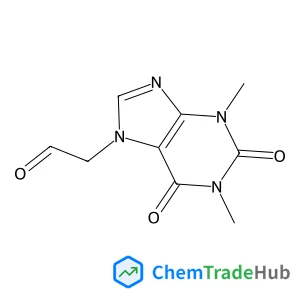
![N-[(1-Ethyl-2-pyrrolidinyl)methyl]-2-hydroxy-5-sulfamoylbenzamide structure](https://cnstatic.chemtradehub.com/structs/673/67381-52-6-877f.webp "N-[(1-Ethyl-2-pyrrolidinyl)methyl]-2-hydroxy-5-sulfamoylbenzamide structure")
推荐供应商





免责声明
本页面提供的学术期刊信息仅供参考和研究使用。我们与任何期刊出版商均无关联,也不处理投稿事宜。如有投稿相关咨询,请直接联系相关期刊出版商。
如发现页面信息有误,请发送邮件至 support@chemtradehub.com 联系我们。我们将及时核实并处理您的问题。