


![4-Chloro-3-(trifluoromethyl)-1H-pyrrolo[2,3-b]pyridine structure](https://cnstatic.chemtradehub.com/structs/869/869335-75-1-a9d0.webp "4-Chloro-3-(trifluoromethyl)-1H-pyrrolo[2,3-b]pyridine structure")
Isolation of pristine MXene from Nb4AlC3 MAX phase: a first-principles study
文献信息
发布日期
2016-03-22
DOI
10.1039/C5CP07609A
影响因子
3.676
作者
Avanish Mishra, Pooja Srivastava, Hiroshi Mizuseki, Kwang-Ryeol Lee, Abhishek K. Singh
查看原文
摘要
Synthesis of pristine MXene sheets from MAX phase is one of the foremost challenges in getting a complete understanding of the properties of this new technologically important 2D-material. Efforts to exfoliate Nb4AlC3 MAX phase always lead to Nb4C3 MXene sheets, which are functionalized and have several Al atoms attached. Using the first-principles calculations, we perform an intensive study on the chemical transformation of MAX phase into MXene sheets by inserting HF, alkali atoms and LiF in Nb4AlC3 MAX phase. Calculated bond-dissociation energy (BDE) shows that the presence of HF in MAX phase always results in functionalized MXene, as the binding of H with MXene is quite strong while that with F is weak. Insertion of alkali atoms does not facilitate pristine MXene isolation due to the presence of chemical bonds of almost equal strength. In contrast, weak Li–MXene and strong Li–F bonding in Nb4AlC3 with LiF ensured strong anisotropy in BDE, which will result in the dissociation of the Li–MXene bond. Ab initio molecular dynamics calculations capture these features and show that at 500–650 K, the Li–MXene bond indeed breaks leaving a pristine MXene sheet behind. The approach and insights developed here for chemical exfoliation of layered materials bonded by chemical bonds instead of van der Waals can promote their experimental realization.
期刊推荐

Contact Lens & Anterior Eye

Advanced Engineering Materials
Faraday Discussions
Environmental Toxicology and Pharmacology
Journal of Enzyme inhibition and Medicinal Chemistry
Journal of Medical Biochemistry
Photochemical & Photobiological Sciences
Molecules

European Journal of Organic Chemistry
Current Pharmaceutical Biotechnology
相关文献
Supported protic acid-catalyzed synthesis of 2,3-disubstituted thiazolidin-4-ones: enhancement of the catalytic potential of protic acid by adsorption on solid supports
Dinesh Kumar, Mukesh Sonawane, Brahmam Pujala, Varun K. Jain, Srikant Bhagat, Asit K. Chakraborti
2013-07-23
Paper
DOI: 10.1039/C3GC41218K
Sodium salt effect on hydrothermal carbonization of biomass: a catalyst for carbon-based nanostructured materials for lithium-ion battery applications
Jin-Bum Park
2013-08-14
Communication
DOI: 10.1039/C3GC40480C
Photocatalytic selective oxidation of the terminal methyl group of dodecane with molecular oxygen over atomically dispersed Ti in a mesoporous SiO2 matrix
Jae Yul Kim, Ji-Wook Jang, Duck Hyun Youn, Eun Sun Kim, Sun Hee Choi, Tae Joo Shin, Jae Sung Lee
2013-09-12
Paper
DOI: 10.1039/C3GC41343H
AIBN-initiated metal free amidation of aldehydes using N-chloroamines
Rajeshwer Vanjari, Tirumaleswararao Guntreddi, Krishna Nand Singh
2013-10-25
Paper
DOI: 10.1039/C3GC41548A
Antioxidant canolol production from a renewable feedstock via an engineered decarboxylase
Krista L. Morley, Stephan Grosse, Hannes Leisch
2013-10-03
Paper
DOI: 10.1039/C3GC40748A
Direct transformation of 5-hydroxymethylfurfural to the building blocks 2,5-dihydroxymethylfurfural (DHMF) and 5-hydroxymethyl furanoic acid (HMFA) via Cannizzaro reaction
Svilen P. Simeonov, José M. S. S. Esperança, Luís Paulo N. Rebelo, Carlos A. M. Afonso
2013-08-06
Paper
DOI: 10.1039/C3GC40930A
Bridging racemic lactate esters with stereoselective polylactic acid using commercial lipase catalysis
Pieter Van Wouwe, Michiel Dusselier, Aurelie Basiç, Bert F. Sels
2013-08-14
Paper
DOI: 10.1039/C3GC41457D
Preparation of waterborne functional polymers using a bifunctional coupler
Subrata Chattopadhyay, Helmut Keul, Martin Moeller
2013-08-29
Communication
DOI: 10.1039/C3GC41406J
Nanozeolite clinoptilolite as a highly efficient heterogeneous catalyst for the synthesis of various 2-amino-4H-chromene derivatives in aqueous media
Seyed Meysam Baghbanian, Niloufar Rezaei, Hamed Tashakkorian
2013-09-19
Paper
DOI: 10.1039/C3GC41302K
您可能还喜欢
化合物问答
3 - (二氟甲基)-1 -氟苯(CAS号:26029-52-7)适用哪些法规指南?
3 - (二氟甲基)-1 -氟苯需遵循联合国全球化学品统一分类和标签制度(GHS),包括急性毒性、皮肤腐蚀/刺激、严重眼损伤/眼刺激等分类。同时,该化合物还需符...
26029-52-71-(Difluoromethyl)-3...
化合物问答
3,5-二甲基苯胺(CAS号:108-69-0)通常如何合成?
3,5-二甲基苯胺通常通过乙苯的氨解反应合成。反应中使用硫酸作为催化剂,反应温度为120-130°C。乙苯在硫酸存在下与氨反应,生成3,5-二甲基苯胺和苯胺副产...
108-69-03,5-Dimethylaniline
化合物问答
3-甲基异噻唑-5-胺(CAS号:24340-76-9)安全吗?
3-甲基异噻唑-5-胺在适当使用和储存条件下是相对安全的,但在操作时应注意防护措施。应避免吸入粉尘,避免与皮肤和眼睛直接接触。在操作过程中,应穿戴适当的防护装备...
24340-76-93-Methyl-1,2-thiazol...
化合物问答
3-(1,3-Thiazol-2-yl)-1H-indole(CAS号:135531-86-1)通常如何合成?
3-(1,3-噻唑-2-基)-1H-吲哚通常通过多步合成方法制备。首先,由噻唑-2-基溴化物和吲哚进行偶联反应,得到中间体。然后,通过还原反应将中间体转化为所需...
135531-86-13-(1,3-Thiazol-2-yl)...
化合物问答
4-溴-2-氟苯甲基氯(CAS号:85510-82-3)的主要用途是什么?
4-溴-2-氟苯甲基氯主要用于有机合成中间体,特别是在医药、农药和染料等领域。作为一种具有特定结构的化合物,它在合成复杂有机分子时扮演重要角色。
85510-82-34-Bromo-1-(chloromet...
化合物问答
处理Fmoc-β-(3-噻吩基)-D-Ala-OH(CAS号:220497-90-5)时应注意哪些实验室安全事项?
处理Fmoc-β-(3-噻吩基)-D-Ala-OH时,应佩戴防护手套、护目镜和实验服。操作应在通风橱内进行。如发生泄露,应立即用大量水冲洗,并通知实验室管理人员...
220497-90-5N-[(9H-Fluoren-9-ylm...
化合物问答
氮化硅(CAS号:12033-89-5)通常如何合成?
氮化硅通常通过氮化硅的直接反应合成,即在高温下将四氯化硅与氨气反应。具体步骤是将四氯化硅和氨气混合并加热至1300-1700℃,在该条件下,四氯化硅与氨气反应生...
12033-89-5Trisilicon tetranitr...
化合物问答
Cetirizine EP Impurity B DiHCl(CAS号:1000690-91-4)通常如何合成?
Cetirizine EP Impurity B DiHCl通常通过一锅法合成,首先将4-氯苯基-苯甲基氯甲酸酯与1-哌嗪乙酸反应,生成相应的酸,然后与盐酸反应...
1000690-91-4{4-[(4-Chlorophenyl)...
化合物问答
如何储存1-哌啶-4-基丁-1-酮(CAS号:3509-15-7)?
1-哌啶-4-基丁-1-酮应储存在阴凉、干燥的地方,避免阳光直射。存储容器应密封,并确保通风良好。建议储存温度不超过25℃,湿度保持在相对较低的水平。
3509-15-71-Piperidin-4-ylbuta...
化合物问答
如何处理含有VORUCICLIB(CAS号:1000023-04-0)的废料?
含有VORUCICLIB的废料应进行专业的收集和处理,包括使用适当的容器进行隔离,避免与其他化学品接触。处理方法通常包括化学中和、沉淀反应或吸附过程,随后进行焚...
1000023-04-02-[2-Chloro-4-(trifl...
来源期刊
Physical Chemistry Chemical Physics

CiteScore:
5.5
自引率:
10.3%
年发文量:
3036
Physical Chemistry Chemical Physics (PCCP) is an international journal co-owned by 19 physical chemistry and physics societies from around the world. This journal publishes original, cutting-edge research in physical chemistry, chemical physics and biophysical chemistry. To be suitable for publication in PCCP, articles must include significant innovation and/or insight into physical chemistry; this is the most important criterion that reviewers and Editors will judge against when evaluating submissions. The journal has a broad scope and welcomes contributions spanning experiment, theory, computation and data science. Topical coverage includes spectroscopy, dynamics, kinetics, statistical mechanics, thermodynamics, electrochemistry, catalysis, surface science, quantum mechanics, quantum computing and machine learning. Interdisciplinary research areas such as polymers and soft matter, materials, nanoscience, energy, surfaces/interfaces, and biophysical chemistry are welcomed if they demonstrate significant innovation and/or insight into physical chemistry. Joined experimental/theoretical studies are particularly appreciated when complementary and based on up-to-date approaches.
推荐化合物
![6-Benzyl-4,5,6,7-tetrahydro-1H-pyrazolo[3,4-c]pyridin-3(2H)-one structure](https://cnstatic.chemtradehub.com/structs/909/909187-64-0-f54f.webp "6-Benzyl-4,5,6,7-tetrahydro-1H-pyrazolo[3,4-c]pyridin-3(2H)-one structure")
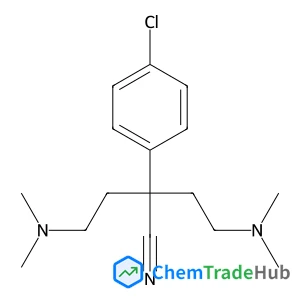
推荐供应商




免责声明
本页面提供的学术期刊信息仅供参考和研究使用。我们与任何期刊出版商均无关联,也不处理投稿事宜。如有投稿相关咨询,请直接联系相关期刊出版商。
如发现页面信息有误,请发送邮件至 support@chemtradehub.com 联系我们。我们将及时核实并处理您的问题。