


![19-[Chloro(dideuterio)methyl]-19-deuterio-20,20-dideuteriooxyoctatriacontane-18,21-dione structure](https://cnstatic.chemtradehub.com/structs/124/1246818-85-8-6244.webp "19-[Chloro(dideuterio)methyl]-19-deuterio-20,20-dideuteriooxyoctatriacontane-18,21-dione structure")
“Energy Relay Center” for doped mechanoluminescence materials: a case study on Cu-doped and Mn-doped CaZnOS
文献信息
发布日期
2016-11-22
DOI
10.1039/C6CP07472C
影响因子
3.676
作者
Bolong Huang, Dengfeng Peng, Caofeng Pan
查看原文
摘要
We unraveled the mechanisms of transition metal-doped mechanoluminescent materials through a case study of CaZnOS. We found that the native point defect levels in Cu or Mn-doped CaZnOS system acted as energy relay centers for luminescence energy transfer. In combination with native point defect levels, discussed in a previous study [Phys. Chem. Chem. Phys., 2016, 18, 25946], we found that phosphor luminescence belongs to two different mechanisms. For Cu-doping, it occurs by the path via the conduction band minimum to the Cu-t2g level of the 3d orbital localized in the band gap. The hole-drifting effect was found to support the reported red-shifting of the emission. Both reversible and irreversible mechanical quenching were attributed to the spatially separated electrons recombining with the hole localized on the Cu-t2g level within the gap at levels below or above respectively. For Mn-doping, this occurs by a collaborative luminescence assisted by native point defects, and the excited states of Mn2+ overlap with the conduction band edge. The coexistence of MnZn and MnCa was confirmed, but was relatively low in MnCa. The concentration quenching effect, as well as the red-shift of absorption, shows a strong correlation with native point defect levels and the relative position of the 4T1(4G) state for both MnZn and MnCa. Further simplified approximations were used for modeling such concentration quenching effects.
相关文献
Coacervation of α-elastin studied by ultrafast nonlinear infrared spectroscopy
Francesca Palombo, Ellen Green, C. Peter Winlove
2016-09-21
Paper
DOI: 10.1039/C6CP04049G
Nuclear spin hyperpolarization with ansa-aminoboranes: a metal-free perspective for parahydrogen-induced polarization
Kristina Sorochkina, Konstantin Chernichenko, Bianka Kótai, Tamás Földes, Imre Pápai, Ville-Veikko Telkki, Timo Repo
2016-09-06
Paper
DOI: 10.1039/C6CP05211H
Physical chemistry of hybrid perovskite solar cells
Aron Walsh, Nitin P. Padure, Sang Il Seok
2016-09-02
Editorial
DOI: 10.1039/C6CP90212J
Resonant multiphoton ionisation probe of the photodissociation dynamics of ammonia
Adam D. Smith, Hannah M. Watts, Edward Jager, Daniel A. Horke, Emma Springate, Oliver Alexander, Cephise Cacho, Richard T. Chapman, Russell S. Minns
2016-09-16
Paper
DOI: 10.1039/C6CP05279G
Structure and Li+ ion transport in a mixed carbonate/LiPF6 electrolyte near graphite electrode surfaces: a molecular dynamics study
Mathew J. Boyer, Linas Vilčiauskas, Gyeong S. Hwang
2016-09-22
Paper
DOI: 10.1039/C6CP05140E
Helium droplet infrared spectroscopy of glycine and glycine–water aggregates
Matin Kaufmann, Daniel Leicht, Raffael Schwan, Devendra Mani, Gerhard Schwaab, Martina Havenith
2016-09-21
Paper
DOI: 10.1039/C6CP05042E
The rectifying and negative differential resistance effects in graphene/h-BN nanoribbon heterojunctions
Yipeng An, Mengjun Zhang, Dapeng Wu, Tianxing Wang, Zhaoyong Jiao, Congxin Xia, Kun Wang
2016-09-21
Paper
DOI: 10.1039/C6CP05912K
Application of classical simulations for the computation of vibrational properties of free molecules
Dmitry I. Sharapa, Jan Schwabedissen, Vladimir V. Rybkin
2016-09-15
Paper
DOI: 10.1039/C6CP05849C
您可能还喜欢
化合物问答
什么是3-表南美楝属二醇(CAS号:19942-04-2)?
3-表南美楝属二醇是一种具有特定立体化学结构的化合物,其分子式为C31H52O2,属于甾醇类化合物。它具有光学活性,是一种复杂的有机分子,主要存在于一些植物中。
19942-04-2(3S,5R,8R,9R,10R,13R...
化合物问答
3-羧基-5-碘苯甲酸甲酯(CAS号:50765-22-5)应用于哪些行业?
3-羧基-5-碘苯甲酸甲酯主要应用于医药行业,作为合成某些药物中间体的重要原料。此外,它还可能用于聚合物的改性、传感器的制备以及半导体材料的制备等领域。
50765-22-5Methyl 3-hydroxy-5-i...
化合物问答
什么是3-Bromoindolin-2-one(CAS号:22942-87-6)?
3-Bromoindolin-2-one是一种含有溴代基团的吲哚酮衍生物,分子式为C9H7BrNO。它是一种无色固体,具有一定的挥发性,熔点为158-159°C...
22942-87-63-Bromoindolin-2-one
化合物问答
如何处理含有L-Lysyl-L-phenylalanyl-L-isoleucylglycyl-L-leucyl-L-methioninamide(CAS号:2990-43-4)的废料?
对于含有该化合物的废液,应先进行中和处理,然后根据其毒性和活性选择合适的处置方法。可以考虑焚烧处理或由专业的化学品废物处理公司进行无害化处理。处理过程中需注意环...
2990-43-4L-Lysyl-L-phenylalan...
化合物问答
ANGIOTENSIN 1/2 + A (2 - 8)(CAS号:51833-76-2)的物理化学性质是什么?
ANGIOTENSIN 1/2 + A (2 - 8)是一种蛋白质类化合物,具有典型的蛋白质性质。它的分子量约为5900 Da。该化合物在水中具有一定的溶解性,...
51833-76-2ANGIOTENSIN 1/2 + A ...
化合物问答
如何储存2-甲基硫代嘧啶-5-硼酸频那酯(CAS号:940284-18-4)?
应将该化合物存放在阴凉干燥、通风良好的地方,避免阳光直射。建议将化合物密封保存在避光的、干燥的容器中,远离火源和高温环境。
940284-18-42-(Methylthio)-5-(4,...
化合物问答
什么是苏丹红IV氘代物 标准品(CAS号:1014689-18-9)?
苏丹红IV氘代物 标准品是一种含有氘代标记的苏丹红IV化合物,是一种用于化合物分析、结构确证以及代谢研究的标准物质。
1014689-18-91-[(E)-{2-Methyl-4-[...
化合物问答
(+)-2-Amino-6-propionamido-d3-tetrahydrobenzothiazole(CAS号:1217680-69-7)适用哪些法规指南?
该化合物需要遵循《全球化学品统一分类和标签制度》(GHS)中的分类和标签要求,具体分类需依据其毒性和物理化学性质。此外,还需要符合《欧盟化学品注册、评估、授权和...
1217680-69-7(+)-2-Amino-6-propio...
化合物问答
如何储存2-氨基-2-(2-吡啶)乙酸乙酯(CAS号:55243-15-7)?
2-氨基-2-(2-吡啶)乙酸乙酯应储存于阴凉、干燥、通风良好的环境中,避免高温和光照。应使用密封容器储存,并远离易燃物、氧化剂和其他危险化学品。
55243-15-7Ethyl 2-amino-2-(pyr...
化合物问答
3-羟基-4-甲氧基吡啶-2-羧酸(CAS号:210300-09-7)的主要用途是什么?
3-羟基-4-甲氧基吡啶-2-羧酸主要用于合成其他有机化合物,如药物合成、农药合成和染料合成等。此外,它还可用作中间体和试剂,在化学研究领域也有一定的应用。
210300-09-73-Hydroxy-4-methoxy-...
来源期刊
Physical Chemistry Chemical Physics

CiteScore:
5.5
自引率:
10.3%
年发文量:
3036
Physical Chemistry Chemical Physics (PCCP) is an international journal co-owned by 19 physical chemistry and physics societies from around the world. This journal publishes original, cutting-edge research in physical chemistry, chemical physics and biophysical chemistry. To be suitable for publication in PCCP, articles must include significant innovation and/or insight into physical chemistry; this is the most important criterion that reviewers and Editors will judge against when evaluating submissions. The journal has a broad scope and welcomes contributions spanning experiment, theory, computation and data science. Topical coverage includes spectroscopy, dynamics, kinetics, statistical mechanics, thermodynamics, electrochemistry, catalysis, surface science, quantum mechanics, quantum computing and machine learning. Interdisciplinary research areas such as polymers and soft matter, materials, nanoscience, energy, surfaces/interfaces, and biophysical chemistry are welcomed if they demonstrate significant innovation and/or insight into physical chemistry. Joined experimental/theoretical studies are particularly appreciated when complementary and based on up-to-date approaches.
推荐化合物
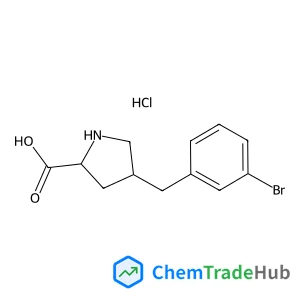
(2S,4R)-4-(3-Bromobenzyl)pyrrolidine-2-carboxylic acid hydrochloride
CAS号:
1049734-10-2
分子式:
C12H15BrClNO2
![(1R)-N-((1R)-1-Phenylethyl)-1-[4-(tert-butyldimethylsilyloxymethyl)cyclohexyl]ethan-1-amine structure](https://cnstatic.chemtradehub.com/structs/672/672314-45-3-47ef.webp "(1R)-N-((1R)-1-Phenylethyl)-1-[4-(tert-butyldimethylsilyloxymethyl)cyclohexyl]ethan-1-amine structure")
推荐供应商




免责声明
本页面提供的学术期刊信息仅供参考和研究使用。我们与任何期刊出版商均无关联,也不处理投稿事宜。如有投稿相关咨询,请直接联系相关期刊出版商。
如发现页面信息有误,请发送邮件至 support@chemtradehub.com 联系我们。我们将及时核实并处理您的问题。