










![Heptadecanoic Acid 3-[2-[4-(6-Fluoro-1,2-benzisoxazol-3-yl)-1-piperidinyl]ethyl]-6,7,8,9-tetrahydro-2-methyl-4-oxo-4H-pyrido[1,2-a]pyrimidin-9-yl Ester structure](https://cnstatic.chemtradehub.com/structs/140/1404053-62-8-9da4.webp "Heptadecanoic Acid 3-[2-[4-(6-Fluoro-1,2-benzisoxazol-3-yl)-1-piperidinyl]ethyl]-6,7,8,9-tetrahydro-2-methyl-4-oxo-4H-pyrido[1,2-a]pyrimidin-9-yl Ester structure")
Size-dependent one-photon- and two-photon-pumped amplified spontaneous emission from organometal halide CH3NH3PbBr3 perovskite cubic microcrystals
文献信息
发布日期
2016-12-12
DOI
10.1039/C6CP07522C
影响因子
3.676
作者
Zhen-Yu Zhang, Hai-Yu Wang, Yan-Xia Zhang, Kai-Jiao Li, Xue-Peng Zhan, Bing-Rong Gao, Qi-Dai Chen, Hong-Bo Sun
查看原文
摘要
In the past few years, organometal halide light-emitting perovskite thin films and colloidal nanocrystals (NCs) have attracted significant research interest in the field of highly purified illuminating applications. However, knowledge of photoluminescence (PL) characteristics, such as amplified spontaneous emission (ASE) of larger-sized perovskite crystals, is still relatively scarce. Here, we presented room-temperature size-dependent spontaneous emission (SE) and ASE of the organometal halide CH3NH3PbBr3 perovskite cubic microcrystals pumped through one-photon-(1P) and two-photon-(2P) excitation paradigms. The results showed that the optical properties of SE and ASE were sensitively dependent on the sizes of perovskite microcrystals irrespective of whether 1P or 2P excitation was used. Moreover, by comparing the spectral results of 1P- and 2P-pumped experiments, 2P pumping was found to be an effective paradigm to reduce thresholds by one order of magnitude. Finally, we carried out fluences-dependent time-resolved fluorescence dynamics experiments to study the underlying effects of these scale-dependent SE and ASE. We found that the photoluminescence (PL) recombination rates sensitively became faster with increasing carriers’ densities, and that the ASE pumped from larger-sized CH3NH3PbBr3 perovskite cubic microcrystals showed faster lifetimes. This work shows that micro-sized perovskite cubic crystals could be the ideal patterns of perovskite materials for realizing ASE applications in the future.
相关文献
Molecular origin of photoluminescence of carbon dots: aggregation-induced orange-red emission
Venkatesh Gude, Ananya Das, Tanmay Chatterjee, Prasun K. Mandal
2016-09-16
Paper
DOI: 10.1039/C6CP05321A
Bottom-up excited state dynamics of two cinnamate-based sunscreen filter molecules
Michael Staniforth, Lewis A. Baker, Natércia D. N. Rodrigues, Neil C. Cole-Filipiak, Wen-Dong Quan, Vasilios G. Stavros
2016-09-22
Paper
DOI: 10.1039/C6CP05205C
Wetting behavior of water on silicon carbide polar surfaces
Y. F. Huang, D. Gan, J. Y. Xu, H. Li, G. Wang
2016-09-13
Paper
DOI: 10.1039/C6CP04686J
The rectifying and negative differential resistance effects in graphene/h-BN nanoribbon heterojunctions
Yipeng An, Mengjun Zhang, Dapeng Wu, Tianxing Wang, Zhaoyong Jiao, Congxin Xia, Kun Wang
2016-09-21
Paper
DOI: 10.1039/C6CP05912K
Gd(iii) and Mn(ii) complexes for dynamic nuclear polarization: small molecular chelate polarizing agents and applications with site-directed spin labeling of proteins
Thach V. Can, Marc A. Caporini, Albert A. Smith, Robert G. Griffin
2016-08-12
Paper
DOI: 10.1039/C6CP04623A
Prediction of flatness-driven quantum spin Hall effect in functionalized germanene and stanene
Run-wu Zhang, Wei-xiao Ji, Chang-wen Zhang, Ping Li, Pei-ji Wang
2016-09-21
Paper
DOI: 10.1039/C6CP06216D
Understanding of the formation of shallow level defects from the intrinsic defects of lead tri-halide perovskites
Jongseob Kim, Choong-Heui Chung, Ki-Ha Hong
2016-09-02
Paper
DOI: 10.1039/C6CP02886A
New insights into the photoswitching mechanisms of normal dithienylethenes
G. Buntinx, O. Devos, N. Jaïdane, S. Delbaere, A. K. Tiwari, J. Dubois, M. Takeshita, Y. Wada, S. Aloïse
2016-09-13
Paper
DOI: 10.1039/C6CP03471C
Impact electrochemistry on screen-printed electrodes for the detection of monodispersed silver nanoparticles of sizes 10–107 nm
Muhammad Zafir Mohamad Nasir, Martin Pumera
2016-10-03
Paper
DOI: 10.1039/C6CP05463C
Control of calcium accessibility over hydroxyapatite by post-precipitation steps: influence on the catalytic reactivity toward alcohols
Manel Ben Osman, Sarah Diallo Garcia, Jean-Marc Krafft, Christophe Methivier, Juliette Blanchard, Tetsuya Yoshioka, Jun Kubo, Guylène Costentin
2016-09-13
Paper
DOI: 10.1039/C6CP05294K
您可能还喜欢
化合物问答
什么是3-表南美楝属二醇(CAS号:19942-04-2)?
3-表南美楝属二醇是一种具有特定立体化学结构的化合物,其分子式为C31H52O2,属于甾醇类化合物。它具有光学活性,是一种复杂的有机分子,主要存在于一些植物中。
19942-04-2(3S,5R,8R,9R,10R,13R...
化合物问答
3-羧基-5-碘苯甲酸甲酯(CAS号:50765-22-5)应用于哪些行业?
3-羧基-5-碘苯甲酸甲酯主要应用于医药行业,作为合成某些药物中间体的重要原料。此外,它还可能用于聚合物的改性、传感器的制备以及半导体材料的制备等领域。
50765-22-5Methyl 3-hydroxy-5-i...
化合物问答
什么是3-Bromoindolin-2-one(CAS号:22942-87-6)?
3-Bromoindolin-2-one是一种含有溴代基团的吲哚酮衍生物,分子式为C9H7BrNO。它是一种无色固体,具有一定的挥发性,熔点为158-159°C...
22942-87-63-Bromoindolin-2-one
化合物问答
如何处理含有L-Lysyl-L-phenylalanyl-L-isoleucylglycyl-L-leucyl-L-methioninamide(CAS号:2990-43-4)的废料?
对于含有该化合物的废液,应先进行中和处理,然后根据其毒性和活性选择合适的处置方法。可以考虑焚烧处理或由专业的化学品废物处理公司进行无害化处理。处理过程中需注意环...
2990-43-4L-Lysyl-L-phenylalan...
化合物问答
ANGIOTENSIN 1/2 + A (2 - 8)(CAS号:51833-76-2)的物理化学性质是什么?
ANGIOTENSIN 1/2 + A (2 - 8)是一种蛋白质类化合物,具有典型的蛋白质性质。它的分子量约为5900 Da。该化合物在水中具有一定的溶解性,...
51833-76-2ANGIOTENSIN 1/2 + A ...
化合物问答
如何储存2-甲基硫代嘧啶-5-硼酸频那酯(CAS号:940284-18-4)?
应将该化合物存放在阴凉干燥、通风良好的地方,避免阳光直射。建议将化合物密封保存在避光的、干燥的容器中,远离火源和高温环境。
940284-18-42-(Methylthio)-5-(4,...
化合物问答
什么是苏丹红IV氘代物 标准品(CAS号:1014689-18-9)?
苏丹红IV氘代物 标准品是一种含有氘代标记的苏丹红IV化合物,是一种用于化合物分析、结构确证以及代谢研究的标准物质。
1014689-18-91-[(E)-{2-Methyl-4-[...
化合物问答
(+)-2-Amino-6-propionamido-d3-tetrahydrobenzothiazole(CAS号:1217680-69-7)适用哪些法规指南?
该化合物需要遵循《全球化学品统一分类和标签制度》(GHS)中的分类和标签要求,具体分类需依据其毒性和物理化学性质。此外,还需要符合《欧盟化学品注册、评估、授权和...
1217680-69-7(+)-2-Amino-6-propio...
化合物问答
如何储存2-氨基-2-(2-吡啶)乙酸乙酯(CAS号:55243-15-7)?
2-氨基-2-(2-吡啶)乙酸乙酯应储存于阴凉、干燥、通风良好的环境中,避免高温和光照。应使用密封容器储存,并远离易燃物、氧化剂和其他危险化学品。
55243-15-7Ethyl 2-amino-2-(pyr...
化合物问答
3-羟基-4-甲氧基吡啶-2-羧酸(CAS号:210300-09-7)的主要用途是什么?
3-羟基-4-甲氧基吡啶-2-羧酸主要用于合成其他有机化合物,如药物合成、农药合成和染料合成等。此外,它还可用作中间体和试剂,在化学研究领域也有一定的应用。
210300-09-73-Hydroxy-4-methoxy-...
来源期刊
Physical Chemistry Chemical Physics

CiteScore:
5.5
自引率:
10.3%
年发文量:
3036
Physical Chemistry Chemical Physics (PCCP) is an international journal co-owned by 19 physical chemistry and physics societies from around the world. This journal publishes original, cutting-edge research in physical chemistry, chemical physics and biophysical chemistry. To be suitable for publication in PCCP, articles must include significant innovation and/or insight into physical chemistry; this is the most important criterion that reviewers and Editors will judge against when evaluating submissions. The journal has a broad scope and welcomes contributions spanning experiment, theory, computation and data science. Topical coverage includes spectroscopy, dynamics, kinetics, statistical mechanics, thermodynamics, electrochemistry, catalysis, surface science, quantum mechanics, quantum computing and machine learning. Interdisciplinary research areas such as polymers and soft matter, materials, nanoscience, energy, surfaces/interfaces, and biophysical chemistry are welcomed if they demonstrate significant innovation and/or insight into physical chemistry. Joined experimental/theoretical studies are particularly appreciated when complementary and based on up-to-date approaches.
推荐化合物
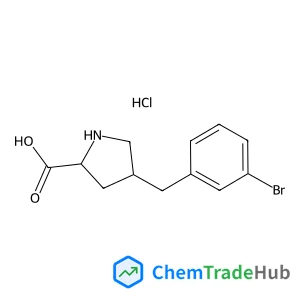
(2S,4R)-4-(3-Bromobenzyl)pyrrolidine-2-carboxylic acid hydrochloride
CAS号:
1049734-10-2
分子式:
C12H15BrClNO2
![Ethyl thieno[3,2-f]quinoline-2-carboxylate structure](https://cnstatic.chemtradehub.com/structs/299/29948-26-3-f62b.webp "Ethyl thieno[3,2-f]quinoline-2-carboxylate structure")
![3,7-Di(1,1':3',1''-terphenyl-5'-yl)-10,11,12,13-tetrahydrodiindeno[7,1-de:1',7'-fg][1,3,2]dioxaphosphocin-5-ol 5-oxide structure](https://cnstatic.chemtradehub.com/structs/135/1352810-38-8-3f10.webp "3,7-Di(1,1':3',1''-terphenyl-5'-yl)-10,11,12,13-tetrahydrodiindeno[7,1-de:1',7'-fg][1,3,2]dioxaphosphocin-5-ol 5-oxide structure")
推荐供应商






免责声明
本页面提供的学术期刊信息仅供参考和研究使用。我们与任何期刊出版商均无关联,也不处理投稿事宜。如有投稿相关咨询,请直接联系相关期刊出版商。
如发现页面信息有误,请发送邮件至 support@chemtradehub.com 联系我们。我们将及时核实并处理您的问题。