



Combining random walk and regression models to understand solvation in multi-component solvent systems
文献信息
发布日期
2017-06-21
DOI
10.1039/C7CP02873C
影响因子
3.676
作者
Ella M. Gale, Janet L. Scott
查看原文
摘要
Polysaccharides, such as cellulose, are often processed by dissolution in solvent mixtures, e.g. an ionic liquid (IL) combined with a dipolar aprotic co-solvent (CS) that the polymer does not dissolve in. A multi-walker, discrete-time, discrete-space 1-dimensional random walk can be applied to model solvation of a polymer in a multi-component solvent mixture. The number of IL pairs in a solvent mixture and the number of solvent shells formable, x, is associated with n, the model time-step, and N, the number of random walkers. The mean number of distinct sites visited is proportional to the amount of polymer soluble in a solution. By also fitting a polynomial regression model to the data, we can associate the random walk terms with chemical interactions between components and probe where the system deviates from a 1-D random walk. The ‘frustration’ between solvents shells is given as ln x in the random walk model and as a negative IL:IL interaction term in the regression model. This frustration appears in regime II of the random walk model (high volume fractions of IL) where walkers interfere with each other, and the system tends to its limiting behaviour. In the low concentration regime, (regime I) the solvent shells do not interact, and the system depends only on IL and CS terms. In both models (and both regimes), the system is almost entirely controlled by the volume available to solvation shells, and thus is a counting/space-filling problem, where the molar volume of the CS is important. Small deviations are observed when there is an IL–CS interaction. The use of two models, built on separate approaches, confirm these findings, demonstrating that this is a real effect and offering a route to identifying such systems. Specifically, the majority of CSs – such as dimethylformide – follow the random walk model, whilst 1-methylimidazole, dimethyl sulfoxide, 1,3-dimethyl-2-imidazolidinone and tetramethylurea offer a CS-mediated improvement and propylene carbonate results in a CS-mediated hindrance. It is shown here that systems, which are very complex at a molecular level, may, nonetheless, be effectively modelled as a simple random walk in phase-space. The 1-D random walk model allows prediction of the ability of solvent mixtures to dissolve cellulose based on only two dissolution measurements (one in neat IL) and molar volume.
期刊推荐
Russian Journal of Bioorganic Chemistry

Drug Discovery Today
Russian Chemical Bulletin
Russian Journal of Applied Chemistry
Current Opinion in Colloid & Interface Science

Acta Materialia

Journal of Peptide Science

Saudi Pharmaceutical Journal
Organic Process Research & Development
Russian Journal of General Chemistry
相关文献
A facile freeze–thaw ultrasonic assisted circulation method of graphite flakes prepared by anode graphite from spent lithium-ion batteries for application in nanofluids
Yu Qiao, Wen Sheng, Chen He, Bai Yang, Haoxuan Xu, Chenzhen Liu, Zhonghao Rao
2021-08-16
Paper
DOI: 10.1039/D1SE00973G
Trimethylsulfonium lead triiodide (TMSPbI3) for moisture-stable perovskite solar cells
Md. Mahbubur Rahman, Arif Ahmed, Chuang-ye Ge, Ranbir Singh, Kicheon Yoo, Sanjay Sandhu, Sunghwan Kim, Jae-Joon Lee
2021-07-07
Paper
DOI: 10.1039/D1SE00560J
Characterization of electrocatalytic proton reduction and surface adsorption of platinum nanoparticles supported by a polymeric stabilizer on an ITO electrode
Yuta Tsubonouchi, Masashi Kajita, Taichi Hayasaka, Mohamed R. Berber, Masayuki Yagi
2021-12-21
Paper
DOI: 10.1039/D1SE01760H
Facile and green one-step synthesis of Ni3S2@CN carbon nanosheets from sodium lignosulfonate for a supercapacitor electrode
2021-08-23
Paper
DOI: 10.1039/D1SE00946J
Hydrodeoxygenation of lignin derived phenolics over a hydrous ruthenium oxide based catalyst(s): role of surface water molecules and acidity of the support
2021-05-14
Paper
DOI: 10.1039/D1SE00102G
Enzyme immobilization as a strategy towards efficient and sustainable lignocellulosic biomass conversion into chemicals and biofuels: current status and perspectives
Elisa Zanuso, Daniel G. Gomes, Héctor A. Ruiz, José A. Teixeira, Lucília Domingues
2021-06-28
Review Article
DOI: 10.1039/D1SE00747E
Efficient utilization of crude bio-oil: the synthesis of nitrogen-doped hierarchically porous carbon as electrocatalysts for the oxygen reduction reaction
Jiahuan Xu, Beichen Xue, Chao Liu, Chunlin Xia, Ming Li, Rui Xiao
2021-06-23
Paper
DOI: 10.1039/D1SE00652E
您可能还喜欢
化合物问答
2-Bromo-4-chloro-1-(difluoromethyl)benzene(CAS号:1261476-50-9)的市场或研究趋势如何?
随着环保要求的提高和安全意识的增强,该化合物的研究和应用趋势正逐渐转向更安全、更环境友好的替代品。市场关注点主要集中在开发新型合成方法和绿色化学路径,以减少有害...
1261476-50-92-Bromo-4-chloro-1-(...
化合物问答
如何处理含有2,9 - 二苯基-1,10 - 菲罗啉(CAS号:25677-69-4)的废料?
处理含有2,9 - 二苯基 - 1,10 - 菲罗啉的废料时,应先将其收集在适当的容器中,避免与其他化学品混合。随后,可以通过水解或氧化等方法进行处理,直至达到...
25677-69-42,9-Diphenyl-1,10-ph...
化合物问答
处理(6-氯-吡嗪-3-基)-(4-乙基-哌嗪-1-基)-甲酮(CAS号:1178836-15-1)时应注意哪些实验室安全事项?
处理(6-氯-吡嗪-3-基)-(4-乙基-哌嗪-1-基)-甲酮时,应穿戴适当的个人防护装备(PPE),包括手套、护目镜和实验室外套。在通风橱中操作以确保良好的通...
1178836-15-1(6-Chloro-3-pyridazi...
化合物问答
处理(R)-2-氯-1-(2,4-二氯苯基)乙醇(CAS号:114446-57-0)时应注意哪些实验室安全事项?
在处理(R)-2-氯-1-(2,4-二氯苯基)乙醇时,应佩戴防护眼镜、实验室外套和手套,确保通风橱开启以减少接触和吸入的风险。避免直接接触皮肤和眼睛。处理过程中...
114446-57-0(1R)-2-Chloro-1-(2,4...
化合物问答
在合成中是否有3-氯-6-(3-氯哌啶-1-基)吡嗪(CAS号:1185310-37-5)的替代品?
可考虑使用类似结构的化合物作为替代品,如3-氯-6-(哌啶-1-基)吡嗪或3-氯-6-(2-氯哌啶-1-基)吡嗪,这些化合物在结构上与目标化合物相似,可能具有相...
1185310-37-53-Chloro-6-(3-chloro...
化合物问答
苯并三氮唑-5-甲酸乙酯(CAS号:73605-91-1)通常如何合成?
该化合物可以通过乙酸乙酯与5-溴-1H-苯并三氮唑的反应合成,通常在无水条件下进行。合成过程中,需要使用适当的溶剂如乙酸乙酯,并在适当的温度下反应。该反应具有较...
73605-91-1Ethyl 1H-benzotriazo...
化合物问答
什么是一水硫酸镁(CAS号:14168-73-1)?
一水硫酸镁是一种无机化合物,化学式为MgSO₄·H₂O,CAS号为14168-73-1。它由镁离子、硫酸根离子和一个结晶水分子组成,通常呈现为白色粉末或颗粒状固...
14168-73-1Magnesium sulfate hy...
化合物问答
氘代-1,3-二氯-2-丙醇(CAS号:1173020-20-6)应用于哪些行业?
氘代-1,3-二氯-2-丙醇主要应用于医药和有机合成领域,作为研究化合物的氘代替代品,用于标记和追踪反应过程。此外,在聚合物和半导体生产中也有一定的应用潜力。
1173020-20-61,3-Dichloro-2-(~2~H...
化合物问答
如何储存氰乙酸环己酯(CAS号:52688-11-6)?
氰乙酸环己酯应储存在阴凉、干燥、通风良好的环境中,远离火源和热源,防止阳光直射。储存容器应密封良好,避免与空气接触,防止发生不必要的反应。
52688-11-6Cyclohexyl cyanoacet...
化合物问答
2-碘-4-硝基苯胺(CAS号:6293-83-0)的市场或研究趋势如何?
目前,2-碘-4-硝基苯胺在医药和农药领域有一定的研究和应用,尤其是在开发新型药物和农药产品方面。然而,由于其潜在的环境和健康风险,行业正趋向于寻找更为安全和环...
6293-83-02-iodo-4-nitroanilin...
来源期刊
Physical Chemistry Chemical Physics

CiteScore:
5.5
自引率:
10.3%
年发文量:
3036
Physical Chemistry Chemical Physics (PCCP) is an international journal co-owned by 19 physical chemistry and physics societies from around the world. This journal publishes original, cutting-edge research in physical chemistry, chemical physics and biophysical chemistry. To be suitable for publication in PCCP, articles must include significant innovation and/or insight into physical chemistry; this is the most important criterion that reviewers and Editors will judge against when evaluating submissions. The journal has a broad scope and welcomes contributions spanning experiment, theory, computation and data science. Topical coverage includes spectroscopy, dynamics, kinetics, statistical mechanics, thermodynamics, electrochemistry, catalysis, surface science, quantum mechanics, quantum computing and machine learning. Interdisciplinary research areas such as polymers and soft matter, materials, nanoscience, energy, surfaces/interfaces, and biophysical chemistry are welcomed if they demonstrate significant innovation and/or insight into physical chemistry. Joined experimental/theoretical studies are particularly appreciated when complementary and based on up-to-date approaches.
推荐化合物

![5,7-Dihydroxy-3-(4-hydroxyphenyl)-6-[(1R,6R)-3-methyl-6-prop-1-en-2-ylcyclohex-2-en-1-yl]chromen-4-one structure](https://cnstatic.chemtradehub.com/structs/191/1914963-20-4-2b05.webp "5,7-Dihydroxy-3-(4-hydroxyphenyl)-6-[(1R,6R)-3-methyl-6-prop-1-en-2-ylcyclohex-2-en-1-yl]chromen-4-one structure")
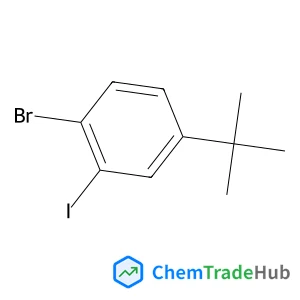
![Bis(N,N''-dimethylpiperazine)tetra[copper(I) iodide] structure](https://cnstatic.chemtradehub.com/structs/140/1401708-91-5-2b86.webp "Bis(N,N''-dimethylpiperazine)tetra[copper(I) iodide] structure")
推荐供应商




免责声明
本页面提供的学术期刊信息仅供参考和研究使用。我们与任何期刊出版商均无关联,也不处理投稿事宜。如有投稿相关咨询,请直接联系相关期刊出版商。
如发现页面信息有误,请发送邮件至 support@chemtradehub.com 联系我们。我们将及时核实并处理您的问题。