








![tert-Butyl N-[(2-chloropyridin-4-yl)methyl]carbamate structure](https://cnstatic.chemtradehub.com/structs/916/916210-27-0-9f95.webp "tert-Butyl N-[(2-chloropyridin-4-yl)methyl]carbamate structure")
Low temperature kinetics and theoretical studies of the reaction CN + CH3NH2: a potential source of cyanamide and methyl cyanamide in the interstellar medium
文献信息
发布日期
2017-10-18
DOI
10.1039/C7CP05746F
影响因子
3.676
作者
Chantal Sleiman, Gisèle El Dib, Marzio Rosi, Dimitrios Skouteris, Nadia Balucani, André Canosa
查看原文
摘要
The reaction between cyano radicals (which are ubiquitous in interstellar clouds) and methylamine (a molecule detected in various interstellar sources) has been investigated in a synergistic experimental and theoretical study. The reaction has been found to be very fast in the entire range of temperatures investigated (23–297 K) by using a CRESU apparatus coupled to pulsed laser photolysis – laser induced fluorescence. The global experimental rate coefficient is given by In addition, dedicated electronic structure calculations of the underlying potential energy surface have been performed, together with capture theory and RRKM calculations. The experimental data have been interpreted in the light of the theoretical calculations and the product branching ratio has been established. According to the present study, in the range of temperatures investigated the title reaction is an efficient interstellar route of formation of cyanamide, NH2CN, another interstellar species. The second most important channel is the one leading to methyl cyanamide, CH3NHCN (an isomer of aminoacetonitrile), via a CN/H exchange mechanism with a yield of 12% of the global reaction in the entire range of temperatures explored. For a possible inclusion in future astrochemical models we suggest, by referring to the usual expression the following values: α = 3.68 × 10⁻¹² cm3 molec−1 s−1, β = −1.80, γ = 7.79 K for the channel leading to NH2CN + CH3; α = 5.05 × 10⁻¹³ cm3 molec−1 s−1, β = −1.82, γ = 7.93 K for the channel leading to CH3NHCN + H.
相关文献
Circular dichroism and circularly polarised luminescence of bipyrenyl oligopeptides, with piperidines added in the peptide chains
Yuki Mimura, Sayaka Kitamura, Motohiro Shizuma, Mizuki Kitamatsu, Yoshitane Imai
2018-08-17
Paper
DOI: 10.1039/C8OB01869C
Copper-catalyzed synthesis of 2-aminophenyl benzothiazoles: a novel approach
Chandra Mohan Kurmarayuni, Baby Ramana Mutchu, Ramana Tamminana, Hari Babu Bollikolla
2018-09-06
Communication
DOI: 10.1039/C8OB02018C
Specific protein-labeling and ligand-binding position analysis with amidopyrene probes as LDI MS tags
Rei Watanabe, Yaping Hu, Keita Iio, Kozo Yoneda, Atsunori Hattori, Atsushi Arai, Hideo Kigoshi
2018-10-04
Paper
DOI: 10.1039/C8OB02222D
Palladium-catalyzed heck-type cascade cyclization of (Z)-1-iodo-1,6-dienes with N-tosyl hydrazones
Jun Li, Xiaochen Chi, Long Meng, Luyang Jiao, Wenhui Shang, Ping Wang, Daopeng Zhang, Yunhui Dong, Qing Liu, Hui Liu
2018-09-25
Communication
DOI: 10.1039/C8OB01821A
Atom-economic synthesis of cyclobuta[a]naphthalen-4-ols via a base-promoted [2 + 2] cycloaddition/1,6-nucleophilic addition cascade
Jia-Yin Wang, Feng-Lie Xie, Jian-Qiang Hu, Shi-Zhao Yang, You-Jian Wang, Wen-Juan Hao, Shu-Jiang Tu, Bo Jiang
2018-09-19
Communication
DOI: 10.1039/C8OB02042F
Synthesis of iminoisoindolinones via a cascade of the three-component Ugi reaction, palladium catalyzed isocyanide insertion, hydroxylation and an unexpected rearrangement reaction
Zhi-Lin Ren, Ping He, Wen-Ting Lu, Mei Sun, Ming-Wu Ding
2018-08-17
Paper
DOI: 10.1039/C8OB01728J
Converting a weaker ATP-binding site inhibitor into a potent hetero-bivalent ligand by tethering to a unique peptide sequence derived from the same kinase
Samanth Reddy Kedika
2018-08-17
Paper
DOI: 10.1039/C8OB01406J
trans-Hydroboration vs. 1,2-reduction: divergent reactivity of ynones and ynoates in Lewis-base-catalyzed reactions with pinacolborane
You Zi, Fritz Schömberg, Fabian Seifert, Helmar Görls, Ivan Vilotijevic
2018-08-16
Paper
DOI: 10.1039/C8OB01343H
tert-Butyl nitrite mediated nitrogen transfer reactions: synthesis of benzotriazoles and azides at room temperature
Sadaf Azeez, Priyanka Chaudhary, Popuri Sureshbabu, Shahulhameed Sabiah, Jeyakumar Kandasamy
2018-09-07
Paper
DOI: 10.1039/C8OB01950A
您可能还喜欢
化合物问答
3 - (二氟甲基)-1 -氟苯(CAS号:26029-52-7)适用哪些法规指南?
3 - (二氟甲基)-1 -氟苯需遵循联合国全球化学品统一分类和标签制度(GHS),包括急性毒性、皮肤腐蚀/刺激、严重眼损伤/眼刺激等分类。同时,该化合物还需符...
26029-52-71-(Difluoromethyl)-3...
化合物问答
3,5-二甲基苯胺(CAS号:108-69-0)通常如何合成?
3,5-二甲基苯胺通常通过乙苯的氨解反应合成。反应中使用硫酸作为催化剂,反应温度为120-130°C。乙苯在硫酸存在下与氨反应,生成3,5-二甲基苯胺和苯胺副产...
108-69-03,5-Dimethylaniline
化合物问答
3-甲基异噻唑-5-胺(CAS号:24340-76-9)安全吗?
3-甲基异噻唑-5-胺在适当使用和储存条件下是相对安全的,但在操作时应注意防护措施。应避免吸入粉尘,避免与皮肤和眼睛直接接触。在操作过程中,应穿戴适当的防护装备...
24340-76-93-Methyl-1,2-thiazol...
化合物问答
3-(1,3-Thiazol-2-yl)-1H-indole(CAS号:135531-86-1)通常如何合成?
3-(1,3-噻唑-2-基)-1H-吲哚通常通过多步合成方法制备。首先,由噻唑-2-基溴化物和吲哚进行偶联反应,得到中间体。然后,通过还原反应将中间体转化为所需...
135531-86-13-(1,3-Thiazol-2-yl)...
化合物问答
4-溴-2-氟苯甲基氯(CAS号:85510-82-3)的主要用途是什么?
4-溴-2-氟苯甲基氯主要用于有机合成中间体,特别是在医药、农药和染料等领域。作为一种具有特定结构的化合物,它在合成复杂有机分子时扮演重要角色。
85510-82-34-Bromo-1-(chloromet...
化合物问答
处理Fmoc-β-(3-噻吩基)-D-Ala-OH(CAS号:220497-90-5)时应注意哪些实验室安全事项?
处理Fmoc-β-(3-噻吩基)-D-Ala-OH时,应佩戴防护手套、护目镜和实验服。操作应在通风橱内进行。如发生泄露,应立即用大量水冲洗,并通知实验室管理人员...
220497-90-5N-[(9H-Fluoren-9-ylm...
化合物问答
氮化硅(CAS号:12033-89-5)通常如何合成?
氮化硅通常通过氮化硅的直接反应合成,即在高温下将四氯化硅与氨气反应。具体步骤是将四氯化硅和氨气混合并加热至1300-1700℃,在该条件下,四氯化硅与氨气反应生...
12033-89-5Trisilicon tetranitr...
化合物问答
Cetirizine EP Impurity B DiHCl(CAS号:1000690-91-4)通常如何合成?
Cetirizine EP Impurity B DiHCl通常通过一锅法合成,首先将4-氯苯基-苯甲基氯甲酸酯与1-哌嗪乙酸反应,生成相应的酸,然后与盐酸反应...
1000690-91-4{4-[(4-Chlorophenyl)...
化合物问答
如何储存1-哌啶-4-基丁-1-酮(CAS号:3509-15-7)?
1-哌啶-4-基丁-1-酮应储存在阴凉、干燥的地方,避免阳光直射。存储容器应密封,并确保通风良好。建议储存温度不超过25℃,湿度保持在相对较低的水平。
3509-15-71-Piperidin-4-ylbuta...
化合物问答
如何处理含有VORUCICLIB(CAS号:1000023-04-0)的废料?
含有VORUCICLIB的废料应进行专业的收集和处理,包括使用适当的容器进行隔离,避免与其他化学品接触。处理方法通常包括化学中和、沉淀反应或吸附过程,随后进行焚...
1000023-04-02-[2-Chloro-4-(trifl...
来源期刊
Physical Chemistry Chemical Physics

CiteScore:
5.5
自引率:
10.3%
年发文量:
3036
Physical Chemistry Chemical Physics (PCCP) is an international journal co-owned by 19 physical chemistry and physics societies from around the world. This journal publishes original, cutting-edge research in physical chemistry, chemical physics and biophysical chemistry. To be suitable for publication in PCCP, articles must include significant innovation and/or insight into physical chemistry; this is the most important criterion that reviewers and Editors will judge against when evaluating submissions. The journal has a broad scope and welcomes contributions spanning experiment, theory, computation and data science. Topical coverage includes spectroscopy, dynamics, kinetics, statistical mechanics, thermodynamics, electrochemistry, catalysis, surface science, quantum mechanics, quantum computing and machine learning. Interdisciplinary research areas such as polymers and soft matter, materials, nanoscience, energy, surfaces/interfaces, and biophysical chemistry are welcomed if they demonstrate significant innovation and/or insight into physical chemistry. Joined experimental/theoretical studies are particularly appreciated when complementary and based on up-to-date approaches.
推荐化合物
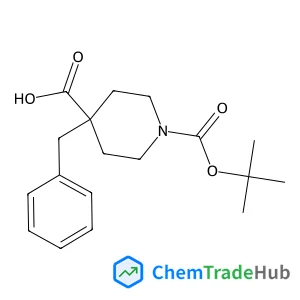
![5-Methyl-4,5,6,7-tetrahydropyrazolo[1,5-a]pyrazin-2-amine structure](https://cnstatic.chemtradehub.com/structs/122/1227210-33-4-8d64.webp "5-Methyl-4,5,6,7-tetrahydropyrazolo[1,5-a]pyrazin-2-amine structure")
推荐供应商



免责声明
本页面提供的学术期刊信息仅供参考和研究使用。我们与任何期刊出版商均无关联,也不处理投稿事宜。如有投稿相关咨询,请直接联系相关期刊出版商。
如发现页面信息有误,请发送邮件至 support@chemtradehub.com 联系我们。我们将及时核实并处理您的问题。