


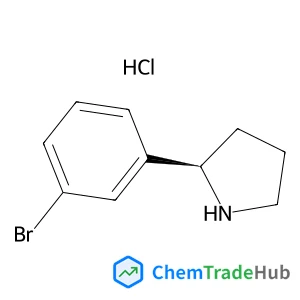
Synthesis of iminoisoindolinones via a cascade of the three-component Ugi reaction, palladium catalyzed isocyanide insertion, hydroxylation and an unexpected rearrangement reaction
文献信息
发布日期
2018-08-17
DOI
10.1039/C8OB01728J
影响因子
3.876
作者
Zhi-Lin Ren, Ping He, Wen-Ting Lu, Mei Sun, Ming-Wu Ding
查看原文
摘要
A robust ligand-free palladium-catalyzed cascade reaction for the synthesis of diversely substituted iminoisoindolinones has been developed. The cascade reaction involves isocyanide insertion into Ugi-3CR adducts, accompanied by unexpected hydroxylation and rearrangement.
期刊推荐
Russian Chemical Bulletin
Current Opinion in Colloid & Interface Science
Chemistry Education Research and Practice
Russian Journal of Bioorganic Chemistry

Chemical Communications
Nature Medicine

New Journal of Chemistry
Journal of Saudi Chemical Society
Russian Journal of Coordination Chemistry

Journal of Peptide Science
相关文献
Introduction to chemistry for covalent adaptable networks
Filip Du Prez, Julia Kalow
2020-07-10
Editorial
DOI: 10.1039/D0PY90102D
Folded amphiphilic homopolymer micelles in water: uniform self-assembly beyond amphiphilic random copolymers
Yoshihiko Kimura, Makoto Ouchi, Takaya Terashima
2020-07-06
Paper
DOI: 10.1039/D0PY00685H
Ring opening polymerization of macrocyclic oligoesters derived from renewable sources
Antxon Martínez de Ilarduya, Sebastián Muñoz Guerra
2020-03-17
Review Article
DOI: 10.1039/D0PY00258E
Synthesis and sequencing of informational poly(amino phosphodiester)s
Ian Roszak, Laurence Oswald, Abdelaziz Al Ouahabi, Eline Laurent, Olivier Felix, Isaure Carvin-Sergent, Laurence Charles, Jean-François Lutz
2021-09-13
Communication
DOI: 10.1039/D1PY01052B
Development of physical, mechanical, antibacterial and cell growth properties of poly(glycerol sebacate urethane) (PGSU) with helping of curcumin and hydroxyapatite nanoparticles
Vafa Fakhri, Aliakbar Jafari, Mir Alireza Shafiei, Mohammad Vahid Ehteshamfar, Shima Khalighiyan, Hadi Hosseini, Vahabodin Goodarzi, Frederik R. Wurm, Mehrdad Moosazadeh Moghaddam
2021-10-19
Paper
DOI: 10.1039/D1PY01040A
One-pot synthesis of amphiphilic multiblock poly(2-oxazoline)s via para-fluoro-thiol click reactions
Tieshuai Zhao, Ben Drain, Gokhan Yilmaz, C. Remzi Becer
2021-09-20
Paper
DOI: 10.1039/D1PY00944C
Imidazole based dual photo/thermal initiators for highly efficient radical polymerization under air with a metal-free approach‡
2021-10-22
Communication
DOI: 10.1039/D1PY01079D
Bis(N-acylated imidazolin-2-imine) nickel catalyzed norbornene copolymerization with methyl acrylate
Hu Zhang, Ru Xiao, Zhengguo Cai
2020-07-28
Paper
DOI: 10.1039/D0PY00857E
您可能还喜欢
化合物问答
(5-氨基吡唑-3-基)乙酸(CAS号:174891-10-2)的物理化学性质是什么?
(5-氨基吡唑-3-基)乙酸是一种无色至白色固体,分子量为174.15 g/mol。它在水中具有较好的溶解性,在有机溶剂中的溶解度较低。该化合物具有较好的反应活...
174891-10-2(3-Amino-1H-pyrazol-...
化合物问答
3-氟-4,5-二氯苯胺(CAS号:35754-38-2)适用哪些法规指南?
3-氟-4,5-二氯苯胺受到多项法规指南的约束,包括但不限于GHS(全球化学品统一分类和标签制度)的危险分类标准、欧盟的REACH法规(注册、评估、授权和限制)...
35754-38-23,4-Dichloro-5-fluor...
化合物问答
什么是(R)-(+)-2,2',6,6'-四甲氧基-4,4'-联(二(3,5-二甲苯基基)膦基)-3,3'-二联吡啶(CAS号:442905-33-1)?
这是一种有机化合物,化学名为(R)-(+)-2,2',6,6'-四甲氧基-4,4'-联(二(3,5-二甲苯基基)膦基)-3,3'-二联吡啶,CAS号为44290...
442905-33-14,4'-Bis[bis(3,5-dim...
化合物问答
1-氨基-2-氰基萘(CAS号:3100-67-2)应用于哪些行业?
1-氨基-2-氰基萘在医药、聚合物、传感器和半导体等行业中有应用。在医药领域,它可用作中间体合成某些药物。在聚合物行业,它可以用于制备具有特定性能的聚合物。此外...
3100-67-21-Amino-2-naphthonit...
化合物问答
如何处理含有1-溴-4-(异丙氧基甲基)苯(CAS号:98446-84-5)的废料?
处理含1-溴-4-(异丙氧基甲基)苯的废料时,首先应确保废液收集在防渗漏的容器中,避免泄露。然后,可以考虑采用化学降解法或物理吸附法进行处理。在特定条件下,可通...
98446-84-51-Bromo-4-(isopropox...
化合物问答
6-Chloro-8-(trifluoromethyl)chroman-4-one(CAS号:1344889-75-3)的主要用途是什么?
6-氯-8-三氟甲基-2,3-二氢-4H-色喃-4-酮主要用于有机合成中的中间体,也可作为研究试剂使用。
1344889-75-36-Chloro-8-(trifluor...
化合物问答
7-乙氧基-2-萘酚(CAS号:57944-44-2)通常如何合成?
7-乙氧基-2-萘酚通常通过N-乙氧基化反应合成,首先将2-萘酚与乙醇钠在乙醇中反应生成7-乙氧基-2-萘酚钠盐,再通过酸化进一步得到7-乙氧基-2-萘酚。该合...
57944-44-27-Ethoxy-2-naphthol
化合物问答
4-(1,1-二氧硫代吗啉)丁醇(CAS号:59801-41-1)适用哪些法规指南?
该化合物需遵循一系列的法规指南,包括但不限于GHS全球统一分类和标签制度,其分类可能包括易燃液体和可能危害水生环境。在欧洲,还需遵循REACH法规,确保物质和混...
59801-41-14-(4-Hydroxybutyl)th...
化合物问答
4-甲氧基苄基叠氮甲酸酯(CAS号:25474-85-5)的物理化学性质是什么?
4-甲氧基苄基叠氮甲酸酯是一种无色液体,具有一定的挥发性。其分子量为198.16,熔点为-69°C,沸点为105°C。该化合物在水中溶解度较低,在有机溶剂如乙醇...
25474-85-54-Methoxybenzyl carb...
化合物问答
如何处理含有4-氯-2-氟嘧啶(CAS号:51422-00-5)的废料?
含有4-氯-2-氟嘧啶的废料应按照危险废物处理。首先,应收集并分类这些废料,避免与其他废物混合。然后,可以采用焚烧处理或者交由专业机构进行处置。在处理过程中,需...
51422-00-54-Chloro-2-fluoropyr...
来源期刊
Organic & Biomolecular Chemistry
CiteScore:
3.4
自引率:
10.3%
年发文量:
1041
Organic & Biomolecular Chemistry (OBC) publishes original and high impact research and reviews in organic chemistry. We welcome research that shows new or significantly improved protocols or methodologies in total synthesis, synthetic methodology or physical and theoretical organic chemistry as well as research that shows a significant advance in the organic chemistry or molecular design aspects of chemical biology, catalysis, supramolecular and macromolecular chemistry, theoretical chemistry, mechanism-oriented physical organic chemistry, medicinal chemistry or natural products. Articles published in the journal should report new work which makes a highly-significant impact in the field. Routine and incremental work is generally not suitable for publication in the journal. More details about key areas of our scope are below. In all cases authors should include in their article clear rationale for why their research has been carried out.
推荐化合物
推荐供应商




免责声明
本页面提供的学术期刊信息仅供参考和研究使用。我们与任何期刊出版商均无关联,也不处理投稿事宜。如有投稿相关咨询,请直接联系相关期刊出版商。
如发现页面信息有误,请发送邮件至 support@chemtradehub.com 联系我们。我们将及时核实并处理您的问题。