







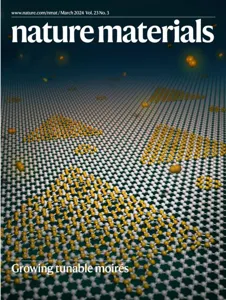
Facile synthesis and chiral recognition of block and star copolymers containing stereoregular helical poly(phenyl isocyanide) and polyethylene glycol blocks
文献信息
发布日期
2017-03-09
DOI
10.1039/C7PY00028F
影响因子
5.582
作者
Na Liu, Cui-Hong Ma, Rui-Wen Sun, Jian Huang, Chonglong Li, Zong-Quan Wu
查看原文
摘要
A new Pd(II) initiator bearing an alkyne headgroup was designed and synthesized. Living polymerization of phenyl isocyanide using this Pd(II) initiator afforded well-defined alkyne-terminated helical poly(phenyl isocyanide) (PPI) with controlled molecular weights (Mns) and narrow molecular weight distributions (Mw/Mns). The alkyne end group of PPI coupled with azide-terminated random-coil poly(ethylene glycol) (PEG) via copper-catalyzed alkyne–azide cycloaddition (CuAAC) “click” chemistry formed a novel class of helix–coil block copolymer PPI-b-PEG. The alkyne-terminated PPI coupled with a PEG bearing azides on both the two chain ends afforded a helix–coil–helix triblock copolymer PPI-b-PEG-b-PPI. When optically active alkyne-terminated PPIs bearing L- or D-menthol ester pendants were used in the coupling reaction, optically active di- and triblock copolymers were facilely achieved, which exhibited an intense Cotton effect on circular dichroism (CD) spectra due to the one-handed helical conformation of the PPI segments. Moreover, a Pd(II) complex bearing two alkyne headgroups was designed and synthesized, which initiated the living polymerization of phenyl isocyanide that lead to the formation of well-defined PPI with two alkyne groups on the same chain end. Coupling this helical polymer with azide-terminated PEG via CuAAC “click” chemistry formed a helix–(coil)2 miktoarm star copolymer containing two random-coil PEG segments and one helical PPI block. The amphiphilic block and star polymers containing hydrophobic PPI and hydrophilic PEG segments were found to self-assemble into well-defined spherical nanoparticles in water. Interestingly, these supramolecular architectures showed excellent chiral recognition to dansyl modified L- and D-phenylalanine (L- or D-Phe-DNSP) in high enantiomeric selectivity.
相关文献
Monitoring drug–lipid membrane interactions via a molecular rotor probe
Qinqin Xu, Tao Zhao, Zhihua Sun
2016-05-23
Paper
DOI: 10.1039/C6AN00721J
Cobalt oxyhydroxide nanoflake based fluorescence sensing platform for label-free detection of DNA
Zhe Zhang, Jilin Tang
2016-05-20
Paper
DOI: 10.1039/C6AN00745G
Preparation of a chemically stable metal–organic framework and multi-walled carbon nanotube composite as a high-performance electrocatalyst for the detection of lead
Xin Sun, Yuling Chen, Yao Xie, Lu Wang, Yang Wang, Xiaoya Hu
2020-01-21
Paper
DOI: 10.1039/C9AN02299F
Surface-enhanced spatially-offset Raman spectroscopy (SESORS) for detection of neurochemicals through the skull at physiologically relevant concentrations
Amber S. Moody, Taylor D. Payne, Brian A. Barth, Bhavya Sharma
2020-01-16
Paper
DOI: 10.1039/C9AN01708A
An efficient core–shell fluorescent silica nanoprobe for ratiometric fluorescence detection of pH in living cells
Jingni Fu, Changqin Ding, Anwei Zhu
2016-05-31
Paper
DOI: 10.1039/C6AN00981F
Morphology controlled synthesis of platinum nanoparticles performed on the surface of graphene oxide using a gas–liquid interfacial reaction and its application for high-performance electrochemical sensing
Wushuang Bai, Qinglin Sheng, Jianbin Zheng
2016-05-09
Paper
DOI: 10.1039/C6AN00632A
Signal-off electrochemiluminescence immunosensors based on the quenching effect between curcumin-conjugated Au nanoparticles encapsulated in ZIF-8 and CdS-decorated TiO2 nanobelts for insulin detection
Yu Du, Xiaojian Li, Xiang Ren, Huan Wang, Dan Wu, Hongmin Ma, Dawei Fan, Qin Wei
2020-01-20
Paper
DOI: 10.1039/C9AN02288K
Effective isolation of exosomes with polyethylene glycol from cell culture supernatant for in-depth proteome profiling
Zhigang Sui, Yichu Shan, Lihua Zhang, Yukui Zhang
2016-05-04
Paper
DOI: 10.1039/C6AN00892E
您可能还喜欢
化合物问答
什么是2,6-二溴-4,8-双[(2-乙基己基)氧基]苯并[1,2-b:4,5-b']二噻吩(CAS号:1226782-13-3)?
2,6-二溴-4,8-双[(2-乙基己基)氧基]苯并[1,2-b:4,5-b']二噻吩是一种有机化合物,分子式为C23H32Br2O2S2。该化合物具有芳香性和...
1226782-13-32,6-Dibromo-4,8-bis[...
化合物问答
木聚硫钠(CAS号:37319-17-8)的物理化学性质是什么?
木聚硫钠通常为无色或白色结晶性粉末,具有吸湿性。其分子量约为121.11 g/mol。木聚硫钠易溶于水,不溶于醇类和其他非极性溶剂。在酸性或碱性溶液中,木聚硫钠...
37319-17-8Pentosan
化合物问答
2-甲氧基-4-(三氟甲基)苄溴, JRD(CAS号:886500-59-0)适用哪些法规指南?
该化合物在合成、储存和运输过程中需遵循《全球化学品统一分类和标签制度》(GHS)的健康、环境和物理危险分类。在欧洲还需符合《化学品注册、评估、授权和限制》(RE...
886500-59-02-Methoxy-4-(trifluo...
化合物问答
1,4-Diazoniabicyclo[2.2.2]octane-1,4-disulfinate(CAS号:119752-83-9)的主要用途是什么?
1,4-二氮杂双环[2.2.2]辛烷-1,4-二硫酸二酯主要用于有机合成中的保护基团,特别是在保护胺基和硫醇基方面具有广泛应用。此外,它还用于一些特殊化学反应的...
119752-83-91,4-Diazabicyclo[2.2...
化合物问答
如何处理含有4-(Bromomethyl)-2-fluorobenzenesulphonamide(CAS号:1645275-47-3)的废料?
含有4-(Bromomethyl)-2-fluorobenzenesulphonamide的废液应首先进行中和处理,以降低pH值,避免对环境造成腐蚀性影响。随后...
1645275-47-34-(Bromomethyl)-2-fl...
化合物问答
Loureiriol(CAS号:479195-44-3)的物理化学性质是什么?
Loureiriol是一种天然化合物,其分子式为C15H22O4。Loureiriol为无色结晶性粉末,具有较高的熔点和良好的热稳定性。其相对分子质量为262....
479195-44-3Loureiriol
化合物问答
在合成中是否有3-氨基苯甲酰苯胺(CAS号:14315-16-3)的替代品?
在合成过程中,可以考虑使用类似结构的化合物作为3-氨基苯甲酰苯胺的替代品,例如N-苯基-3-氰基苯胺或N-苯基-3-硝基苯胺等,这些化合物具有相似的化学性质,可...
14315-16-33-Amino-N-phenylbenz...
化合物问答
4-异氰酰苯基硼酸频哪醇酯(CAS号:380430-64-8)的市场或研究趋势如何?
4-异氰酰苯基硼酸频哪醇酯主要应用于有机合成、药物化学和材料科学领域。随着绿色化学的发展,该化合物因其高效的官能团转化能力和环境友好性而受到越来越多的关注。近年...
380430-64-82-(4-Isocyanatopheny...
化合物问答
如何储存3β-乙酰氧基-7,25-甘遂二烯-24(R)-醇(CAS号:1352001-09-2)?
3β-乙酰氧基-7,25-甘遂二烯-24(R)-醇应储存在阴凉、干燥、通风良好的地方,避免直接光照。储存容器应密封,防止空气中的水分和氧气影响化合物的稳定性。建...
1352001-09-23β-acetoxy-eupha- 7,...
化合物问答
如何储存4-氟-2-甲基-1H-吲哚(CAS号:1260383-51-4)?
应将4-氟-2-甲基-1H-吲哚存放在阴凉、干燥、通风良好的地方,避免直接暴露在光照下。容器应密封,避免与空气中的水蒸气接触。建议在避光、温度不超过25℃的环境...
1260383-51-44-Fluoro-2-methyl-1H...
来源期刊
Polymer Chemistry

CiteScore:
8.6
自引率:
7.3%
年发文量:
457
Polymer Chemistry welcomes submissions in all areas of polymer science that have a strong focus on macromolecular chemistry. Manuscripts may cover a broad range of fields, yet no direct application focus is required.
推荐化合物
![Ethyl 4-[8-chloro(5,5,6,6,7-~2~H_5_)-5,6-dihydro-11H-benzo[5,6]cyclohepta[1,2-b]pyridin-11-ylidene]-1-piperidinecarboxylate structure](https://cnstatic.chemtradehub.com/structs/102/1020719-57-6-37e2.webp "Ethyl 4-[8-chloro(5,5,6,6,7-~2~H_5_)-5,6-dihydro-11H-benzo[5,6]cyclohepta[1,2-b]pyridin-11-ylidene]-1-piperidinecarboxylate structure")
![(R)-N-[(S)-1-[2-(Diphenylphosphino)phenyl]ethyl]-2-methylpropane-2-sulfinamide structure](https://cnstatic.chemtradehub.com/structs/159/1595319-98-4-33e7.webp "(R)-N-[(S)-1-[2-(Diphenylphosphino)phenyl]ethyl]-2-methylpropane-2-sulfinamide structure")
推荐供应商






免责声明
本页面提供的学术期刊信息仅供参考和研究使用。我们与任何期刊出版商均无关联,也不处理投稿事宜。如有投稿相关咨询,请直接联系相关期刊出版商。
如发现页面信息有误,请发送邮件至 support@chemtradehub.com 联系我们。我们将及时核实并处理您的问题。