


![2-[2-(2-Methoxyethoxy)ethoxy]-2-methylpropane structure](https://cnstatic.chemtradehub.com/structs/527/52788-79-1-71c1.webp "2-[2-(2-Methoxyethoxy)ethoxy]-2-methylpropane structure")
In situ synthesis of thermoresponsive 4-arm star block copolymer nano-assemblies by dispersion RAFT polymerization
文献信息
发布日期
2017-05-04
DOI
10.1039/C7PY00508C
影响因子
5.582
作者
Yaqing Qu, Xueying Chang, Shengli Chen
查看原文
摘要
Well-defined 4-arm star block copolymer nanospheres of [poly(N-isopropylacrylamide)-block-polystyrene]4 [(PNIPAM-b-PS)4] containing a hydrophobic core of the polystyrene (PS) block and a thermoresponsive corona of the 4-arm star poly(N-isopropylacrylamide) (PNIPAM) were prepared by dispersion RAFT polymerization employing a tetrafunctional macro-RAFT agent of tetra(trithiocarbonate)-terminated poly(N-isopropylacrylamide) [(PNIPAM-TTC)4]. The size of the 4-arm star (PNIPAM-b-PS)4 nanospheres increases with the increasing degree of polymerization (DP) of the PS block, whereas it decreases with the DP of the star PNIPAM increasing. A comparison between the 4-arm star (PNIPAM-b-PS)4 nanospheres and the linear poly(N-isopropylacrylamide)-block-polystyrene (PNIPAM-b-PS) nanospheres is made. It is found that the 4-arm star (PNIPAM-b-PS)4 nanospheres and the linear PNIPAM-b-PS nanospheres have a similar particle size when the DPs of the PS and PNIPAM blocks in the star and linear block copolymers are close to each other. Interestingly, the topology of PNIPAM is found to exert influence on its thermo-responsive phase transition, and the (PNIPAM122-b-PS110)4 4-arm star block copolymer nanospheres have a lower critical solution temperature (LCST) lower than the PNIPAM118-b-PS125 linear block copolymer nanospheres. At temperatures above LCST of the (PNIPAM122-b-PS110)4 nanospheres, the 4-arm star PNIPAM chains deposit on the PS core to form raspberry-like nanospheres, in which the dehydrated 4-arm star PNIPAM chains form dispersed microdomains on the PS core. This synthesis of (AB)4 4-arm star block copolymer nano-assemblies is believed to be efficient and is helpful to study how the topology of PNIPAM affects the thermoresponsive phase transition.
期刊推荐
Acta Metallurgica Sinica-English Letters
Herald of the Russian Academy of Sciences

Cellulose

Bioorganic & Medicinal Chemistry
Biocatalysis and Biotransformation
Heteroatom Chemistry
Medicinal Chemistry Research
NDT & E International

Bioorganic & Medicinal Chemistry Letters
Critical Reviews in Solid State and Materials Sciences
相关文献
Polaron hopping barriers and rates in semiconducting polymers
Joel H. Bombile, Shreya Shetty, Michael J. Janik, Scott T. Milner
2020-01-07
Paper
DOI: 10.1039/C9CP06039A
The influence of oxygen vacancy on the electronic and optical properties of ABO3−δ (A = La, Sr, B = Fe, Co) perovskites
Ting Jia, Zhi Zeng, Xiaoli Zhang, Paul Ohodnicki, Benjamin Chorpening, Gregory Hackett, Jonathan Lekse, Yuhua Duan
2019-08-28
Paper
DOI: 10.1039/C9CP03883C
Computational description of key spectroscopic features of zeolite SSZ-13
Alyssa M. Love, Sarah C. Schuenzel, Patrick Wolf, Manos Mavrikakis
2019-08-08
Paper
DOI: 10.1039/C9CP03146D
Assessing the accuracy of simplified coupled cluster methods for electronic excited states in f0 actinide compounds
Artur Nowak, Paweł Tecmer, Katharina Boguslawski
2019-08-14
Paper
DOI: 10.1039/C9CP03678D
Equilibration of molecules between two compartments through a nanochannel in the presence of osmolytes: a molecular dynamics simulation study
2019-09-17
Paper
DOI: 10.1039/C9CP03635K
Prediction of the Au4S crystal via a superatom network model: from clusters to solids
Qiman Liu, Chengyu Zhang, Chang Xu, Shuanglin Hu
2020-01-17
Paper
DOI: 10.1039/C9CP06180K
Why does the presence of silicon atoms improve the emission properties of biphenyl derivatives? – Verification of various hypotheses by experiment and theory
Karolina Rachuta, Jacek Koput, Gordon L. Hug, Mariusz Majchrzak
2019-08-28
Paper
DOI: 10.1039/C9CP03749G
closo-Carboranes as dual CH⋯π and BH⋯π donors: theoretical study and biological significance
Antonio Frontera, Antonio Bauzá
2019-08-21
Paper
DOI: 10.1039/C9CP03858B
Calculation of vibrationally resolved absorption spectra of acenes and pyrene
Isaac Benkyi, Enrico Tapavicza, Heike Fliegl, Dage Sundholm
2019-09-11
Paper
DOI: 10.1039/C9CP04178H
您可能还喜欢
化合物问答
甲基双烯双酮(CAS号:5173-46-6)通常如何合成?
甲基双烯双酮可以通过多种途径合成。一种常见的合成方法是通过甲基化和环化反应,先由4-甲基-9-烯-1,3-二酮合成,然后进行环化反应得到目标产物。具体的合成路线...
5173-46-6Estra-4,9-diene-3,17...
化合物问答
如何处理含有tert-butyl 3,5-difluorobenzoate(CAS号:467442-11-1)的废料?
处理含有tert-butyl 3,5-difluorobenzoate(CAS号:467442-11-1)的废液时,应首先收集并密封,避免泄漏。随后,建议通过焚...
467442-11-12-Methyl-2-propanyl ...
化合物问答
4-二甲氧基甲基-2-(三氟甲基)嘧啶(CAS号:878760-47-5)通常如何合成?
4-二甲氧基甲基-2-(三氟甲基)嘧啶通常通过三氟甲基化反应合成。首先,将2-氯嘧啶与三氟甲基锂在惰性溶剂中反应,然后将得到的三氟甲基化中间体与二甲氧基甲基化试...
878760-47-54-(Dimethoxymethyl)-...
化合物问答
WRW4(CAS号:878557-55-2)的主要用途是什么?
WRW4主要应用于科学研究领域,尤其是在合成化学和有机合成方面。由于其特殊的化学性质,它可能被用于特定的化学反应或合成过程。
878557-55-2WRW4
化合物问答
什么是6-O-(三异丙基硅基)-D-葡萄烯糖(CAS号:137915-37-8)?
6-O-(三异丙基硅基)-D-葡萄烯糖是一种有机化合物,化学名为1,5-Anhydro-2-deoxy-6-O-(triisopropylsilyl)-D-ar...
137915-37-81,5-Anhydro-2-deoxy-...
化合物问答
N-Benzyl-N,N-dimethyl-2-phenoxyethanaminium(CAS号:7181-73-9)的主要用途是什么?
N-Benzyl-N,N-dimethyl-2-phenoxyethanaminium在有机合成中被用作保护基团,可以用于保护氨基,提高反应的选择性和产率。此外...
7181-73-9N-Benzyl-N,N-dimethy...
化合物问答
什么是3-(Cyclohex-1-en-1-yl)acrylic acid(CAS号:56453-88-4)?
3-(Cyclohex-1-en-1-yl)acrylic acid,简称3-环己烯-1-烯丙酸,是一种含有环己烯基团的丙烯酸衍生物,用于合成其他化合物或作为有...
56453-88-43-(Cyclohex-1-en-1-y...
化合物问答
如何储存(1R)-7-fluoro-1,2,3,4-tetrahydronaphthalen-1-amine(CAS号:1055949-62-6)?
应将(1R)-7-氟-1,2,3,4-四氢萘胺储存于阴凉、干燥、通风良好的地方,远离火源和热源。避免与氧化剂、酸类接触。使用合适的容器,密封保存。
1055949-62-6(1R)-7-Fluoro-1,2,3,...
化合物问答
3-甲基苯并呋喃-2-羧酸(CAS号:24673-56-1)的主要用途是什么?
3-甲基苯并呋喃-2-羧酸主要用作合成其他化合物的中间体,如药物合成、有机合成等领域。此外,该化合物在某些领域作为化学试剂或分析试剂使用。
24673-56-13-Methyl-1-benzofura...
化合物问答
孕烷醇酮(CAS号:128-20-1)适用哪些法规指南?
孕烷醇酮(CAS号:128-20-1)需遵守GHS(全球化学品统一分类和标签制度)的相关分类和标签要求,主要涉及健康危害、环境危害和物理化学危害。此外,还需要遵...
128-20-1(3alpha,5beta)-3-Hyd...
来源期刊
Polymer Chemistry

CiteScore:
8.6
自引率:
7.3%
年发文量:
457
Polymer Chemistry welcomes submissions in all areas of polymer science that have a strong focus on macromolecular chemistry. Manuscripts may cover a broad range of fields, yet no direct application focus is required.
推荐化合物
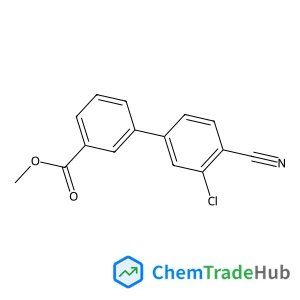

![1-Oxa-8-azaspiro[4.5]decan-3-ol structure](https://cnstatic.chemtradehub.com/structs/757/757239-76-2-a0ec.webp "1-Oxa-8-azaspiro[4.5]decan-3-ol structure")
methyl]-N,2-dimethyl-2-propanesulfinamide structure](https://cnstatic.chemtradehub.com/structs/256/2565792-50-7-8a26.webp "N-[(R)-[3-(Benzyloxy)-2-(dicyclohexylphosphino)phenyl](phenyl)methyl]-N,2-dimethyl-2-propanesulfinamide structure")
推荐供应商




免责声明
本页面提供的学术期刊信息仅供参考和研究使用。我们与任何期刊出版商均无关联,也不处理投稿事宜。如有投稿相关咨询,请直接联系相关期刊出版商。
如发现页面信息有误,请发送邮件至 support@chemtradehub.com 联系我们。我们将及时核实并处理您的问题。