


![4-{(2R,3R)-3-Methyl-5-[(1E)-1-propen-1-yl]-2,3-dihydro-1-benzofuran-2-yl}phenol structure](https://cnstatic.chemtradehub.com/structs/221/221666-27-9-20a9.webp "4-{(2R,3R)-3-Methyl-5-[(1E)-1-propen-1-yl]-2,3-dihydro-1-benzofuran-2-yl}phenol structure")
Helically twining polymerization for constructing polymeric double helices
文献信息
发布日期
2017-08-21
DOI
10.1039/C7PY00729A
影响因子
5.582
作者
Huajun Huang, Song Hong, Junya Liang, Yan Shi, Jianping Deng
查看原文
摘要
The double helix is one of the most basic and exquisite architectures in nature, and thus has received much attention in multiple disciplines. However, the types of artificial polymeric double helices and their synthetic methods are severely limited. The present contribution develops a novel 3-step methodology for preparing double helices consisting of helical substituted polyacetylenes (DHSPs): (1) an optically inactive helical polymer is synthesized using an achiral monomer; (2) the as-obtained polymer is induced to form a one-handed helix by “locking” a chiral monomer in the helical grooves; (3) the “locked” chiral monomer undergoes helically twining polymerization along the pre-formed one-handed helical polymer chains, thereby constructing the DHSPs. Circular dichroism and UV-vis absorption spectra in combination with high resolution TEM images demonstrate the optical activity, double helical structure, and helix sense of the DHSPs. The convenient synthetic strategy is expected to provide various kinds of double helical polymers.
期刊推荐

Topics in Catalysis
Polycyclic Aromatic Compounds
Journal of Chemical Sciences

Heteroatom Chemistry

Medicinal Chemistry Research

Bioorganic & Medicinal Chemistry Letters

Critical Reviews in Solid State and Materials Sciences

Biocatalysis and Biotransformation

Bioorganic & Medicinal Chemistry

Journal of the Indian Institute of Science
相关文献
Vibrational spectra and conformational isomerism of calixarene building blocks: 2-benzylphenol
Sergei Katsyuba, Alla Chernova, Reinhard Schmutzler
2003-01-27
Paper
DOI: 10.1039/B211164K
Phthalimide-based-SSCF3 reagent for enantioselective dithiotrifluoromethylation
Jianrong Liu
2021-01-22
Research Article
DOI: 10.1039/D1QO00001B
An electrochemical perspective on the roles of ligands in the merger of transition-metal catalysis and electrochemistry
Jun-Song Zhong, Yi Yu, Zhaojiang Shi, Ke-Yin Ye
2020-12-28
Review Article
DOI: 10.1039/D0QO01227K
Synthesis of isoxazolidines via catalyst-free one-pot three-component cycloaddition of sulfoxonium ylides, nitrosoarenes and alkenes
Xing Li, Pingan Zhai, Yongsheng Fang, Wenhui Li, Honghong Chang, Wenchao Gao
2021-01-12
Research Article
DOI: 10.1039/D0QO01471K
A [15]paracyclophenone and its fluorenone-containing derivatives: syntheses and binding to nerve agent mimics via aryl-CH hydrogen bonding interactions
Peiren Liu, Hongliang Wang, Hong Zeng, Xin Hong, Feihe Huang
2020-05-14
Research Article
DOI: 10.1039/D0QO00456A
Site-specific solvation determined by intermolecular nuclear Overhauser effect—measurements and molecular dynamics
Manuel Angulo, Christoph Hawat, Hans-Jörg Hofmann, Stefan Berger
2003-02-13
Paper
DOI: 10.1039/B211134A
Theozyme for antibody aldolases. Characterization of the transition-state analogue
Manuel Arnó, Luis R. Domingo
2003-01-27
Paper
DOI: 10.1039/B209636F
Copper-catalyzed alkynylation/annulation cascades of N-allyl ynamides: regioselective access to medium-sized N-heterocycles
Xu-Heng Yang, Jian Huang, Fang Wang, Zhuoliang Liu, Yujiao Li, Cheng-an Tao, Jianfang Wang
2020-09-30
Research Article
DOI: 10.1039/D0QO00837K
Recent advances in quinazolinones as an emerging molecular platform for luminescent materials and bioimaging
Zhiming Xing, Wanhui Wu, Yongxiang Miao, Yingqun Tang, Youkang Zhou, Lifang Zheng, Yang Fu, Zhibin Song, Yiyuan Peng
2021-02-02
Review Article
DOI: 10.1039/D0QO01425G
您可能还喜欢
化合物问答
4-[4-三氟甲基苯基]恶唑(CAS号:1126636-40-5)通常如何合成?
4-[4-三氟甲基苯基]恶唑通常通过将4-三氟甲基苯酚与异硫氰酸苯酯在有机溶剂中进行酯化反应合成。该反应可在无水条件下,使用适当的催化剂,如四丁基氢氧化铵,以提...
1126636-40-54-(4-(Trifluoromethy...
59729-32-71-[3-(Dimethylamino)...
化合物问答
RockPhos Pd G3(CAS号:2009020-38-4)通常如何合成?
RockPhos Pd G3 通常通过钯催化偶联反应合成,使用配体 (2'-Amino-2-biphenylyl)(methanesulfonato-kappa...
2009020-38-4(2'-Amino-2-biphenyl...
化合物问答
1-哌啶甲酰胺(CAS号:2158-03-4)的市场或研究趋势如何?
1-哌啶甲酰胺作为有机合成中的重要中间体,其市场需求主要受医药、农药、染料等行业推动。近年来,随着新药开发和绿色化学的发展,该化合物的研究趋势集中在开发更高效、...
2158-03-41-Piperidinecarboxam...
化合物问答
2-(二苯基膦基)乙胺(CAS号:4848-43-5)适用哪些法规指南?
2-(二苯基膦基)乙胺适用于多种法规指南,包括但不限于《全球化学品统一分类和标签制度》(GHS),欧盟《化学品注册、评估、授权和限制》法规(REACH),以及美...
4848-43-52-(Diphenylphosphino...
化合物问答
如何储存间苯二甲酸二烯丙酯(CAS号:1087-21-4)?
间苯二甲酸二烯丙酯应储存在阴凉、干燥、通风良好的地方,远离火源和热源。储存容器应密封,避免光照和高温。储存温度应控制在25℃以下,相对湿度应低于80%。避免与其...
1087-21-4Diallyl isophthalate
化合物问答
什么是间甲苯异硫代异氰酸酯(CAS号:621-30-7)?
间甲苯异硫代异氰酸酯是一种有机化合物,分子式为C7H7NO2S,具有刺激性气味。它是一种重要的有机合成中间体,在合成其他化合物时广泛应用。
621-30-71-Isothiocyanato-3-m...
化合物问答
在合成中是否有N-Boc-D-苯丙氨醇(CAS号:106454-69-7)的替代品?
在合成中,可以考虑使用N-Cbz-D-苯丙氨醇或N-Fmoc-D-苯丙氨醇作为替代品。这些化合物同样具有保护氨基的功能,且在合成过程中表现出良好的反应性能。
106454-69-72-Methyl-2-propanyl ...
化合物问答
3-羟甲基-2-氧异丙基吡啶(CAS号:954240-50-7)的主要用途是什么?
3-羟甲基-2-氧异丙基吡啶主要用于有机合成领域,可以作为合成其他药物、农药或精细化学品的中间体。此外,它还可能在实验室研究中作为特定反应的前体或溶剂。
954240-50-7(2-Isopropoxy-3-pyri...
化合物问答
6-氨基-9-甲基嘌呤(CAS号:700-00-5)应用于哪些行业?
6-氨基-9-甲基嘌呤目前主要应用于医药行业,作为某些药物的中间体。此外,它还可能用于聚合物、传感器和半导体的某些领域,作为功能性单体或掺杂剂。
700-00-59-Methyl-9H-purin-6-...
来源期刊
Polymer Chemistry

CiteScore:
8.6
自引率:
7.3%
年发文量:
457
Polymer Chemistry welcomes submissions in all areas of polymer science that have a strong focus on macromolecular chemistry. Manuscripts may cover a broad range of fields, yet no direct application focus is required.
推荐化合物
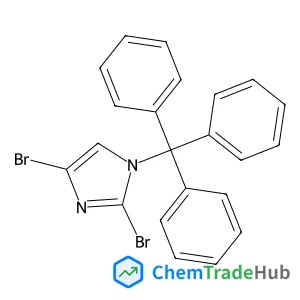
![(S,S)-2-{1-Carboxy-2-[3-(3,5-dichloro-benzyl)-3H-imidazol-4-YL]-ethylamino}-4-methyl-pentanoic acid structure](https://cnstatic.chemtradehub.com/structs/305/305335-31-3-1724.webp "(S,S)-2-{1-Carboxy-2-[3-(3,5-dichloro-benzyl)-3H-imidazol-4-YL]-ethylamino}-4-methyl-pentanoic acid structure")
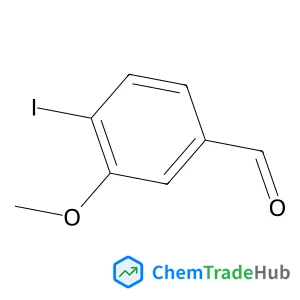
推荐供应商




免责声明
本页面提供的学术期刊信息仅供参考和研究使用。我们与任何期刊出版商均无关联,也不处理投稿事宜。如有投稿相关咨询,请直接联系相关期刊出版商。
如发现页面信息有误,请发送邮件至 support@chemtradehub.com 联系我们。我们将及时核实并处理您的问题。