


Poly(ε-caprolactone) with pendant natural peptides: an old polymeric biomaterial with new properties
文献信息
发布日期
2017-08-01
DOI
10.1039/C7PY01012E
影响因子
5.582
作者
Yuanyuan Ju, Mingming Zhang, Hanying Zhao
查看原文
摘要
The bio-functionalization of poly(ε-caprolactone) (PεCL) provides an approach to broaden the applications of the polymer in medical and biological engineering fields. In this research, PεCL with pendant glutathione (GSH) or L-carnosine was synthesized by a combination of ring-opening copolymerization, Cu(I)-catalyzed Huisgen 1,3-dipolar cycloaddition reaction (click reaction) and thiol-disulfide exchange reaction. The ring-opening copolymerization of εCL and α-chloro-ε-caprolactone (αCl-εCL) was employed in the synthesis of the PεCL-co-P(αCl-εCL) copolymer. The pendent chlorides were converted into azides by a reaction with sodium azide. N-Hydroxysuccinimide (NHS) groups were introduced into the polymer backbones by the click reaction. PεCL with pendant pyridyl disulfide groups was prepared by a reaction of N-hydroxysuccinimide (NHS) activated ester and pyridine dithioethylamine. Peptide modified PεCL were synthesized by thiol-disulfide exchange reactions between thiol groups on GSH (or thiol-modified L-carnosine) and the pendant pyridyl disulfide groups on the polymer chains. The synthesized copolymers were analyzed by size exclusion chromatography, FTIR, 1H NMR and differential scanning calorimetry. The bio-graft copolymers are able to self-assemble into micelles or vesicles in aqueous solutions, depending on the pH values of the solutions. The assembled structures formed by the bio-graft copolymers in aqueous solutions are essentially nontoxic toward MCF-7 and COS-7 cells. The functionalization of the peptide-stabilized assembled structures with lysozyme was also investigated in this research.
期刊推荐
Medicinal Chemistry Research

Journal of the Indian Institute of Science

Heteroatom Chemistry

Biocatalysis and Biotransformation
Main Group Chemistry

Journal of Asian Natural Products Research

Acta Metallurgica Sinica-English Letters
Chinese Journal of Chemistry

Bioorganic & Medicinal Chemistry Letters
Herald of the Russian Academy of Sciences
相关文献
Photoexcited molecular probes for selective and revertible imaging of cellular reactive oxygen species
Ying Wen, Zhiqing Long, Fangjun Huo, Caixia Yin
2021-01-20
Review Article
DOI: 10.1039/D0QO01260B
Enantioselection in peptide bond formation
Roger R. Hill, David Birch, Graham E. Jeffs, Michael North
2003-02-25
Paper
DOI: 10.1039/B211914E
New cytotoxic cembrane based diterpenes from the soft corals Sarcophyton cherbonnieri and Nephthea sp.
Harald Gross, Stefan Kehraus, Markus Nett, Gabriele M. König, Winfried Beil, Anthony D. Wright
2003-02-24
Paper
DOI: 10.1039/B210039H
Generation and precise control of sulfonyl radicals: visible-light-activated redox-neutral formation of sulfonates and sulfonamides
Mingjun Zhang, Xin Ding, Aidang Lu, Jin Kang, Yongyue Gao, Ziwen Wang, Hongyan Li, Qingmin Wang
2020-12-30
Research Article
DOI: 10.1039/D0QO01413C
Recent advances in quinazolinones as an emerging molecular platform for luminescent materials and bioimaging
Zhiming Xing, Wanhui Wu, Yongxiang Miao, Yingqun Tang, Youkang Zhou, Lifang Zheng, Yang Fu, Zhibin Song, Yiyuan Peng
2021-02-02
Review Article
DOI: 10.1039/D0QO01425G
Rh(iii)-Catalyzed sulfonylamination of α-indolyl alcohols via Csp2–Csp3 bond cleavage
Xinwei Hu, Zheng Tan, Zhipeng Liu, Fengjuan Chen, Huanfeng Jiang, Wei Zeng
2020-12-30
Research Article
DOI: 10.1039/D0QO01426E
Relations between 77Se NMR chemical shifts of (phenylseleno)benzenes and their molecular structures derived from nine X-ray crystal structures
Jette Oddershede, Lars Henriksen, Sine Larsen
2003-02-21
Paper
DOI: 10.1039/B211130F
Self-recognition and hydrogen bonding by polycyclic bridgehead monoalcohols
Amelia García Fraile, David G. Morris, Antonio García Martínez, Santiago de la Moya Cerero, Kenneth W. Muir, Karl S. Ryder, Enrique Teso Vilar
2003-01-21
Paper
DOI: 10.1039/B209427D
Reaction cascades initiated by nucleophilic attack of heteropentalene mesomeric betaine and nitrogen-rich mesoionic tetrazolium-5-amides on electron-deficient unsaturated compounds. Synthesis of novel heterocyclic systems
Shuki Araki, Masashi Kuzuya, Kenji Hamada, Masatoshi Nogura, Nayumi Ohata
2003-02-14
Paper
DOI: 10.1039/B211000H
您可能还喜欢
化合物问答
4-[4-三氟甲基苯基]恶唑(CAS号:1126636-40-5)通常如何合成?
4-[4-三氟甲基苯基]恶唑通常通过将4-三氟甲基苯酚与异硫氰酸苯酯在有机溶剂中进行酯化反应合成。该反应可在无水条件下,使用适当的催化剂,如四丁基氢氧化铵,以提...
1126636-40-54-(4-(Trifluoromethy...
59729-32-71-[3-(Dimethylamino)...
化合物问答
RockPhos Pd G3(CAS号:2009020-38-4)通常如何合成?
RockPhos Pd G3 通常通过钯催化偶联反应合成,使用配体 (2'-Amino-2-biphenylyl)(methanesulfonato-kappa...
2009020-38-4(2'-Amino-2-biphenyl...
化合物问答
1-哌啶甲酰胺(CAS号:2158-03-4)的市场或研究趋势如何?
1-哌啶甲酰胺作为有机合成中的重要中间体,其市场需求主要受医药、农药、染料等行业推动。近年来,随着新药开发和绿色化学的发展,该化合物的研究趋势集中在开发更高效、...
2158-03-41-Piperidinecarboxam...
化合物问答
2-(二苯基膦基)乙胺(CAS号:4848-43-5)适用哪些法规指南?
2-(二苯基膦基)乙胺适用于多种法规指南,包括但不限于《全球化学品统一分类和标签制度》(GHS),欧盟《化学品注册、评估、授权和限制》法规(REACH),以及美...
4848-43-52-(Diphenylphosphino...
化合物问答
如何储存间苯二甲酸二烯丙酯(CAS号:1087-21-4)?
间苯二甲酸二烯丙酯应储存在阴凉、干燥、通风良好的地方,远离火源和热源。储存容器应密封,避免光照和高温。储存温度应控制在25℃以下,相对湿度应低于80%。避免与其...
1087-21-4Diallyl isophthalate
化合物问答
什么是间甲苯异硫代异氰酸酯(CAS号:621-30-7)?
间甲苯异硫代异氰酸酯是一种有机化合物,分子式为C7H7NO2S,具有刺激性气味。它是一种重要的有机合成中间体,在合成其他化合物时广泛应用。
621-30-71-Isothiocyanato-3-m...
化合物问答
在合成中是否有N-Boc-D-苯丙氨醇(CAS号:106454-69-7)的替代品?
在合成中,可以考虑使用N-Cbz-D-苯丙氨醇或N-Fmoc-D-苯丙氨醇作为替代品。这些化合物同样具有保护氨基的功能,且在合成过程中表现出良好的反应性能。
106454-69-72-Methyl-2-propanyl ...
化合物问答
3-羟甲基-2-氧异丙基吡啶(CAS号:954240-50-7)的主要用途是什么?
3-羟甲基-2-氧异丙基吡啶主要用于有机合成领域,可以作为合成其他药物、农药或精细化学品的中间体。此外,它还可能在实验室研究中作为特定反应的前体或溶剂。
954240-50-7(2-Isopropoxy-3-pyri...
化合物问答
6-氨基-9-甲基嘌呤(CAS号:700-00-5)应用于哪些行业?
6-氨基-9-甲基嘌呤目前主要应用于医药行业,作为某些药物的中间体。此外,它还可能用于聚合物、传感器和半导体的某些领域,作为功能性单体或掺杂剂。
700-00-59-Methyl-9H-purin-6-...
来源期刊
Polymer Chemistry

CiteScore:
8.6
自引率:
7.3%
年发文量:
457
Polymer Chemistry welcomes submissions in all areas of polymer science that have a strong focus on macromolecular chemistry. Manuscripts may cover a broad range of fields, yet no direct application focus is required.
推荐化合物
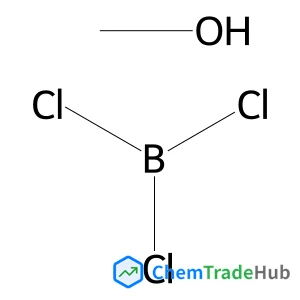
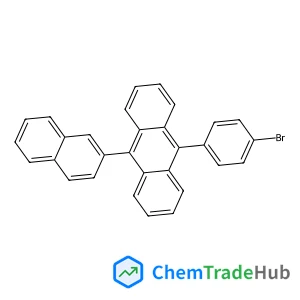
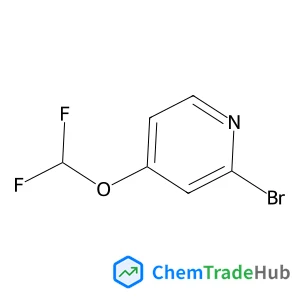
推荐供应商




免责声明
本页面提供的学术期刊信息仅供参考和研究使用。我们与任何期刊出版商均无关联,也不处理投稿事宜。如有投稿相关咨询,请直接联系相关期刊出版商。
如发现页面信息有误,请发送邮件至 support@chemtradehub.com 联系我们。我们将及时核实并处理您的问题。