


Analysis of 14C-bearing compounds released by the corrosion of irradiated steel using accelerator mass spectrometry
文献信息
发布日期
2018-05-07
DOI
10.1039/C8AN00237A
影响因子
4.616
作者
B. Z. Cvetković, G. Salazar, D. Kunz, S. Szidat, E. Wieland
查看原文
摘要
The combination of ion chromatography (IC) with accelerator mass spectrometry (AMS) was developed to determine the speciation of 14C-(radiocarbon) bearing organic compounds in the femto to pico molar concentration range. The development of this compound-specific radiocarbon analysis (CSRA) of carboxylic acids is reported and the application of the method on a leaching solution from neutron-irradiated steel is demonstrated. The background and the dynamic range of the AMS-based method were quantified. On using 14C-labelled standards, the measurements demonstrate the repeatability of the analytical method and the reproducible recovery of the main target carboxylic acids (i.e., acetate, formate, malonate, and oxalate). The detection limit was determined to be in the mid fmol 14C per L level while the dynamic range of the analytical method covers three orders of magnitude from the low fmol to the mid pmol 14C per L level. Cross contamination was found to be negligible during IC fractionation and was accounted for during eluate processing and 14C detection by AMS. The 14C-bearing carboxylates released from an irradiated steel nut into an alkaline leaching solution were analysed using the CSRA-based analytical method with the aim to check the applicability of the approach and develop appropriate sample preparation. The concentrations of 14C-bearing formate and acetate, the main organic corrosion products, were at a low pmol 14C per L level for convenient dimensions of the alkaline leaching experiment which demonstrates that compound-specific 14C AMS is an extremely sensitive analytical method for analysing 14C-bearing compounds. The content of total organic 14C in solution (TO14C) determined by the direct measurement of an aliquot of the leaching solution agrees well with the sum of the 14C concentrations of the individual carboxylates within the uncertainty of the data. Furthermore, the TO14C content is in good agreement with the calculated value using the corrosion rate determined from the 60Co release and the 14C inventory of the irradiated steel specimen.
期刊推荐
Russian Chemical Reviews
Proceedings of the National Academy of Sciences of the United States of America
Journal of Organometallic Chemistry
Helvetica Chimica Acta
Journal of Catalysis
Organic Preparations and Procedures International
Journal of Physics and Chemistry of Solids
Journal of Medicinal Chemistry
Molecular Pharmacology
European Journal of Wood and Wood Products
相关文献
Protein–cofactor interactions in bacterial reaction centers from Rhodobacter sphaeroides R-26: Effect of hydrogen bonding on the electronic and geometric structure of the primary quinone. A density functional theory study
Sebastian Sinnecker, Marco Flores, Wolfgang Lubitz
2006-11-24
Paper
DOI: 10.1039/B612568A
Spectroscopy and potential energy surface of the H2–CO2 van der Waals complex: experimental and theoretical studies‡
A. R. W. McKellar, Dong H. Zhang
2006-11-28
Paper
DOI: 10.1039/B614849B
Direct observation of the solvent reorientation dynamics in the “twisted” intramolecular charge-transfer process of cyanophenyldisilane–water cluster by transient infrared spectroscopy‡
Haruki Ishikawa, Masuyuki Sugiyama, Wataru Setaka, Mitsuo Kira, Naohiko Mikami
2006-11-17
Paper
DOI: 10.1039/B612758D
Structural and redox properties of VOx and Pd/VOx thin film model catalysts studied by TEM and SAED
Simon Penner, Bernhard Klötzer, Bernd Jenewein
2007-03-19
Paper
DOI: 10.1039/B700650K
Fluorescence quenching in cyclic hydrogen-bonded complexes of 1H-pyrrolo[3,2-h]quinoline with methanol: cluster size effect
Alexander Kyrychenko, Randolph P. Thummel, Jacek Waluk, Bernhard Brutschy, Jerzy Herbich
2007-05-16
Paper
DOI: 10.1039/B703908E
Proton transfer in hydrogen-bonded pyridine/acid systems: the role of higher aggregation
Vytautas Balevicius, Ruta Bariseviciute, Kestutis Aidas, Ingrid Svoboda, Helmut Ehrenberg, Hartmut Fuess
2007-04-16
Paper
DOI: 10.1039/B701775H
A London-type formula for the dispersion interactions of endohedral A@B systems
Pekka Pyykkö, Cong Wang, Michal Straka, Juha Vaara
2007-05-22
Communication
DOI: 10.1039/B704695B
Density functional theory calculations for the hydrogen evolution reaction in an electrochemical double layer on the Pt(111) electrode
Gustav S. Karlberg, Jan Rossmeisl, Jeff Greeley, Hannes Jónsson, Jens K. Nørskov
2007-05-30
Paper
DOI: 10.1039/B700099E
Isothermal crystallization kinetics of in situ photo and thermo aged poly(ethylene oxide) using photoDSC
Frédéric Fraïsse, Jean-Marie Nedelec, Jean Pierre E. Grolier
2007-02-16
Paper
DOI: 10.1039/B618701C
Long-lived coherent oscillations of the femtosecond transients in cyanobacterial photosystem I
Oleg M. Sarkisov, Fedor E. Gostev, Vladimir I. Novoderezhkin, Oxana A. Gopta, Mahir D. Mamedov, Alexey Yu. Semenov
2006-11-13
Paper
DOI: 10.1039/B605660A
您可能还喜欢
化合物问答
(5-氨基吡唑-3-基)乙酸(CAS号:174891-10-2)的物理化学性质是什么?
(5-氨基吡唑-3-基)乙酸是一种无色至白色固体,分子量为174.15 g/mol。它在水中具有较好的溶解性,在有机溶剂中的溶解度较低。该化合物具有较好的反应活...
174891-10-2(3-Amino-1H-pyrazol-...
化合物问答
3-氟-4,5-二氯苯胺(CAS号:35754-38-2)适用哪些法规指南?
3-氟-4,5-二氯苯胺受到多项法规指南的约束,包括但不限于GHS(全球化学品统一分类和标签制度)的危险分类标准、欧盟的REACH法规(注册、评估、授权和限制)...
35754-38-23,4-Dichloro-5-fluor...
化合物问答
什么是(R)-(+)-2,2',6,6'-四甲氧基-4,4'-联(二(3,5-二甲苯基基)膦基)-3,3'-二联吡啶(CAS号:442905-33-1)?
这是一种有机化合物,化学名为(R)-(+)-2,2',6,6'-四甲氧基-4,4'-联(二(3,5-二甲苯基基)膦基)-3,3'-二联吡啶,CAS号为44290...
442905-33-14,4'-Bis[bis(3,5-dim...
化合物问答
1-氨基-2-氰基萘(CAS号:3100-67-2)应用于哪些行业?
1-氨基-2-氰基萘在医药、聚合物、传感器和半导体等行业中有应用。在医药领域,它可用作中间体合成某些药物。在聚合物行业,它可以用于制备具有特定性能的聚合物。此外...
3100-67-21-Amino-2-naphthonit...
化合物问答
如何处理含有1-溴-4-(异丙氧基甲基)苯(CAS号:98446-84-5)的废料?
处理含1-溴-4-(异丙氧基甲基)苯的废料时,首先应确保废液收集在防渗漏的容器中,避免泄露。然后,可以考虑采用化学降解法或物理吸附法进行处理。在特定条件下,可通...
98446-84-51-Bromo-4-(isopropox...
化合物问答
6-Chloro-8-(trifluoromethyl)chroman-4-one(CAS号:1344889-75-3)的主要用途是什么?
6-氯-8-三氟甲基-2,3-二氢-4H-色喃-4-酮主要用于有机合成中的中间体,也可作为研究试剂使用。
1344889-75-36-Chloro-8-(trifluor...
化合物问答
7-乙氧基-2-萘酚(CAS号:57944-44-2)通常如何合成?
7-乙氧基-2-萘酚通常通过N-乙氧基化反应合成,首先将2-萘酚与乙醇钠在乙醇中反应生成7-乙氧基-2-萘酚钠盐,再通过酸化进一步得到7-乙氧基-2-萘酚。该合...
57944-44-27-Ethoxy-2-naphthol
化合物问答
4-(1,1-二氧硫代吗啉)丁醇(CAS号:59801-41-1)适用哪些法规指南?
该化合物需遵循一系列的法规指南,包括但不限于GHS全球统一分类和标签制度,其分类可能包括易燃液体和可能危害水生环境。在欧洲,还需遵循REACH法规,确保物质和混...
59801-41-14-(4-Hydroxybutyl)th...
化合物问答
4-甲氧基苄基叠氮甲酸酯(CAS号:25474-85-5)的物理化学性质是什么?
4-甲氧基苄基叠氮甲酸酯是一种无色液体,具有一定的挥发性。其分子量为198.16,熔点为-69°C,沸点为105°C。该化合物在水中溶解度较低,在有机溶剂如乙醇...
25474-85-54-Methoxybenzyl carb...
化合物问答
如何处理含有4-氯-2-氟嘧啶(CAS号:51422-00-5)的废料?
含有4-氯-2-氟嘧啶的废料应按照危险废物处理。首先,应收集并分类这些废料,避免与其他废物混合。然后,可以采用焚烧处理或者交由专业机构进行处置。在处理过程中,需...
51422-00-54-Chloro-2-fluoropyr...
来源期刊
Analyst

CiteScore:
7.8
自引率:
5.6%
年发文量:
653
Analyst publishes analytical and bioanalytical research that reports premier fundamental discoveries and inventions, and the applications of those discoveries, unconfined by traditional discipline barriers.
推荐化合物
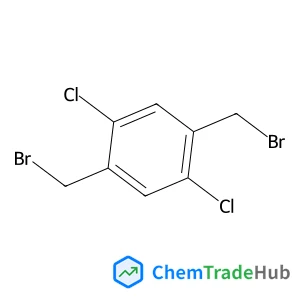
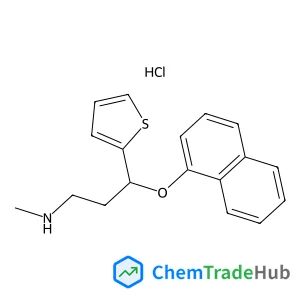
N-Methyl-3-(1-naphthyloxy)-3-(2-thienyl)-1-propanamine hydrochloride (1:1)
CAS号:
1188266-11-6
分子式:
C18H20ClNOS
![(2R,6S)-6-[(Benzyloxy)methyl]-4-{[(2-methyl-2-propanyl)oxy]carbonyl}-2-morpholinecarboxylic acid structure](https://cnstatic.chemtradehub.com/structs/109/1093085-91-6-3382.webp "(2R,6S)-6-[(Benzyloxy)methyl]-4-{[(2-methyl-2-propanyl)oxy]carbonyl}-2-morpholinecarboxylic acid structure")
推荐供应商



免责声明
本页面提供的学术期刊信息仅供参考和研究使用。我们与任何期刊出版商均无关联,也不处理投稿事宜。如有投稿相关咨询,请直接联系相关期刊出版商。
如发现页面信息有误,请发送邮件至 support@chemtradehub.com 联系我们。我们将及时核实并处理您的问题。