


Development of highly sensitive fluorescent probes for the detection of β-galactosidase activity – application to the real-time monitoring of senescence in live cells
文献信息
发布日期
2018-05-14
DOI
10.1039/C8AN00516H
影响因子
4.616
作者
Pascal Dao, Maéva Gesson, Anthony R. Martin, Rachid Benhida
查看原文
摘要
We report the development of four novel fluorescent probes to monitor the activity of the β-galactosidase enzyme (β-gal), in vitro and in living cells. The fluorophores are based on a 6-amino-styryl-benzothiazole push–pull core and display a strong ICT emission. The probes encompass the fluorescent motif that is connected to a β-D-galactopyranoside moiety through a self-immolative benzyl carbamate linker (βGal-1–4). The screening of four different fluorophores enabled us to access new light-up and two-band ratiometric reporters. The four probes, βGal-1–4, exhibited an extremely fast response and over 200-fold fluorescence enhancement (βGal-1) following the enzymatic cleavage of the β-D-galactopyranoside unit. This rapid and extremely sensitive response allowed the detection of senescence-associated β-galactosidase (SA-β-gal) activity; a widely used biomarker of senescence. More importantly, βGal-1 also enabled us to monitor, in real-time, the emergence of senescence in live cells, i.e. the phenotypic transformation from normal to senescent cell. These findings underpin the fact that βGal-1 may find useful applications in biomedical research. Importantly, βGal-1 is suitable for epifluorescence and confocal microscopies, and flow cytometry techniques, which are among the most common analytical tools in biology.
期刊推荐
Journal of Medicinal Chemistry
Pharmacological Reviews

Journal of Physics and Chemistry of Solids
Organic Preparations and Procedures International
Journal of Heterocyclic Chemistry
Journal of Organometallic Chemistry

European Journal of Wood and Wood Products
Kinetics and Catalysis

Israel Journal of Chemistry

Science Progress
相关文献
Molecular orientational and dipolar correlation in the liquid crystal mixture E7: a molecular dynamics simulation study at a fully atomistic level
Jorge Peláez, Mark Wilson
2007-04-25
Paper
DOI: 10.1039/B614422E
Cross sections for low-energy electron scattering from adenine in the condensed phase
Radmila Panajotović, Marc Michaud, Léon Sanche
2006-11-17
Paper
DOI: 10.1039/B612700B
Anion photoelectron imaging of deprotonated thymine and cytosine
Bradley F. Parsons, Sean M. Sheehan, Terry A. Yen, Daniel M. Neumark, Nadine Wehres, Rainer Weinkauf
2007-05-03
Paper
DOI: 10.1039/B703045B
Weak distance dependence of through-bond interactions in tetrahydro-4H-thiopyran-4-ylidene end-capped oligo(cyclohexylidenes); a computational survey
Cornelis A. van Walree, Alwin W. Marsman, Joop H. van Lenthe, Leonardus W. Jenneskens
2007-01-26
Paper
DOI: 10.1039/B616893K
Determination of the temperature and pressure dependence of the reaction OH + C2H4 from 200–400 K using experimental and master equation analyses
Patricia A. Cleary, Maria Teresa Baeza Romero, Mark A. Blitz, Dwayne E. Heard, Michael J. Pilling, Paul W. Seakins, Liming Wang
2006-11-15
Paper
DOI: 10.1039/B612127F
Tuning plasmons on nano-structured substrates for NIR-SERS
Sumeet Mahajan, Mamdouh Abdelsalam, Yoshiro Suguwara, Suzanne Cintra, Andrea Russell, Jeremy Baumberg, Philip Bartlett
2006-11-23
Paper
DOI: 10.1039/B611803H
Can “microwave effects” be explained by enhanced diffusion?
Christian Antonio, Rowan T. Deam
2007-04-26
Paper
DOI: 10.1039/B617358F
Dissociative electron attachment to abasic DNA
Sylwia Ptasińska, Léon Sanche
2007-02-12
Paper
DOI: 10.1039/B616619A
Helices and Sheets in vacuoThe HTML version of this article has been enhanced with colour images.
2007-01-19
Invited Article
DOI: 10.1039/B612615D
A well-tempered density functional theory of electrons in molecules
Ester Livshits, Roi Baer
2007-03-01
Invited Article
DOI: 10.1039/B617919C
您可能还喜欢
化合物问答
(5-氨基吡唑-3-基)乙酸(CAS号:174891-10-2)的物理化学性质是什么?
(5-氨基吡唑-3-基)乙酸是一种无色至白色固体,分子量为174.15 g/mol。它在水中具有较好的溶解性,在有机溶剂中的溶解度较低。该化合物具有较好的反应活...
174891-10-2(3-Amino-1H-pyrazol-...
化合物问答
3-氟-4,5-二氯苯胺(CAS号:35754-38-2)适用哪些法规指南?
3-氟-4,5-二氯苯胺受到多项法规指南的约束,包括但不限于GHS(全球化学品统一分类和标签制度)的危险分类标准、欧盟的REACH法规(注册、评估、授权和限制)...
35754-38-23,4-Dichloro-5-fluor...
化合物问答
什么是(R)-(+)-2,2',6,6'-四甲氧基-4,4'-联(二(3,5-二甲苯基基)膦基)-3,3'-二联吡啶(CAS号:442905-33-1)?
这是一种有机化合物,化学名为(R)-(+)-2,2',6,6'-四甲氧基-4,4'-联(二(3,5-二甲苯基基)膦基)-3,3'-二联吡啶,CAS号为44290...
442905-33-14,4'-Bis[bis(3,5-dim...
化合物问答
1-氨基-2-氰基萘(CAS号:3100-67-2)应用于哪些行业?
1-氨基-2-氰基萘在医药、聚合物、传感器和半导体等行业中有应用。在医药领域,它可用作中间体合成某些药物。在聚合物行业,它可以用于制备具有特定性能的聚合物。此外...
3100-67-21-Amino-2-naphthonit...
化合物问答
如何处理含有1-溴-4-(异丙氧基甲基)苯(CAS号:98446-84-5)的废料?
处理含1-溴-4-(异丙氧基甲基)苯的废料时,首先应确保废液收集在防渗漏的容器中,避免泄露。然后,可以考虑采用化学降解法或物理吸附法进行处理。在特定条件下,可通...
98446-84-51-Bromo-4-(isopropox...
化合物问答
6-Chloro-8-(trifluoromethyl)chroman-4-one(CAS号:1344889-75-3)的主要用途是什么?
6-氯-8-三氟甲基-2,3-二氢-4H-色喃-4-酮主要用于有机合成中的中间体,也可作为研究试剂使用。
1344889-75-36-Chloro-8-(trifluor...
化合物问答
7-乙氧基-2-萘酚(CAS号:57944-44-2)通常如何合成?
7-乙氧基-2-萘酚通常通过N-乙氧基化反应合成,首先将2-萘酚与乙醇钠在乙醇中反应生成7-乙氧基-2-萘酚钠盐,再通过酸化进一步得到7-乙氧基-2-萘酚。该合...
57944-44-27-Ethoxy-2-naphthol
化合物问答
4-(1,1-二氧硫代吗啉)丁醇(CAS号:59801-41-1)适用哪些法规指南?
该化合物需遵循一系列的法规指南,包括但不限于GHS全球统一分类和标签制度,其分类可能包括易燃液体和可能危害水生环境。在欧洲,还需遵循REACH法规,确保物质和混...
59801-41-14-(4-Hydroxybutyl)th...
化合物问答
4-甲氧基苄基叠氮甲酸酯(CAS号:25474-85-5)的物理化学性质是什么?
4-甲氧基苄基叠氮甲酸酯是一种无色液体,具有一定的挥发性。其分子量为198.16,熔点为-69°C,沸点为105°C。该化合物在水中溶解度较低,在有机溶剂如乙醇...
25474-85-54-Methoxybenzyl carb...
化合物问答
如何处理含有4-氯-2-氟嘧啶(CAS号:51422-00-5)的废料?
含有4-氯-2-氟嘧啶的废料应按照危险废物处理。首先,应收集并分类这些废料,避免与其他废物混合。然后,可以采用焚烧处理或者交由专业机构进行处置。在处理过程中,需...
51422-00-54-Chloro-2-fluoropyr...
来源期刊
Analyst

CiteScore:
7.8
自引率:
5.6%
年发文量:
653
Analyst publishes analytical and bioanalytical research that reports premier fundamental discoveries and inventions, and the applications of those discoveries, unconfined by traditional discipline barriers.
推荐化合物
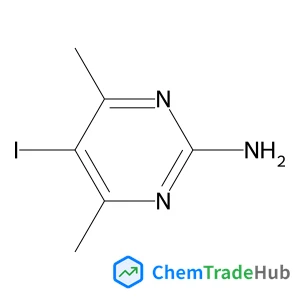
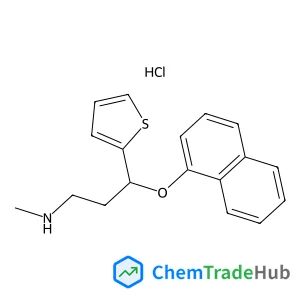
N-Methyl-3-(1-naphthyloxy)-3-(2-thienyl)-1-propanamine hydrochloride (1:1)
CAS号:
1188266-11-6
分子式:
C18H20ClNOS
![5'-Fluoro-[2,3'-biindolinylidene]-2',3-dione structure](https://cnstatic.chemtradehub.com/structs/251/251903-00-1-9cb1.webp "5'-Fluoro-[2,3'-biindolinylidene]-2',3-dione structure")
推荐供应商





免责声明
本页面提供的学术期刊信息仅供参考和研究使用。我们与任何期刊出版商均无关联,也不处理投稿事宜。如有投稿相关咨询,请直接联系相关期刊出版商。
如发现页面信息有误,请发送邮件至 support@chemtradehub.com 联系我们。我们将及时核实并处理您的问题。