




Probing the mechanism of thermally driven thiol-Michael dynamic covalent chemistry
文献信息
发布日期
2018-03-15
DOI
10.1039/C8OB00397A
影响因子
3.876
作者
Borui Zhang, Progyateg Chakma, Max P. Shulman, Jun Ke, Zachary A. Digby, Dominik Konkolewicz
查看原文
摘要
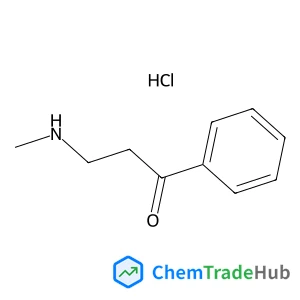
The kinetics and mechanism of the thermally activated dynamic covalent exchange of thiol-Michael adducts is investigated. A model system of thiol-Michael adducts between thiophenol and phenylvinylketone derivatives and adducts between 2-mercaptoethanol phenylvinylketone derivatives in N,N-dimethylformamide (DMF) at elevated temperatures is used to probe the underlying exchange mechanism. The kinetic data show negligible free Michael acceptor, which is consistent with the highly efficient thiol-Michael reaction being a “click”-like reaction that significantly favors the adduct form. At elevated temperatures of 90 °C in DMF the thiol-Michael adducts reach equilibrium after 24 h, although equilibration did not occur within 24 h at 60 °C or 75 °C, and negligible exchange occurs under ambient conditions. A kinetic model was developed to describe the dynamic covalent exchange and equilibration. The experimental and simulation kinetic data of dynamic covalent exchange are consistent with the thiol-Michael adducts undergoing a retro-Michael reaction, followed by subsequent addition of a free thiol to the liberated Michael acceptor. Kinetic analysis is consistent with the fragmentation, or retro-Michael reaction, being the rate-determining step in the dynamic covalent exchange. This suggests that the key step in dynamic covalent exchange is not enhanced by addition of free thiol or free Michael acceptor, since the addition reaction is much faster than the retro-Michael reaction. This fundamental study will guide the design of organic compounds, materials, and bioconjugates that utilize the thermally activated dynamic covalent thiol-Michael linkages.
相关文献
What's all the phos about? Insights into the phosphorylation state of the RNA polymerase II C-terminal domain via mass spectrometry
Blase M. LeBlanc, R. Yvette Moreno, Edwin E. Escobar, Mukesh Kumar Venkat Ramani, Jennifer S. Brodbelt
2021-06-03
Review Article
DOI: 10.1039/D1CB00083G
Cyclic peptide scaffold with ability to stabilize and deliver a helical cell-impermeable cargo across membranes of cultured cancer cells
Nicole Lawrence, Grégoire J.-B. Philippe, Peta J. Harvey, Nicholas D. Condon, Olivier Cheneval, David J. Craik
2020-10-20
Paper
DOI: 10.1039/D0CB00099J
Site-specific modification and segmental isotope labelling of HMGN1 reveals long-range conformational perturbations caused by posttranslational modifications
Gerhard Niederacher, Debra Urwin, Yasmin Dijkwel, David J. Tremethick, K. Johan Rosengren, Christian F. W. Becker, Anne C. Conibear
2021-01-05
Paper
DOI: 10.1039/D0CB00175A
Met80 and Tyr67 affect the chemical unfolding of yeast cytochrome c: comparing the solution vs. immobilized state
Alessandro Paradisi, Lidia Lancellotti, Marco Borsari, Marzia Bellei, Carlo Augusto Bortolotti, Giulia Di Rocco, Antonio Ranieri, Marco Sola, Gianantonio Battistuzzi
2020-09-09
Paper
DOI: 10.1039/D0CB00115E
Interfacing non-enzymatic catalysis with living microorganisms
Joanna C. Sadler, Nick W. Johnson, Stephen Wallace
2021-06-04
Review Article
DOI: 10.1039/D1CB00072A
A thorough analysis and categorization of bacterial interrupted adenylation domains, including previously unidentified families
Taylor A. Lundy, Shogo Mori, Sylvie Garneau-Tsodikova
2020-08-18
Paper
DOI: 10.1039/D0CB00092B
Bypassing the requirement for aminoacyl-tRNA by a cyclodipeptide synthase enzyme
Christopher J. Harding, Emmajay Sutherland, Jane G. Hanna, Douglas R. Houston, Clarissa M. Czekster
2021-01-15
Paper
DOI: 10.1039/D0CB00142B
Natural product scaffolds as inspiration for the design and synthesis of 20S human proteasome inhibitors
Grace E. Hubbell, Jetze J. Tepe
2020-09-16
Review Article
DOI: 10.1039/D0CB00111B
您可能还喜欢
化合物问答
4-[[6-(3-苯基苯基)-7H-嘌呤-2-基]氨基]苯磺酰胺(CAS号:2079895-42-2)适用哪些法规指南?
该化合物需遵循REACH法规以确保其安全使用和管理。同时,根据其潜在的生物降解性和毒性,也需要符合GHS分类中的相应要求。此外,若用于医药或食品相关领域,则还需...
2079895-42-24-{[6-(3-Biphenylyl)...
化合物问答
反式-度骨化醇(CAS号:74007-20-8)的物理化学性质是什么?
反式-度骨化醇是一种脂溶性维生素D3的衍生物,呈无色或白色结晶性粉末,不溶于水,溶于乙醇、丙酮、氯仿等有机溶剂。其分子式为C28H44O,分子量为404.65。...
74007-20-8trans-Doxercalcifero...
化合物问答
莲花掌苷(CAS号:59282-56-3)的市场或研究趋势如何?
莲花掌苷作为一种天然产物,近年来在抗炎、抗癌等生物活性研究方面显示出一定的潜力,因此市场需求逐渐增长。市场动态方面,随着天然产物开发的深入,预计该化合物的研究会...
59282-56-3Lindleyin
化合物问答
2-溴-6-(吡咯烷-1-基)吡啶-4-硼酸频那醇酯(CAS号:1150271-64-9)应用于哪些行业?
2-溴-6-(吡咯烷-1-基)吡啶-4-硼酸频那醇酯在医药领域有着广泛的应用,它可以用作药物合成中的中间体。此外,它还可以用于有机合成,特别是在构建复杂杂环化合...
1150271-64-92-Bromo-6-(1-pyrroli...
化合物问答
什么是methyl 2-(4-bromophenyl)-3-methylbutanoate(CAS号:1061284-70-5)?
methyl 2-(4-溴苯基)-3-甲基丁酸甲酯是一种化学物质,分子式为C12H13BrO2。它是一种有机化合物,具有一定的挥发性和易燃性。
1061284-70-52-(4-Bromo-phenyl)-3...
化合物问答
CJC1-295(CAS号:863288-34-0)的物理化学性质是什么?
CJC1-295是一种具有复杂肽链结构的化合物,其分子量约为1875 Da。该化合物在水中具有一定的溶解性,但在有机溶剂中的溶解性不佳。它是一种反应活性化合物,...
863288-34-0L-tyrosyl-D-alanyl-L...
化合物问答
三正丁基锍碘(CAS号:18146-62-8)的市场或研究趋势如何?
三正丁基锍碘作为一种重要的有机硫化合物,主要用于有机合成中作为亲电试剂。近年来,由于其在合成中的广泛应用,市场对其需求持续增长。此外,随着绿色化学的发展,对其替...
18146-62-8Tributylsulfonium io...
化合物问答
雌二醇-[13C3]同位素内标(CAS号:1261254-48-1)通常如何合成?
雌二醇-[13C3]同位素内标通常通过在雌二醇分子中引入[13C3]同位素来合成。常见的方法是通过化学标记反应,如与[13C3]标记的甲基溴化物进行亲核取代反应...
1261254-48-117beta-Estradiol-2,3...
化合物问答
N1-(2-吡啶甲基)-N2-(2-甲基-1-萘基)草酰胺(CAS号:2611225-93-3)的物理化学性质是什么?
N1-(2-吡啶甲基)-N2-(2-甲基-1-萘基)草酰胺为固体化合物,具有良好的结晶形态,分子量为340.34 g/mol。该化合物在水中的溶解度较低,但在有...
2611225-93-3N-(2-Methyl-1-naphth...
化合物问答
如何处理含有十五碳烯酸甲酯(顺-10)(C15:1)标准品(CAS号:90176-52-6)的废料?
含有十五碳烯酸甲酯(顺-10)(C15:1)标准品的废料应首先进行适当收集和储存,避免与其他化学品混合。然后,可采用焚烧或交由专业废物处理公司进行处理。处理过程...
90176-52-6(Z)-10-Pentadecenoic...
来源期刊
Organic & Biomolecular Chemistry

CiteScore:
3.4
自引率:
10.3%
年发文量:
1041
Organic & Biomolecular Chemistry (OBC) publishes original and high impact research and reviews in organic chemistry. We welcome research that shows new or significantly improved protocols or methodologies in total synthesis, synthetic methodology or physical and theoretical organic chemistry as well as research that shows a significant advance in the organic chemistry or molecular design aspects of chemical biology, catalysis, supramolecular and macromolecular chemistry, theoretical chemistry, mechanism-oriented physical organic chemistry, medicinal chemistry or natural products. Articles published in the journal should report new work which makes a highly-significant impact in the field. Routine and incremental work is generally not suitable for publication in the journal. More details about key areas of our scope are below. In all cases authors should include in their article clear rationale for why their research has been carried out.
推荐化合物
![N-[(Benzyloxy)carbonyl]serine structure](https://cnstatic.chemtradehub.com/structs/276/2768-56-1-77f7.webp "N-[(Benzyloxy)carbonyl]serine structure")
推荐供应商




免责声明
本页面提供的学术期刊信息仅供参考和研究使用。我们与任何期刊出版商均无关联,也不处理投稿事宜。如有投稿相关咨询,请直接联系相关期刊出版商。
如发现页面信息有误,请发送邮件至 support@chemtradehub.com 联系我们。我们将及时核实并处理您的问题。