



Computational study of the mechanism of amide bond formation via CS2-releasing 1,3-acyl transfer
文献信息
发布日期
2018-07-25
DOI
10.1039/C8OB01338A
影响因子
3.876
作者
Yuan-Ye Jiang, Tian-Tian Liu, Xue Sun, Zhong-Yan Xu, Xia Fan, Ling Zhu, Siwei Bi
查看原文
摘要
Reactions of thiocarboxylic acids and dithiocarbamate-terminal amines provide a linker-traceless method for amide bond formation under mild conditions, whereas the reaction mechanism is not clear. A systematic study was performed herein with density functional theory (DFT) calculations to elucidate the detailed mechanism, the substitution effect on the proposed CS2-releasing 1,3-acyl transfer and the differences between CS2- and CO2-releasing 1,3-acyl transfer. Relevant results indicate that this type of reaction proceeds via the nucleophilic addition of an in situ generated dithiocarbamic acid on thiocarboxylic acid, H2S elimination, rate-determining 1,3-acyl transfer and CS2 release. For the generation of secondary amides via the 1,3-acyl transfer, a thiocarboxylic acid- or dithiocarbamic acid-assisted pathway, in which both the carbonyl group and amide nitrogen are activated, is the most favored. For the generation of tertiary amides, MeOH-assisted carbonyl-activation is the most favorable pathway. N,N-Dialkyl substitution of the mixed anhydride intermediate promotes the 1,3-acyl transfer by the steric effect. In contrast, N-phenyl substitution and using thiobenzoic acid as a substrate slow down 1,3-acyl transfer by both the conjugation effect and steric effect. Furthermore, CS2-releasing 1,3-acyl transfer was found to be favored over CO2-releasing 1,3-acyl transfer in the aspects of both kinetics and thermodynamics mainly because the S–COR bond is weaker than the O–COR bond.
相关文献
Base-promoted diastereoselective α-alkylation of borane N-((S)-1′-phenylethyl)azetidine-2-carboxylic acid ester complexes
Eiji Tayama, Ryotaro Nishio, Yoshiaki Kobayashi
2018-07-27
Paper
DOI: 10.1039/C8OB01395K
Two catalytic protocols for Achmatowicz rearrangement using cyclic diacyl peroxides as oxidants
2018-07-17
Communication
DOI: 10.1039/C8OB01382A
The radical acylarylation of N-arylacrylamides with aliphatic aldehydes using the photolysis of hypervalent iodine(iii) reagents
Ryu Sakamoto, Naomichi Hirama
2018-07-14
Communication
DOI: 10.1039/C8OB01420E
Zinc–Brønsted acid mediated practical hydrotrifluoromethylation of alkenes with CF3Br
Deqian Peng, Wu Fan, Xueqi Zhao, Wei Chen, Yuan Wen, Li Zhang
2021-09-13
Research Article
DOI: 10.1039/D1QO01073E
The discovery of a freezing-induced peptide ligation during the total chemical synthesis of human interferon-ε
Yin-He Yang, Bin Di, Da-Song Yang
2018-06-25
Communication
DOI: 10.1039/C8OB01365A
Phenolate-induced intramolecular ring-opening cyclization of N-tosylaziridines: access to functionalized benzoxacycles
Runjun Devi, Jonali Das, Bipul Sarma, Sajal Kumar Das
2018-07-25
Paper
DOI: 10.1039/C8OB01143E
Asymmetric organocatalytic synthesis of chiral 3,3-disubstituted oxindoles via a 1,6-conjugate addition reaction
Abdul Rahman, Qiaoxia Zhou, Xufeng Lin
2018-06-28
Paper
DOI: 10.1039/C8OB01169A
Brønsted acid-catalyzed dynamic kinetic resolution of in situ formed acyclic N,O-hemiaminals: cascade synthesis of chiral cyclic N,O-aminals
Xue-Jiao Lv, Yong-Chao Ming, Hui-Chun Wu
2021-09-16
Research Article
DOI: 10.1039/D1QO01135A
Tandem Strecker/C(sp3)–H amination reactions for the construction of cyanide-functionalized imidazo[1,5-a]pyridines with NH4SCN as a cyanating agent
Xiao-Tong Yan, De-Xiang Chen, Zhong-Zhong Yan, Kun Xu
2021-09-21
Research Article
DOI: 10.1039/D1QO01060C
您可能还喜欢
化合物问答
如何储存1,2-环己二酮环乙缩醛(CAS号:4746-96-7)?
1,2-环己二酮环乙缩醛应储存在阴凉、干燥、通风良好的地方,避免阳光直射。建议使用密封容器保存,并保持环境温度在室温范围内,远离火源和热源。
4746-96-71,4-Dioxaspiro[4.5]d...
化合物问答
Ecopladib(CAS号:381683-92-7)的市场或研究趋势如何?
Ecopladib作为一种新型的药物,主要应用于治疗高胆固醇等疾病。目前,市场和研究趋势显示,Ecopladib因其独特的药理作用而受到关注。随着对心血管疾病治...
381683-92-7Ecopladib
化合物问答
2,3-Dimethyl-3H-imidazo[4,5-c]pyridine(CAS号:52538-09-7)通常如何合成?
2,3-二甲基-3H-咪唑[4,5-c]吡啶通常通过咪唑和2,3-二甲基吡啶的缩合反应合成。具体来说,将咪唑和2,3-二甲基吡啶在适当的溶剂中进行加热或加压反应...
52538-09-72,3-Dimethyl-3H-imid...
化合物问答
2,3,4,5-tetrahydro-1H-3-苯并氮杂环;盐酸盐(CAS号:17379-01-0)的市场或研究趋势如何?
该化合物在药物化学和有机合成中有一定的应用。近年来,随着对新型药物化合物的需求增加,该化合物的研究趋势主要集中在探索其生物活性,尤其是其在神经系统疾病治疗中的潜...
17379-01-02,3,4,5-Tetrahydro-1...
68-90-6(2-Ethyl-1-benzofura...
化合物问答
如何储存盐酸甘氨酸丁酯(CAS号:13048-99-2)?
盐酸甘氨酸丁酯应储存在阴凉、干燥、通风良好的地方,避免阳光直射和高温环境,温度应控制在25℃以下。储存容器应密封,避免与空气中的水分和酸性物质接触,以防发生水解...
13048-99-2Butyl glycinate hydr...
化合物问答
什么是2-Iodo-N,N-dimethylbenzamide(CAS号:54616-46-5)?
2-碘-N,N-二甲基苯胺是一种有机化合物,化学名为2-Iodo-N,N-dimethylbenzamide。其分子式为C<sub>9</sub>H<sub>1...
54616-46-52-Iodo-N,N-dimethylb...
16817-90-6N-Cyclohexylglycinam...
化合物问答
5-溴-2-(4H-1,2,4-三唑-4-基)吡啶(CAS号:959240-99-4)的市场或研究趋势如何?
随着医药、农药和新材料领域的发展,该化合物作为关键中间体的应用日益增多。特别是在药物合成中,由于其独特的化学性质,可以用于合成多种药物分子。未来的研究趋势可能集...
959240-99-45-Bromo-2-(4H-1,2,4-...
化合物问答
2,4-二溴-6-三氟甲基嘧啶(CAS号:785778-00-9)通常如何合成?
2,4-二溴-6-三氟甲基嘧啶通常通过溴化反应合成。首先,将6-三氟甲基嘧啶与溴化剂(如液溴)在适当的溶剂(如二氯甲烷、四氢呋喃)中反应,加入适当的催化剂(如四...
785778-00-92,4-Dibromo-6-(trifl...
来源期刊
Organic & Biomolecular Chemistry
CiteScore:
3.4
自引率:
10.3%
年发文量:
1041
Organic & Biomolecular Chemistry (OBC) publishes original and high impact research and reviews in organic chemistry. We welcome research that shows new or significantly improved protocols or methodologies in total synthesis, synthetic methodology or physical and theoretical organic chemistry as well as research that shows a significant advance in the organic chemistry or molecular design aspects of chemical biology, catalysis, supramolecular and macromolecular chemistry, theoretical chemistry, mechanism-oriented physical organic chemistry, medicinal chemistry or natural products. Articles published in the journal should report new work which makes a highly-significant impact in the field. Routine and incremental work is generally not suitable for publication in the journal. More details about key areas of our scope are below. In all cases authors should include in their article clear rationale for why their research has been carried out.
推荐化合物
![(3R,5R)-1-[(Benzyloxy)carbonyl]-5-methyl-3-piperidinecarboxylic acid structure](https://cnstatic.chemtradehub.com/structs/126/1269757-29-0-c552.webp "(3R,5R)-1-[(Benzyloxy)carbonyl]-5-methyl-3-piperidinecarboxylic acid structure")
(3R,5R)-1-[(Benzyloxy)carbonyl]-5-methyl-3-piperidinecarboxylic acid
CAS号:
1269757-29-0
分子式:
C15H19NO4
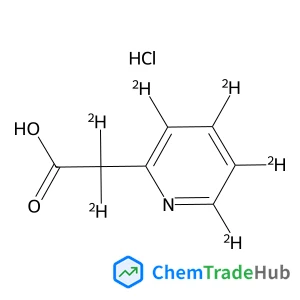
2,2-dideuterio-2-(3,4,5,6-tetradeuterio-2-pyridyl)acetic acid;hydrochloride
CAS号:
1329799-67-8
分子式:
C7H2ClD6NO2
![(2E)-3-(3-Chlorophenyl)-N-{2-[4-(methylsulfonyl)-1-piperazinyl]-2-oxoethyl}acrylamide structure](https://cnstatic.chemtradehub.com/structs/250/2505001-54-5-c1e9.webp "(2E)-3-(3-Chlorophenyl)-N-{2-[4-(methylsulfonyl)-1-piperazinyl]-2-oxoethyl}acrylamide structure")
推荐供应商





免责声明
本页面提供的学术期刊信息仅供参考和研究使用。我们与任何期刊出版商均无关联,也不处理投稿事宜。如有投稿相关咨询,请直接联系相关期刊出版商。
如发现页面信息有误,请发送邮件至 support@chemtradehub.com 联系我们。我们将及时核实并处理您的问题。