


![N,N'-1,2-Ethanediylbis[2-(vinylsulfonyl)acetamide] structure](https://cnstatic.chemtradehub.com/structs/667/66710-66-5-b556.webp "N,N'-1,2-Ethanediylbis[2-(vinylsulfonyl)acetamide] structure")
Protic additives or impurities promote imine reduction with pinacolborane
文献信息
发布日期
2018-11-06
DOI
10.1039/C8OB02330A
影响因子
3.876
作者
Blake S. N. Huchenski, Alexander W. H. Speed
查看原文
摘要
We report here that addition of stoichiometric amounts of alcohols or water to mixtures of imines and pinacolborane promote reduction reactions. The reactions of several imines were examined, revealing that alkyl imines were reduced, while aniline derived imines were not effectively reduced. The use of binol as an additive resulted in modest enantioinduction, however other chiral additives that were screened gave negligible enantioinduction. While the reactions described herein are not competitive in conversion with established imine reduction technologies, this work reveals that the presence of protic impurities must be considered as a promoter of side reactions in catalyzed imine hydroborations. Amines also promote imine reduction in certain cases, raising the possibility of a slow autocatalytic reaction. The ability of water or other protic impurities to promote the reduction of imines with pinacolborane represents an important identification of a potential source of background reaction in catalyzed reductions of imines.
期刊推荐
Pharmacological Reviews
Pure and Applied Chemistry

Journal of Heterocyclic Chemistry

Kinetics and Catalysis

Journal of Organometallic Chemistry
Journal of Medicinal Chemistry
Organic Preparations and Procedures International

Israel Journal of Chemistry

Science Progress

Proceedings of the National Academy of Sciences of the United States of America
相关文献
Topology vs. thermodynamics in chemical reactions: the instability of PH5
Christian Tantardini
2017-09-25
Paper
DOI: 10.1039/C7CP06130G
Laser cooling of the OH− molecular anion in a theoretical investigation
Ming-jie Wan, Duo-hui Huang, You Yu, Yun-guang Zhang
2017-09-18
Paper
DOI: 10.1039/C7CP04393G
Lamellar structures in fluorinated phosphonium ionic liquids: the roles of fluorination and chain length
Daniel Rauber, Peng Zhang, Volker Huch
2017-09-21
Paper
DOI: 10.1039/C7CP04814A
Atomistic observation of the collision and migration of Li on MoSe2 and WS2 surfaces through ab initio molecular dynamics
Viet Q. Bui, Thang Bach Phan, Yoshiyuki Kawazoe
2017-09-15
Paper
DOI: 10.1039/C7CP05847K
Correction: Tailoring of optical properties of fluorescein using green synthesized gold nanoparticles
Jisha John, Lincy Thomas, Nibu A. George, Achamma Kurian, Sajan D. George
2017-10-09
Correction
DOI: 10.1039/C7CP90220D
A novel explanation for the enhanced colloidal stability of silver nanoparticles in the presence of an oppositely charged surfactant
Sara Skoglund, Inger Odnevall Wallinder, Isabelle Grillo, Jan Skov Pedersen, L. Magnus Bergström
2017-10-03
Paper
DOI: 10.1039/C7CP04662F
Investigation of the dynamics of aqueous proline solutions using neutron scattering and molecular dynamics simulations
Paula Malo de Molina, Bernhard Frick, Andrew Wildes, Arantxa Arbe
2017-09-21
Paper
DOI: 10.1039/C7CP05474B
B(OH)4− hydration and association in sodium metaborate solutions by X-ray diffraction and empirical potential structure refinement
Souta Higa, Chunhui Fang, Yan Fang, Wenqian Zhang, Toshio Yamaguchi
2017-09-28
Paper
DOI: 10.1039/C7CP05107G
Effects of H+ and OH− on H2O as probed by the 1-propanol probing methodology: differential thermodynamic approach
Yoshikata Koga, Kumiko Miki, Keiko Nishikawa
2017-09-20
Paper
DOI: 10.1039/C7CP05519F
Comment on “Elucidation of charge-transfer SERS selection rules by considering the excited state properties and the role of electrode potential” by M. Mohammadpour, M. H. Khodabandeh, L. Visscher and Z. Jamshidi, Phys. Chem. Chem. Phys., 2017, 19, 7833
D. Aranda, J. Román-Pérez, I. López-Tocón, J. Soto, F. Avila, J. C. Otero
2017-09-25
Comment
DOI: 10.1039/C7CP03075D
您可能还喜欢
化合物问答
如何处理含有8-氯咪唑并[1,2-A]吡嗪(CAS号:69214-33-1)的废料?
处理含有8-氯咪唑并[1,2-A]吡嗪的废料时,应首先将其收集并进行化学回收或降解。如果无法回收,需采用安全的化学处理方法,如中和、氧化还原或沉淀。处理过程中需...
69214-33-18-chloroimidazo[1,2-...
化合物问答
Calhex 231 hydrochloride(CAS号:2387505-78-2)适用哪些法规指南?
Calhex 231 hydrochloride 需要遵循《全球化学品统一分类和标签制度》(GHS)的分类和标签要求,以及欧盟的《化学品注册、评估、授权和限制条...
2387505-78-24-Chloro-N-[(1S,2S)-...
化合物问答
11-Beta,17-alpha,21-三羟基-5-beta-孕烯-3,20-二酮(CAS号:1482-50-4)的物理化学性质是什么?
11-Beta,17-alpha,21-三羟基-5-beta-孕烯-3,20-二酮是一种无色结晶性粉末,分子量为372.45 g/mol。该化合物在水中的溶解度...
1482-50-45β-Dihydrocortisol
化合物问答
处理5-异丙基-1,3,4-恶二唑-2-羧酸(CAS号:944907-13-5)时应注意哪些实验室安全事项?
处理5-异丙基-1,3,4-恶二唑-2-羧酸时应注意以下安全事项:穿戴适当的个人防护装备,包括实验室外套、手套和护目镜;操作应在通风橱中进行,以减少吸入或接触有...
944907-13-55-Isopropyl-1,3,4-ox...
化合物问答
benzyl 3-bromopropanoate(CAS号:90841-55-7)安全吗?
Benzyl 3-bromopropanoate属于有毒物质,吸入、摄入或皮肤接触均可能对人体造成伤害。操作时应佩戴防护眼镜、口罩和手套,避免吸入蒸汽和直接接触...
90841-55-7Benzyl 3-bromopropan...
化合物问答
什么是(R)-N-苄氧羰基-3,4-二氢-1H-异喹啉羧酸(CAS号:151004-88-5)?
(R)-N-苄氧羰基-3,4-二氢-1H-异喹啉羧酸是一种含有苄氧羰基和异喹啉环结构的化合物,分子式为C17H15NO3。它是一种有机化合物,具有一定的生物活性...
151004-88-5(1R)-2-[(Benzyloxy)c...
化合物问答
在合成中是否有1-苄基吡啶嗡-3-羧酸盐(CAS号:15990-43-9)的替代品?
可以考虑使用1-苄基吡啶-3-羧酸盐作为1-苄基吡啶嗡-3-羧酸盐的替代品。此外,还可以探索其他类似物,如1-苄基吡啶-3-氨基甲酸酯等。具体的替代品选择需根据...
15990-43-91-Benzyl-3-pyridiniu...
化合物问答
(2,6-二甲基吡啶-3-基)甲醇(CAS号:582303-10-4)安全吗?
(2,6-二甲基吡啶-3-基)甲醇在使用时需注意安全,应避免吸入其蒸汽,接触皮肤和眼睛。操作应在通风良好的环境中进行,佩戴适当的个人防护装备。
582303-10-4(2,6-Dimethyl-3-pyri...
化合物问答
5-溴-2-乙烯基吡啶(CAS号:226883-52-9)的物理化学性质是什么?
5-溴-2-乙烯基吡啶是一种有机化合物,外观为白色固体,具有良好的结晶性。分子量约为190.03 g/mol。它的溶解性在水中较差,但在有机溶剂如二氯甲烷、甲醇...
226883-52-95-Bromo-2-vinylpyrid...
化合物问答
2-羟基-3-硝基-5-甲基吡啶(CAS号:7464-14-4)应用于哪些行业?
2-羟基-3-硝基-5-甲基吡啶主要应用于医药、聚合物和半导体行业。在医药领域,它可以用作合成其他药物的中间体。在聚合物领域,它可以作为功能性单体参与聚合反应,...
7464-14-45-Methyl-3-nitro-2(1...
来源期刊
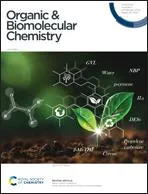
Organic & Biomolecular Chemistry
CiteScore:
3.4
自引率:
10.3%
年发文量:
1041
Organic & Biomolecular Chemistry (OBC) publishes original and high impact research and reviews in organic chemistry. We welcome research that shows new or significantly improved protocols or methodologies in total synthesis, synthetic methodology or physical and theoretical organic chemistry as well as research that shows a significant advance in the organic chemistry or molecular design aspects of chemical biology, catalysis, supramolecular and macromolecular chemistry, theoretical chemistry, mechanism-oriented physical organic chemistry, medicinal chemistry or natural products. Articles published in the journal should report new work which makes a highly-significant impact in the field. Routine and incremental work is generally not suitable for publication in the journal. More details about key areas of our scope are below. In all cases authors should include in their article clear rationale for why their research has been carried out.
推荐化合物
推荐供应商







免责声明
本页面提供的学术期刊信息仅供参考和研究使用。我们与任何期刊出版商均无关联,也不处理投稿事宜。如有投稿相关咨询,请直接联系相关期刊出版商。
如发现页面信息有误,请发送邮件至 support@chemtradehub.com 联系我们。我们将及时核实并处理您的问题。