


A concise approach for determining the relative configuration of H-7 and H-8 in 8,4′-oxyneolignans by 1H NMR spectroscopy
文献信息
发布日期
2018-11-23
DOI
10.1039/C8QO01155A
影响因子
5.281
作者
Ya-Nan Yang, Bing Han, Peng-Fei Yang, Zi-Ming Feng, Jian-Shuang Jiang, Pei-Cheng Zhang
查看原文
摘要
The determination of molecular configuration is usually a difficult and key point in the structure elucidation of natural products. However, due to the small number of available samples and the multiple chiral centers and complex structures of natural products, it is difficult to rapidly and accurately determine their relative configurations. In this paper, we use an NMR technique to comprehensively study 8,4′-oxyneolignan glucosides and find that the chemical shift difference between H-9a and H-9b can be used to accurately and rapidly determine the relative configuration of H-7 and H-8. Our finding can be directly applied to 8,4′-oxyneolignan glucosides without the need for hydrolysis.
相关文献
Isomeric organic semiconductors containing fused-thiophene cores: molecular packing and charge transport
Pei Zhou, Yong Wu, Yanzi Xu, Ying Zhi
2018-03-23
Paper
DOI: 10.1039/C7CP08567B
An ab initio study of Cu-based delafossites as an alternative to nickel oxide in photocathodes: effects of Mg-doping and surface electronic features
Eduardo Schiavo, Vincenzo Barone, Orlando Crescenzi, Ana B. Muñoz-García, Michele Pavone
2018-04-18
Paper
DOI: 10.1039/C8CP00848E
Theoretical insights into the reactivity of Fe-based catalysts for water oxidation: the role of electron-withdrawing groups
Penglin Xu, Shaojin Hu, Hou-Dao Zhang, Xiao Zheng
2018-04-30
Paper
DOI: 10.1039/C8CP00687C
Laboratory spectroscopy of methoxymethanol in the millimeter-wave range
Roman A. Motiyenko, Laurent Margulès, Didier Despois, Jean-Claude Guillemin
2017-10-24
Paper
DOI: 10.1039/C7CP05932A
Open flow non-enzymatic template catalysis and replication
Larwsk H. Gonçalves da Silva, David Hochberg
2018-05-11
Paper
DOI: 10.1039/C8CP01828F
Structural dynamics upon photoexcitation-induced charge transfer in a dicopper(i)–disulfide complex
Mateusz Rebarz, Martin Rohrmüller, Shirly Espinoza, Miroslav Kloz, Norman Kretzschmar, Adam Neuba, Jochen Ortmeyer, Roland Schoch, Matthias Bauer, Wolf Gero Schmidt, Gerald Henkel
2018-02-12
Paper
DOI: 10.1039/C7CP04880G
Phenothiazine-based small-molecule organic solar cells with power conversion efficiency over 7% and open circuit voltage of about 1.0 V using solvent vapor annealing
Yogajivan Rout, Rajneesh Misra, Rahul Singhal, Subhayan Biswas, Ganesh D. Sharma
2018-01-30
Paper
DOI: 10.1039/C7CP08308D
Excitation spectra of retinal by multiconfiguration pair-density functional theory
Sijia S. Dong, Laura Gagliardi, Donald G. Truhlar
2018-02-08
Paper
DOI: 10.1039/C7CP07275A
On the cononsolvency behaviour of hydrophobic clusters in water–methanol solutions
Andrea Pica, Giuseppe Graziano
2018-02-10
Paper
DOI: 10.1039/C7CP07943E
Tunable reactivity of supported single metal atoms by impurity engineering of the MgO(001) support
2018-01-31
Paper
DOI: 10.1039/C7CP08370J
您可能还喜欢
化合物问答
如何储存8-溴-4-羟基-6-(三氟甲氧基)喹啉-3-羧酸乙酯(CAS号:1072944-81-0)?
8-溴-4-羟基-6-(三氟甲氧基)喹啉-3-羧酸乙酯应储存在阴凉、干燥的地方,避免光照和高温。建议使用密封容器进行储存,以防止水分和空气的影响。
1072944-81-0Ethyl 8-bromo-4-hydr...
化合物问答
2,2-二(2-呋喃基)丙烷(CAS号:17920-88-6)的市场或研究趋势如何?
2,2-二(2-呋喃基)丙烷的研究趋势主要集中在新型材料的开发和应用,如高分子材料、有机光电材料等。市场趋势方面,随着环保要求的提高和新材料的应用,该化合物的需...
17920-88-62,2'-(2,2-Propanediy...
化合物问答
如何处理含有螺[呋喃并[3,4-b]吡啶-5(7H),4'-哌啶]-7-酮盐酸盐(CAS号:475152-31-9)的废料?
对于含有螺[呋喃并[3,4-b]吡啶-5(7H),4'-哌啶]-7-酮盐酸盐的废料,应首先进行分类和分离,以减少危险物质的数量。随后,可以考虑通过化学氧化、生物...
475152-31-97H-Spiro[furo[3,4-b]...
化合物问答
Cinnamyl 3-aminobut-2-enoate(CAS号:113898-97-8)安全吗?
Cinnamyl 3-氨基丁-2-烯酸在接触皮肤和眼睛时可能会引起刺激。应避免吸入其粉尘和烟雾。操作时应穿戴适当的个人防护装备,如手套、护目镜和实验室外套。
113898-97-8Cinnamyl 3-aminobut-...
化合物问答
反式-2-十二碳烯二酸(CAS号:6402-36-4)的市场或研究趋势如何?
反式-2-十二碳烯二酸在医药、材料科学等领域有一定的应用,但其市场相对较小。近年来,由于环保意识的提升,对环境友好型化学品的需求增加,研究倾向于开发更绿色的合成...
6402-36-4Traumatic Acid
化合物问答
什么是(9ci)-1H-苯并咪唑-5-乙酸(CAS号:473895-86-2)?
(9ci)-1H-苯并咪唑-5-乙酸是一种含氮杂环化合物,其化学结构为1H-苯并咪唑-5-乙酸。该化合物具有特定的分子式C8H7NO2,属于有机酸类化合物。
473895-86-21H-Benzimidazol-5-yl...
化合物问答
酞菁蓝(CAS号:147-14-8)的主要用途是什么?
酞菁蓝主要用作颜料和染料,广泛应用于塑料、油墨、涂料、纺织品及橡胶工业中。它也用于光敏材料,如太阳能电池和光刻胶。在医疗领域,酞菁蓝因其光敏特性被用于某些光动力...
147-14-8Copper(2+) phthalocy...
化合物问答
5-甲基-1,2,3,4-四氢异喹啉(CAS号:123593-99-7)安全吗?
5-甲基-1,2,3,4-四氢异喹啉在使用和储存时需要谨慎处理。它具有一定的毒性,应避免吸入其蒸气或直接接触皮肤和眼睛。操作此化合物时,建议佩戴防护眼镜、实验服...
123593-99-75-Methyl-1,2,3,4-tet...
化合物问答
如何处理含有3',4',5'-三甲氧基苯乙酮(CAS号:1136-86-3)的废料?
含有3',4',5'-三甲氧基苯乙酮的废液应首先确保其是否为危险废物,根据当地法规确定处理方法。通常,这类有机废液可以采用中和反应降低其pH值,然后通过蒸馏或萃...
1136-86-31-(3,4,5-Trimethoxyp...
化合物问答
如何储存KI-7(CAS号:1489263-00-4)?
KI-7应储存在通风良好的干燥环境中,避免光照和高温。建议使用密封容器储存,并保持在阴凉处。储存温度应控制在室温范围内,一般建议不超过25°C。避免与氧化剂接触...
1489263-00-42-(1-Benzyl-1H-indol...
来源期刊
Organic Chemistry Frontiers
CiteScore:
7.8
自引率:
8.7%
年发文量:
724
Organic Chemistry Frontiers publishes high-quality research from across organic chemistry. Emphases are placed on studies that make significant contributions to the field of organic chemistry by reporting either new or significantly improved protocols or methodologies. Topics include, but are not limited to the following: Organic synthesis Development of synthetic methodologies Catalysis Natural products Functional organic materials Supramolecular and macromolecular chemistry Physical and computational organic chemistry
推荐化合物
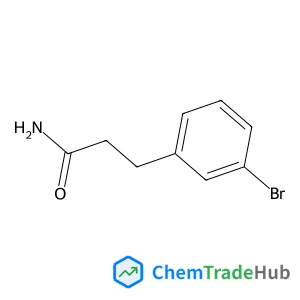
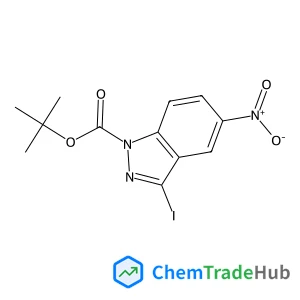
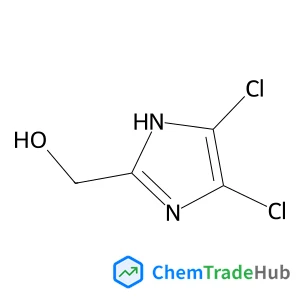
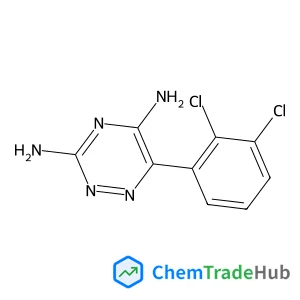
推荐供应商





免责声明
本页面提供的学术期刊信息仅供参考和研究使用。我们与任何期刊出版商均无关联,也不处理投稿事宜。如有投稿相关咨询,请直接联系相关期刊出版商。
如发现页面信息有误,请发送邮件至 support@chemtradehub.com 联系我们。我们将及时核实并处理您的问题。