


Carbon dot-based inverse opal hydrogels with photoluminescence: dual-mode sensing of solvents and metal ions
文献信息
发布日期
2019-08-09
DOI
10.1039/C9AN01287G
影响因子
4.616
作者
Yuhua Zhu, Jianying Wang, Xiang Zhu, Jun Wang, Lijie Zhou, Jinhua Li, Tao Mei, Jingwen Qian, Lai Wei, Xianbao Wang
查看原文
摘要
A dual-mode sensing platform, involving fluorescence and reflectance modes, has been demonstrated for highly sensitive and selective detection of solvents and metal ions based on carbon dot-based inverse opal hydrogels (CD-IOHs). In this work, CD-IOHs have been first synthesized via the typical templating technique. Two kinds of CDs, including solvent and Cu(II) ion sensitive CDs, have been incorporated into the matrix of IOHs during the co-polymerization of acrylic acid (AA) and 2-hydroxyethyl methacrylate (HEMA). The CD-IOHs not only appear green under daylight but also exhibit stable photoluminescence (PL) under UV light owing to the stop-band effect of photonic crystals and the quantum effect of CDs, respectively. By using these two optical phenomena, for solvent sensing, the CD-IOHs change their colors from green, yellow, and red to a semitransparent state and show good linear sensing with the ethanol content varying from 0 to 45% in reflectance mode, while their PL intensities exhibit a nonlinear detection trend: first an increase and then a decrease with the ethanol content in fluorescence mode. Remarkably, as for metal ion sensing, the CD-IOHs have high selectivity for Cu(II) ions via the specific PL quenching effect of Cu(II) ion sensitive CDs. Furthermore, the CD-IOHs show good linear detection in both modes and a wide linear detection range from 0.1 μM to 7 mM. Thus, high selectivity, colorimetric detection, a broad linear detection range, and dual-mode sensing can be realized using the CD-IOHs.
期刊推荐

Lab on a Chip
Mini-Reviews in Medicinal Chemistry

Journal of Enzyme inhibition and Medicinal Chemistry
Angewandte Chemie International Edition

Photochemical & Photobiological Sciences
CrystEngComm
Faraday Discussions

Physical Chemistry Chemical Physics
Current Pharmaceutical Biotechnology
Journal of Medical Biochemistry
相关文献
Unveiling the multifunctional roles of hitherto known capping ligand oleic acid as blue emitter and sensitizer in tuning the emission colour to white in red-emitting phosphors
S. Sekar, J. George Muller
2018-07-05
Paper
DOI: 10.1039/C8CP02954G
Bismuth oxysulfide film electrodes with giant incident photon-to-current conversion efficiency: the dynamics of properties with deposition time
Evgeny A. Bondarenko, Eugene A. Streltsov, Alexander V. Mazanik, Anatoly I. Kulak, Vytautas Grivickas, Patrik Ščajev, Ekaterina V. Skorb
2018-06-22
Paper
DOI: 10.1039/C8CP03225D
Rationally designing mixed Cu–(μ-O)–M (M = Cu, Ag, Zn, Au) centers over zeolite materials with high catalytic activity towards methane activation
Ling Huang, Jian Zhou, Anmin Zheng
2018-09-27
Paper
DOI: 10.1039/C8CP04872J
Reaction pathways for HCN on transition metal surfaces
Mohammed Abdel-Rahman, Xu Feng, Mark Muir, Kushal Ghale, Ye Xu, Michael Trenary
2019-02-18
Paper
DOI: 10.1039/C8CP07548D
Bile acid derivative-based catanionic mixtures: versatile tools for superficial charge modulation of supramolecular lamellae and nanotubes
Maria Chiara di Gregorio, Emilia Severoni, Leana Travaglini, Marta Gubitosi, Simona Sennato, Francesco Mura, Carlos Redondo-Gómez, Aida Jover, Nicolae Viorel Pavel, Luciano Galantini
2018-06-26
Paper
DOI: 10.1039/C8CP02745E
Understanding dissolution process of chitin crystal in ionic liquids: theoretical study
Takuya Uto, Satoshi Idenoue, Kazuya Yamamoto, Jun-ichi Kadokawa
2018-07-30
Paper
DOI: 10.1039/C8CP02749H
The role of the dihedral angle and excited cation states in ionization and dissociation of mono-halogenated biphenyls; a combined experimental and theoretical coupled cluster study
Michael Barclay, Ragnar Bjornsson, Maicol Cipriani, Andreas Terfort, D. Howard Fairbrother, Oddur Ingólfsson
2019-02-01
Paper
DOI: 10.1039/C8CP07785A
Raising glass transition temperature of polymer nanofilms as a function of negative interface energy
Xue Yao, Yaru Wang, Xingyou Lang, Yongfu Zhu, Qing Jiang
2019-02-07
Paper
DOI: 10.1039/C8CP07267A
您可能还喜欢
化合物问答
6-氯-2H-1,4-苯并噁嗪-3(4H)-酮(CAS号:7652-29-1)应用于哪些行业?
6-氯-2H-1,4-苯并噁嗪-3(4H)-酮主要应用于医药、农药和聚合物等领域。在医药领域,该化合物可用于合成抗菌药物;在农药领域,可用作杀虫剂的中间体;在聚...
7652-29-16-Chloro-2H-1,4-benz...
化合物问答
活性氧化铝(CAS号:1302-74-5)应用于哪些行业?
活性氧化铝广泛应用于医药、聚合物、传感器、半导体和催化等领域。在医药行业,活性氧化铝用作吸附剂和干燥剂,有助于去除杂质和水分。在聚合物行业,它用作增白剂和抗结块...
1302-74-5aluminum;trihydrate
化合物问答
什么是硅胶(CAS号:112926-00-8)?
硅胶(Silica gel, pptd.,cryst.-free)是一种无定形、多孔的硅酸盐材料,主要成分为二氧化硅(SiO₂)。其结构由硅氧四面体构成,通过酸...
112926-00-8Silica gel, pptd.,cr...
化合物问答
二乙基甲基一氢硅烷(CAS号:760-32-7)的主要用途是什么?
二乙基甲基一氢硅烷主要用于有机合成、表面处理以及作为溶剂。它还被用作合成其他硅烷化合物的原料,以及在涂料、粘合剂和密封剂中的应用。
760-32-7Diethyl(methyl)silan...
化合物问答
在合成中是否有N-花生四烯酰基甘氨酸(CAS号:179113-91-8)的替代品?
在合成过程中,可以考虑使用类似结构的化合物作为替代品,例如N-亚油酰基甘氨酸或N-花生二烯酰基甘氨酸。这些替代品在结构上有类似的双键位置,但可能具有不同的物理化...
179113-91-8Glycine, N-[(5Z,8Z,1...
化合物问答
在合成中是否有1-(4-甲氧基苯基)丙烷-1,2-二酮(CAS号:10557-27-4)的替代品?
在合成过程中,可以考虑使用类似结构的化合物作为替代品,例如1-(3-甲氧基苯基)丙烷-1,2-二酮或1-(4-羟基苯基)丙烷-1,2-二酮。这些替代品具有相似的...
10557-27-41-(4-Methoxyphenyl)p...
化合物问答
N-(4-氨基-1-苄基-3-羟基-5-苯基戊基)-3-甲基-2-(2-氧代四氢嘧啶-1-基)-丁酰胺 5-氧代吡咯烷-2-甲酸(CAS号:192726-06-0)通常如何合成?
该化合物通常通过一系列复杂的有机合成步骤获得。首先,通过芳香族化合物的羟基化反应获得羟基化产物,然后通过酰化反应形成酰胺中间体,最后通过环化反应得到目标产物。常...
192726-06-05-Oxo-L-proline - (2...
化合物问答
(S)-2-氨基-3-喹啉-2-丙酸(CAS号:161513-46-8)的市场或研究趋势如何?
该化合物作为生物活性化合物,尤其是在药物化学领域表现出色。近年来,随着对新型抗炎、抗病毒和抗癌药物的研究增加,其市场和研究趋势持续增长。此外,其在神经科学领域的...
161513-46-8(S)-2-Amino-3-quinol...
化合物问答
核黄素磷酸钠(CAS号:130-40-5)安全吗?
核黄素磷酸钠在常规使用条件下安全,但高剂量可能引起刺激性反应。操作时需佩戴防护手套和护目镜,避免吸入粉尘。若接触皮肤或眼睛,应立即用大量清水冲洗。急救时需根据接...
130-40-5Sodium 1-deoxy-1-(7,...
化合物问答
盐酸丙胺卡因杂质A(EP) 标准品(CAS号:19281-31-3)通常如何合成?
盐酸丙胺卡因杂质A(EP) 标准品可通过重氮化反应和随后的酰胺化反应合成。首先,利用氯化反应将苯环上的氢原子转化为氯原子,然后通过芳香族重氮化反应引入氨基,最后...
19281-31-32-Chloro-N-(2-methyl...
来源期刊
Analyst

CiteScore:
7.8
自引率:
5.6%
年发文量:
653
Analyst publishes analytical and bioanalytical research that reports premier fundamental discoveries and inventions, and the applications of those discoveries, unconfined by traditional discipline barriers.
推荐化合物
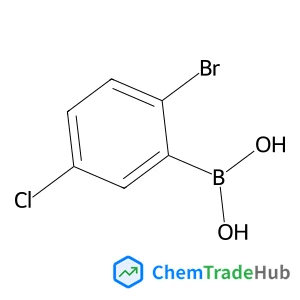
推荐供应商





免责声明
本页面提供的学术期刊信息仅供参考和研究使用。我们与任何期刊出版商均无关联,也不处理投稿事宜。如有投稿相关咨询,请直接联系相关期刊出版商。
如发现页面信息有误,请发送邮件至 support@chemtradehub.com 联系我们。我们将及时核实并处理您的问题。