


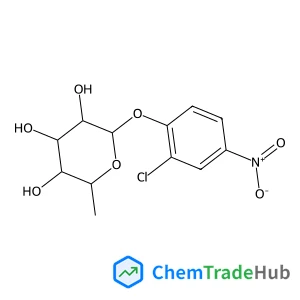
Design of arginine-based therapeutic deep eutectic solvents as drug solubilization vehicles for active pharmaceutical ingredients
文献信息
发布日期
2019-04-30
DOI
10.1039/C9CP01408J
影响因子
3.676
作者
Alberto Gutiérrez, Santiago Aparicio
查看原文
摘要
The solvation of lidocaine in three newly designed deep eutectic solvents is studied using combined experimental and theoretical methods that include density functional theory and molecular dynamics methods. The intermolecular forces between lidocaine and the hydrogen bond acceptors and hydrogen bond donors of the deep eutectic solvents were analysed regarding the type and the strength of inter- and intra-molecular bonding. The structure, composition and properties of the lidocaine solvation shells are analysed together with the possible lidocaine-clustering around the studied deep eutectic solvents and their constituent molecules. Furthermore, the changes in the solvent structures upon lidocaine solubilization are also studied. Natural product-based eutectic solvents showed considerably high solvation of lidocaine in all three deep eutectics based on the strong solute–solvent intermolecular interactions accompanied by a slight volume expansion and minor solvent structural changes. These non-toxic and almost null-volatile therapeutic deep eutectic solvents can be considered as suitable solubilization media for developing pharmaceutical applications and they can be considered as effective drug delivery vehicles for active pharmaceutical ingredients.
期刊推荐
Medicinal Chemistry Research
Heteroatom Chemistry

Atomization and Sprays
Chinese Journal of Chemistry
Acta Metallurgica Sinica-English Letters
Critical Reviews in Solid State and Materials Sciences

Electroanalysis
Biocatalysis and Biotransformation

Polycyclic Aromatic Compounds

Herald of the Russian Academy of Sciences
相关文献
Dynamic nitroxyl formation in the ammonia oxidation on platinum via Eley–Rideal reactions
Yunxi Yao, Konstantinos P. Giapis
2016-10-14
Paper
DOI: 10.1039/C6CP06533C
Enhanced photoelectrochemical water oxidation of bismuth vanadate via a combined strategy of W doping and surface RGO modification
Xiaokang Wan, Fujun Niu, Jinzhan Su, Liejin Guo
2016-11-03
Paper
DOI: 10.1039/C6CP06233D
Charge transfer process at the Ag/MPH/TiO2 interface by SERS: alignment of the Fermi level
Xiaolei Zhang, Huimin Sui, Xiaolei Wang, Hongyang Su, Weina Cheng, Xu Wang, Bing Zhao
2016-10-13
Paper
DOI: 10.1039/C6CP04370D
Electron acceptor of Ni decorated porous carbon nitride applied in photocatalytic hydrogen production
Lingling Bi, Dedong Meng, Qijing Bu, Yanhong Lin, Tengfeng Xie
2016-10-26
Paper
DOI: 10.1039/C6CP05618K
Investigation of helium at a Y2Ti2O7 nanocluster embedded in a BCC Fe matrix
Thomas Danielson, Eric Tea
2016-10-18
Paper
DOI: 10.1039/C6CP05233A
Direct observation of ice nucleation events on individual atmospheric particles
Bingbing Wang, Daniel A. Knopf, Swarup China, Bruce W. Arey, Mary K. Gilles, Alexander Laskin
2016-09-14
Paper
DOI: 10.1039/C6CP05253C
Thermoelectricity in transition metal compounds: the role of spin disorder
Prashun Gorai, Eric S. Toberer, Vladan Stevanović
2016-11-01
Paper
DOI: 10.1039/C6CP06943F
Extracting nano-gold from HAuCl4 solution manipulated with electrons
Y. Lu, K. Wang, F.-R. Chen, W. Zhang, M. L. Sui
2016-10-12
Paper
DOI: 10.1039/C6CP06032C
Deprotonation of formic acid in collisions with a liquid water surface studied by molecular dynamics and metadynamics simulations
Garold Murdachaew, Gilbert M. Nathanson, Lauri Halonen
2016-10-10
Paper
DOI: 10.1039/C6CP06071D
Planarity and multiple components promote organic photovoltaic efficiency by improving electronic transport
Matthew B. Goldey, Daniel Reid, Juan de Pablo, Giulia Galli
2016-09-09
Paper
DOI: 10.1039/C6CP04999K
您可能还喜欢
化合物问答
十二烷基磺酸钠(CAS号:2386-53-0)的主要用途是什么?
十二烷基磺酸钠主要用作表面活性剂,广泛应用于洗涤剂、肥皂、化妆品和工业清洁产品中。它能有效去除油脂和污垢,常用于制造洗发水、沐浴露、洗衣粉和金属清洗剂。此外,它...
2386-53-01-Dodecanesulfonic a...
化合物问答
5-羟基异喹啉(CAS号:2439-04-5)适用哪些法规指南?
5-羟基异喹啉作为化学品,主要适用的法规包括GHS全球化学品统一分类和标签制度,REACH法规等。GHS将5-羟基异喹啉分类为皮肤腐蚀/刺激类别2,严重眼损伤/...
2439-04-55-Isoquinolinol
化合物问答
在合成中是否有FIDAS-5 | Wnt(CAS号:1391934-98-7)的替代品?
合成中可以考虑使用类似结构的化合物,如4-[(E)-2-(2-氯-6-氟苯基)乙烯基]-N-甲基苯胺的类似物或衍生物作为替代品。这类化合物可能具有相似的生物活性...
1391934-98-74-[(E)-2-(2-Chloro-6...
化合物问答
(R)-tert-Butyl 2-(5-bromo-1H-imidazol-2-yl)pyrrolidine-1-carboxylate(CAS号:1370600-56-8)通常如何合成?
该化合物通常通过如下步骤合成:首先,将4-溴-1H-咪唑与对甲苯磺酸在乙酸乙酯中反应,得到中间体5-溴-1H-咪唑-2-甲酸乙酯。然后,该中间体与2-甲基-2-...
1370600-56-82-Methyl-2-propanyl ...
化合物问答
处理4-(吡咯烷-1-基)环己酮(CAS号:10421-18-8)时应注意哪些实验室安全事项?
处理4-(吡咯烷-1-基)环己酮时,应佩戴手套、护目镜和实验室外套,以防止直接接触或吸入。在通风橱中操作,确保良好的通风条件。一旦发生泄漏,应立即清理并使用适当...
10421-18-84-(Pyrrolidin-1-yl)c...
化合物问答
如何处理含有异麦芽糖醇(CAS号:534-73-6)的废料?
含有异麦芽糖醇的废液应首先进行分类收集,避免与其他化学品混合。对于小规模的废液,可以通过焚烧或加入特定的化学试剂进行无害化处理。对于大规模的废液,建议联系专业的...
534-73-66-O-alpha-D-Glucopyr...
化合物问答
7-甲基壬酸(CAS号:41653-89-8)的主要用途是什么?
7-甲基壬酸主要用于有机合成领域,作为合成其他化合物的原料。此外,它还可能作为一种中间体用于药品制造和香料合成,但具体用途需要根据其具体的化学结构和反应特性来确...
41653-89-87-Methylnonanoic aci...
化合物问答
N-甲氧基-N-甲基甲基吡啶羧酰胺(CAS号:148493-07-6)应用于哪些行业?
N-甲氧基-N-甲基甲基吡啶羧酰胺在医药领域有一定的应用,作为一种潜在的药物前体或中间体。此外,该化合物也可能应用于聚合物改性剂、传感器材料等。由于其独特的化学...
148493-07-6N-Methoxy-N-methylpi...
化合物问答
什么是惕各酸香叶酯(CAS号:7785-33-3)?
惕各酸香叶酯是一种化合物,化学名称为(2E)-3,7-二甲基-2,6-辛二烯-1-基(2E)-2-甲基-2-丁烯酸酯。它是一种具有香叶香气的化合物,分子式为C1...
7785-33-3(2E)-3,7-Dimethyl-2,...
化合物问答
1-环丁基哌嗪(CAS号:132800-13-6)安全吗?
1-环丁基哌嗪在适当的操作条件下是相对安全的,但如遇明火或高热会释放有毒气体。操作时应佩戴防护眼镜和手套,避免吸入或接触皮肤、眼睛。
132800-13-61-Cyclobutylpiperazi...
来源期刊
Physical Chemistry Chemical Physics

CiteScore:
5.5
自引率:
10.3%
年发文量:
3036
Physical Chemistry Chemical Physics (PCCP) is an international journal co-owned by 19 physical chemistry and physics societies from around the world. This journal publishes original, cutting-edge research in physical chemistry, chemical physics and biophysical chemistry. To be suitable for publication in PCCP, articles must include significant innovation and/or insight into physical chemistry; this is the most important criterion that reviewers and Editors will judge against when evaluating submissions. The journal has a broad scope and welcomes contributions spanning experiment, theory, computation and data science. Topical coverage includes spectroscopy, dynamics, kinetics, statistical mechanics, thermodynamics, electrochemistry, catalysis, surface science, quantum mechanics, quantum computing and machine learning. Interdisciplinary research areas such as polymers and soft matter, materials, nanoscience, energy, surfaces/interfaces, and biophysical chemistry are welcomed if they demonstrate significant innovation and/or insight into physical chemistry. Joined experimental/theoretical studies are particularly appreciated when complementary and based on up-to-date approaches.
推荐化合物
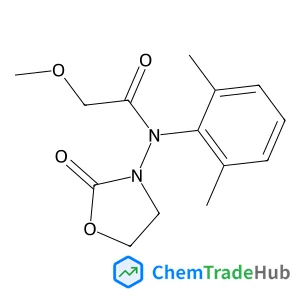
N-(2,6-Dimethylphenyl)-2-methoxy-N-(2-oxo-1,3-oxazolidin-3-yl)acetamide
CAS号:
77732-09-3
分子式:
C14H18N2O4
推荐供应商






免责声明
本页面提供的学术期刊信息仅供参考和研究使用。我们与任何期刊出版商均无关联,也不处理投稿事宜。如有投稿相关咨询,请直接联系相关期刊出版商。
如发现页面信息有误,请发送邮件至 support@chemtradehub.com 联系我们。我们将及时核实并处理您的问题。