





DFT insights into electrocatalytic CO2 reduction to methanol on α-Fe2O3(0001) surfaces
文献信息
发布日期
2020-04-20
DOI
10.1039/C9CP06453B
影响因子
3.676
作者
Nandha Kumar, Nicola Seriani, Ralph Gebauer
查看原文
摘要
Electrocatalytic reduction of CO2 to manufacture fuels and other useful chemicals is one of the appealing methods to reuse CO2. Herein, electrocatalytic CO2 reduction on a model α-Fe2O3(0001) surface catalyst has been investigated by means of density functional theory. This systematic study, involving 20 reaction intermediates and 63 distinct elementary reaction steps, has allowed the identification of a novel mechanism for the decomposition of the key intermediate *COOH. Methanol is the preferred product, with an overpotential of 0.8 V, over carbon monoxide (CO), formic acid (HCOOH), and formaldehyde (CH2O). Formaldehyde formed on the surface will be converted into methanol. This work demonstrates the need for a complete investigation of possible pathways to find the most favourable one, beyond chemical intuition. Moreover, it suggests that hematite could be an interesting material for CO2 reduction.
相关文献
Vinyl and ring-opening metathesis polymerization of norbornene with novel half-sandwich iridium(iii) complexes bearing hydroxyindanimine ligands
Xia Meng, Guang-Rong Tang, Guo-Xin Jin
2008-05-08
Communication
DOI: 10.1039/B803382J
Controlled synthesis of mesoporous SiO2/Ni3Si2O5(OH)4 core–shell microspheres with tunable chamber structures via a self-template method
Zhiyan Guo, Fanglin Du, Guicun Li, Zuolin Cui
2008-04-11
Communication
DOI: 10.1039/B719500A
A rare ligand bridged ferromagnetically coupled MnIV3 complex with a ground spin state of S = 9/2
Thushan Pathmalingam, Serge I. Gorelsky, Tara J. Burchell, Rodolphe Clérac, Muralee Murugesu
2008-04-16
Communication
DOI: 10.1039/B802279H
Synthesis of propargylic fluorides from allenylsilanes
Laurence Carroll, Mª Carmen Pacheco, Ludivine Garcia, Véronique Gouverneur
2006-08-23
Communication
DOI: 10.1039/B610013A
Activation of P5R5 (R = Ph, Et) by a Rh-β-diketiminate complex
Stephen J. Geier, Douglas W. Stephan
2008-04-11
Communication
DOI: 10.1039/B803277G
Electrochemical parameters and techniques in drug development, with an emphasis on quinones and related compounds
Elizabeth Anne Hillard, Fabiane Caxico de Abreu, Danielle Cristhina Melo Ferreira, Gérard Jaouen, Marília Oliveira Fonseca Goulart, Christian Amatore
2008-04-10
Feature Article
DOI: 10.1039/B718116G
您可能还喜欢
化合物问答
如何储存1,2-环己二酮环乙缩醛(CAS号:4746-96-7)?
1,2-环己二酮环乙缩醛应储存在阴凉、干燥、通风良好的地方,避免阳光直射。建议使用密封容器保存,并保持环境温度在室温范围内,远离火源和热源。
4746-96-71,4-Dioxaspiro[4.5]d...
化合物问答
Ecopladib(CAS号:381683-92-7)的市场或研究趋势如何?
Ecopladib作为一种新型的药物,主要应用于治疗高胆固醇等疾病。目前,市场和研究趋势显示,Ecopladib因其独特的药理作用而受到关注。随着对心血管疾病治...
381683-92-7Ecopladib
化合物问答
2,3-Dimethyl-3H-imidazo[4,5-c]pyridine(CAS号:52538-09-7)通常如何合成?
2,3-二甲基-3H-咪唑[4,5-c]吡啶通常通过咪唑和2,3-二甲基吡啶的缩合反应合成。具体来说,将咪唑和2,3-二甲基吡啶在适当的溶剂中进行加热或加压反应...
52538-09-72,3-Dimethyl-3H-imid...
化合物问答
2,3,4,5-tetrahydro-1H-3-苯并氮杂环;盐酸盐(CAS号:17379-01-0)的市场或研究趋势如何?
该化合物在药物化学和有机合成中有一定的应用。近年来,随着对新型药物化合物的需求增加,该化合物的研究趋势主要集中在探索其生物活性,尤其是其在神经系统疾病治疗中的潜...
17379-01-02,3,4,5-Tetrahydro-1...
68-90-6(2-Ethyl-1-benzofura...
化合物问答
如何储存盐酸甘氨酸丁酯(CAS号:13048-99-2)?
盐酸甘氨酸丁酯应储存在阴凉、干燥、通风良好的地方,避免阳光直射和高温环境,温度应控制在25℃以下。储存容器应密封,避免与空气中的水分和酸性物质接触,以防发生水解...
13048-99-2Butyl glycinate hydr...
化合物问答
什么是2-Iodo-N,N-dimethylbenzamide(CAS号:54616-46-5)?
2-碘-N,N-二甲基苯胺是一种有机化合物,化学名为2-Iodo-N,N-dimethylbenzamide。其分子式为C<sub>9</sub>H<sub>1...
54616-46-52-Iodo-N,N-dimethylb...
16817-90-6N-Cyclohexylglycinam...
化合物问答
5-溴-2-(4H-1,2,4-三唑-4-基)吡啶(CAS号:959240-99-4)的市场或研究趋势如何?
随着医药、农药和新材料领域的发展,该化合物作为关键中间体的应用日益增多。特别是在药物合成中,由于其独特的化学性质,可以用于合成多种药物分子。未来的研究趋势可能集...
959240-99-45-Bromo-2-(4H-1,2,4-...
化合物问答
2,4-二溴-6-三氟甲基嘧啶(CAS号:785778-00-9)通常如何合成?
2,4-二溴-6-三氟甲基嘧啶通常通过溴化反应合成。首先,将6-三氟甲基嘧啶与溴化剂(如液溴)在适当的溶剂(如二氯甲烷、四氢呋喃)中反应,加入适当的催化剂(如四...
785778-00-92,4-Dibromo-6-(trifl...
来源期刊
Physical Chemistry Chemical Physics

CiteScore:
5.5
自引率:
10.3%
年发文量:
3036
Physical Chemistry Chemical Physics (PCCP) is an international journal co-owned by 19 physical chemistry and physics societies from around the world. This journal publishes original, cutting-edge research in physical chemistry, chemical physics and biophysical chemistry. To be suitable for publication in PCCP, articles must include significant innovation and/or insight into physical chemistry; this is the most important criterion that reviewers and Editors will judge against when evaluating submissions. The journal has a broad scope and welcomes contributions spanning experiment, theory, computation and data science. Topical coverage includes spectroscopy, dynamics, kinetics, statistical mechanics, thermodynamics, electrochemistry, catalysis, surface science, quantum mechanics, quantum computing and machine learning. Interdisciplinary research areas such as polymers and soft matter, materials, nanoscience, energy, surfaces/interfaces, and biophysical chemistry are welcomed if they demonstrate significant innovation and/or insight into physical chemistry. Joined experimental/theoretical studies are particularly appreciated when complementary and based on up-to-date approaches.
推荐化合物
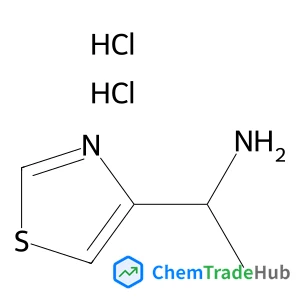
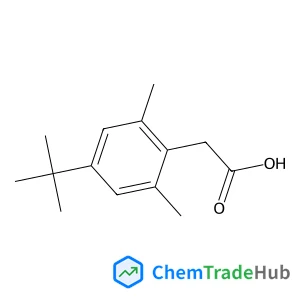
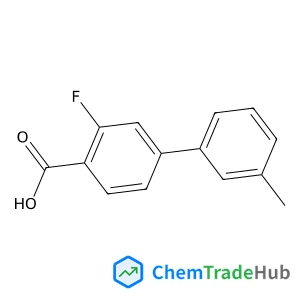
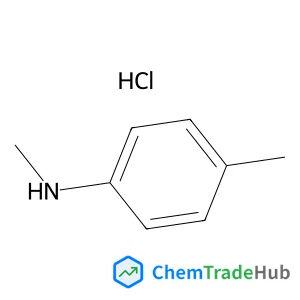
推荐供应商





免责声明
本页面提供的学术期刊信息仅供参考和研究使用。我们与任何期刊出版商均无关联,也不处理投稿事宜。如有投稿相关咨询,请直接联系相关期刊出版商。
如发现页面信息有误,请发送邮件至 support@chemtradehub.com 联系我们。我们将及时核实并处理您的问题。