




Direct C–S bond formation via C–O bond activation of phenols in a crossover Pd/Cu dual-metal catalysis system
文献信息
发布日期
2019-04-10
DOI
10.1039/C9OB00313D
影响因子
3.876
作者
Vahid Khakyzadeh, Abed Rostami, Hojat Veisi, Behzad Shirmardi Shaghasemi, Erik Reimhult, Yuanzhi Xia, Sima Darvishi
查看原文
摘要
A dual-metal catalysis system including a newly prepared nanoparticle [SiO2@organic-linker(OL)@Pd(II)] and CuI was introduced with ultra-high catalytic activity (high turnover number (TON), up to 19 000) to a one-pot and odorless synthesis of unsymmetrical aryl sulfides by crossover C–S bond formation. The reaction proceeds via C–O bond activation of phenols and direct C–S bond formation in the presence of S8 as an oddorless sulfur source and aryl boronic acids under mild conditions (room temperature). The catalyst could be recycled up to five times without an obvious change in its activity.
相关文献
Reactions driving conformational movements (molecular motors) in gels: conformational and structural chemical kinetics
2016-12-06
Perspective
DOI: 10.1039/C6CP06735B
Unravelling the dissociation pathways of acetic acid upon electron transfer in potassium collisions: experimental and theoretical studies
G. Meneses, C. Widmann, T. Cunha, A. Gil, F. Ferreira da Silva, M. J. Calhorda, P. Limão-Vieira
2016-11-23
Paper
DOI: 10.1039/C6CP06375F
Structural, elastic, electronic, and optical properties of the tricycle-like phosphorene
Yang Zhang, Zhi-Feng Wu, Peng-Fei Gao, Dang-Qi Fang, Er-Hu Zhang, Sheng-Li Zhang
2016-12-12
Paper
DOI: 10.1039/C6CP07575D
Structures of protonated hydrogen sulfide clusters, H+(H2S)n, highlighting the nature of sulfur-centered intermolecular interactions
Dandan Wang, Asuka Fujii
2016-12-15
Paper
DOI: 10.1039/C6CP07342E
Interfacial assembly structures and nanotribological properties of saccharic acids
Hongyu Shi, Yuhong Liu, Qingdao Zeng, Yanlian Yang, Chen Wang, Xinchun Lu
2016-11-29
Paper
DOI: 10.1039/C6CP06759J
A structure–property interplay between the width and height of cages and the static third order nonlinear optical responses for fullerenes: applying gamma density analysis
Li Wang, Jin-Ting Ye, He Chen, Zhen-Zhen Chen
2016-12-08
Paper
DOI: 10.1039/C6CP06651H
Excited state proton transfer in 2′-hydroxychalcone derivatives
Michael Dommett, Rachel Crespo-Otero
2016-12-22
Paper
DOI: 10.1039/C6CP07541J
Rational design of model Pd(ii)-catalysts for C–H activation involving ligands with charge-shift bonding characteristics
Dongxia Ma, Congjie Zhang, Zhe-Ning Chen, Xin Xu
2016-12-08
Paper
DOI: 10.1039/C6CP06215F
Energetics and structural characterization of the “DFG-flip” conformational transition of B-RAF kinase: a SITS molecular dynamics study
Qiang Shao, Zhijian Xu, Jinan Wang, Jiye Shi, Weiliang Zhu
2016-12-02
Paper
DOI: 10.1039/C6CP06624K
您可能还喜欢
化合物问答
什么是3-表南美楝属二醇(CAS号:19942-04-2)?
3-表南美楝属二醇是一种具有特定立体化学结构的化合物,其分子式为C31H52O2,属于甾醇类化合物。它具有光学活性,是一种复杂的有机分子,主要存在于一些植物中。
19942-04-2(3S,5R,8R,9R,10R,13R...
化合物问答
3-羧基-5-碘苯甲酸甲酯(CAS号:50765-22-5)应用于哪些行业?
3-羧基-5-碘苯甲酸甲酯主要应用于医药行业,作为合成某些药物中间体的重要原料。此外,它还可能用于聚合物的改性、传感器的制备以及半导体材料的制备等领域。
50765-22-5Methyl 3-hydroxy-5-i...
化合物问答
什么是3-Bromoindolin-2-one(CAS号:22942-87-6)?
3-Bromoindolin-2-one是一种含有溴代基团的吲哚酮衍生物,分子式为C9H7BrNO。它是一种无色固体,具有一定的挥发性,熔点为158-159°C...
22942-87-63-Bromoindolin-2-one
化合物问答
如何处理含有L-Lysyl-L-phenylalanyl-L-isoleucylglycyl-L-leucyl-L-methioninamide(CAS号:2990-43-4)的废料?
对于含有该化合物的废液,应先进行中和处理,然后根据其毒性和活性选择合适的处置方法。可以考虑焚烧处理或由专业的化学品废物处理公司进行无害化处理。处理过程中需注意环...
2990-43-4L-Lysyl-L-phenylalan...
化合物问答
ANGIOTENSIN 1/2 + A (2 - 8)(CAS号:51833-76-2)的物理化学性质是什么?
ANGIOTENSIN 1/2 + A (2 - 8)是一种蛋白质类化合物,具有典型的蛋白质性质。它的分子量约为5900 Da。该化合物在水中具有一定的溶解性,...
51833-76-2ANGIOTENSIN 1/2 + A ...
化合物问答
如何储存2-甲基硫代嘧啶-5-硼酸频那酯(CAS号:940284-18-4)?
应将该化合物存放在阴凉干燥、通风良好的地方,避免阳光直射。建议将化合物密封保存在避光的、干燥的容器中,远离火源和高温环境。
940284-18-42-(Methylthio)-5-(4,...
化合物问答
什么是苏丹红IV氘代物 标准品(CAS号:1014689-18-9)?
苏丹红IV氘代物 标准品是一种含有氘代标记的苏丹红IV化合物,是一种用于化合物分析、结构确证以及代谢研究的标准物质。
1014689-18-91-[(E)-{2-Methyl-4-[...
化合物问答
(+)-2-Amino-6-propionamido-d3-tetrahydrobenzothiazole(CAS号:1217680-69-7)适用哪些法规指南?
该化合物需要遵循《全球化学品统一分类和标签制度》(GHS)中的分类和标签要求,具体分类需依据其毒性和物理化学性质。此外,还需要符合《欧盟化学品注册、评估、授权和...
1217680-69-7(+)-2-Amino-6-propio...
化合物问答
如何储存2-氨基-2-(2-吡啶)乙酸乙酯(CAS号:55243-15-7)?
2-氨基-2-(2-吡啶)乙酸乙酯应储存于阴凉、干燥、通风良好的环境中,避免高温和光照。应使用密封容器储存,并远离易燃物、氧化剂和其他危险化学品。
55243-15-7Ethyl 2-amino-2-(pyr...
化合物问答
3-羟基-4-甲氧基吡啶-2-羧酸(CAS号:210300-09-7)的主要用途是什么?
3-羟基-4-甲氧基吡啶-2-羧酸主要用于合成其他有机化合物,如药物合成、农药合成和染料合成等。此外,它还可用作中间体和试剂,在化学研究领域也有一定的应用。
210300-09-73-Hydroxy-4-methoxy-...
来源期刊
Organic & Biomolecular Chemistry

CiteScore:
3.4
自引率:
10.3%
年发文量:
1041
Organic & Biomolecular Chemistry (OBC) publishes original and high impact research and reviews in organic chemistry. We welcome research that shows new or significantly improved protocols or methodologies in total synthesis, synthetic methodology or physical and theoretical organic chemistry as well as research that shows a significant advance in the organic chemistry or molecular design aspects of chemical biology, catalysis, supramolecular and macromolecular chemistry, theoretical chemistry, mechanism-oriented physical organic chemistry, medicinal chemistry or natural products. Articles published in the journal should report new work which makes a highly-significant impact in the field. Routine and incremental work is generally not suitable for publication in the journal. More details about key areas of our scope are below. In all cases authors should include in their article clear rationale for why their research has been carried out.
推荐化合物
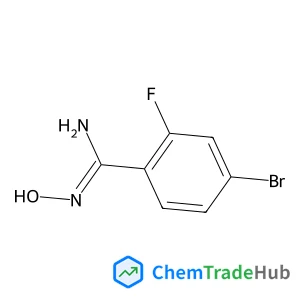
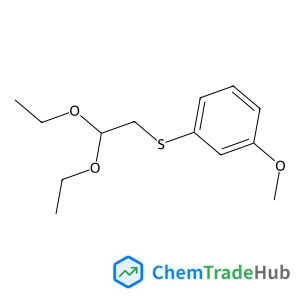
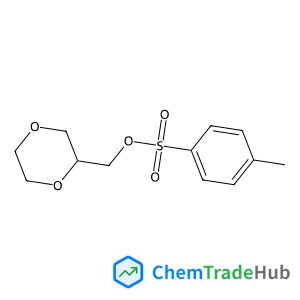
![(1S)-1,5-Anhydro-2-O-alpha-L-arabinopyranosyl-1-[5-hydroxy-7-({6-O-[3-(4-hydroxy-3-methoxyphenyl)propanoyl]-beta-D-glucopyranosyl}oxy)-2-(4-hydroxyphenyl)-4-oxo-4H-chromen-6-yl]-D-glucitol structure](https://cnstatic.chemtradehub.com/structs/225/2252345-81-4-bcff.webp "(1S)-1,5-Anhydro-2-O-alpha-L-arabinopyranosyl-1-[5-hydroxy-7-({6-O-[3-(4-hydroxy-3-methoxyphenyl)propanoyl]-beta-D-glucopyranosyl}oxy)-2-(4-hydroxyphenyl)-4-oxo-4H-chromen-6-yl]-D-glucitol structure")
推荐供应商





免责声明
本页面提供的学术期刊信息仅供参考和研究使用。我们与任何期刊出版商均无关联,也不处理投稿事宜。如有投稿相关咨询,请直接联系相关期刊出版商。
如发现页面信息有误,请发送邮件至 support@chemtradehub.com 联系我们。我们将及时核实并处理您的问题。