


Enantioselective rearrangement of indolyl carbonates catalyzed by chiral DMAP-N-oxides
文献信息
发布日期
2019-10-12
DOI
10.1039/C9QO01146C
影响因子
5.281
作者
Meng Shan, Tao Liang, Ye-Fei Zhang, Ming-Sheng Xie, Gui-Rong Qu, Hai-Ming Guo
查看原文
摘要
Bifunctional chiral DMAP-N-oxides have been reported for the highly enantioselective rearrangement of indolyl carbonates. Using 2.5 mol% of chiral DMAP-N-oxide, diverse oxindoles containing an all-carbon quaternary stereocenter were obtained in excellent yields (up to 98% yield) with high enantioselectivities (up to 96% ee). Compared to the widespread use of chiral DMAP and isothiourea catalysts, in which the nitrogen atom serves as a nucleophilic site, we found that chiral DMAP-N-oxides, which utilize the oxygen atom as a nucleophilic site, were also efficient organocatalysts in this rearrangement.
期刊推荐
Journal of Peptide Science
Russian Chemical Bulletin

Journal of Natural Medicines
Russian Journal of General Chemistry

Chemistry Education Research and Practice

New Journal of Chemistry

Acta Materialia
Russian Journal of Organic Chemistry

Current Opinion in Solid State & Materials Science
Russian Journal of Coordination Chemistry
相关文献
Suppressing triplet decay in quinoidal singlet fission materials: the role of molecular planarity and rigidity
Guangchao Han, Qian Peng
2020-03-09
Paper
DOI: 10.1039/C9CP06987A
BOKEI: Bayesian optimization using knowledge of correlated torsions and expected improvement for conformer generation
Lucian Chan, Geoffrey R. Hutchison, Garrett M. Morris
2020-02-12
Paper
DOI: 10.1039/C9CP06688H
A methodical study of quantum phase engineering in topological crystalline insulator SnTe and related alloys
Mohsen Yarmohammadi, Kavoos Mirabbaszadeh
2019-08-16
Paper
DOI: 10.1039/C9CP03655E
2Ch–2N square and hexagon interactions: a combined crystallographic data analysis and computational study
Yunxiang Lu, Wenxia Li, Weiwei Yang, Zhengdan Zhu, Zhijian Xu, Honglai Liu
2019-09-05
Paper
DOI: 10.1039/C9CP04562G
First-principles investigation of the hydrogen evolution reaction on different surfaces of pyrites MnS2, FeS2, CoS2, NiS2
Ming-Hsiu Wu, Wan-Jou Chou, Jian-Syun Huang, Darwin Barayang Putungan, Shi-Hsin Lin
2019-08-28
Paper
DOI: 10.1039/C9CP03893K
A DNP-hyperpolarized solid-state water NMR MASER: observation and qualitative analysis
Emmanuelle M. M. Weber, Dennis Kurzbach, Daniel Abergel
2019-09-11
Paper
DOI: 10.1039/C9CP03334C
Pyridine–acetaldehyde, a molecular balance to explore the n→π* interaction
Susana Blanco, Alberto Macario, Juan Carlos López
2019-09-06
Communication
DOI: 10.1039/C9CP04088A
Velocity map imaging study of the photodissociation dynamics of the allyl radical
Marta G. González, Luis Rubio-Lago
2020-02-18
Paper
DOI: 10.1039/C9CP04758A
Interaction of positronium with dissolved oxygen in liquids‡
P. S. Stepanov, F. A. Selim, A. V. Bokov, O. V. Ilyukhina, G. Duplâtre
2020-01-29
Paper
DOI: 10.1039/C9CP06105C
Ultrafast polaron-pair dynamics in a poly(3-hexylthiophene-2,5-diyl) device influenced by a static electric field: insights into electric-field-related charge loss
Debkumar Rana, Patrice Donfack, Vladislav Jovanov, Veit Wagner, Arnulf Materny
2019-09-11
Paper
DOI: 10.1039/C9CP03736E
您可能还喜欢
化合物问答
(3-氨苯基)环丙基甲酮(CAS号:162174-75-6)的主要用途是什么?
(3-氨苯基)环丙基甲酮主要用于合成化学中间体,特别是在药物化学领域作为原料。它还可以用于有机合成反应中,作为催化剂或反应物。
162174-75-6(3-Aminophenyl)(cycl...
化合物问答
如何储存亚胺菌(CAS号:136470-79-6)?
亚胺菌应储存在干燥、阴凉处,避免直接暴露于光线下。建议使用密封容器储存,防止吸潮和污染。具体的储存条件应参考产品的安全数据表(MSDS)或药品说明书。
136470-79-6Abacavir EP Impurity...
化合物问答
2-氯-2,2-二氟乙酰胺(CAS号:354-28-9)应用于哪些行业?
2-氯-2,2-二氟乙酰胺在医药、聚合物、传感器、半导体等领域有广泛应用。在医药领域,它作为中间体用于合成其他药物;在聚合物领域,用作聚合引发剂或稳定剂;在传感...
354-28-92-Chloro-2,2-difluor...
化合物问答
处理4-甲基-3-硝基-1,1-联苯(CAS号:53812-68-3)时应注意哪些实验室安全事项?
在处理4-甲基-3-硝基-1,1-联苯时,应佩戴手套、护目镜和实验室外套等个人防护装备(PPE),确保在通风橱中操作以减少吸入风险。若发生泄露,应立即使用沙子或...
53812-68-34'-Methyl-3-nitro-1,...
化合物问答
(2S)-羟基(苯基)乙酸 (2R)-N-苄基-1-(4-甲氧基苯基)丙-2-胺盐(CAS号:188690-84-8)应用于哪些行业?
该化合物广泛应用于医药、聚合物和半导体行业。在医药领域,它是某些药物中间体的重要组成部分;在聚合物领域,可用作增塑剂;在半导体行业,可用于制造光刻胶。
188690-84-8Benzeneacetic acid, ...
化合物问答
在合成中是否有芬苯哒唑砜-D3标准品(CAS号:1228182-49-7)的替代品?
芬苯哒唑砜-D3标准品的替代品可能包括类似的苯并咪唑类化合物,如芬苯哒唑本身或其非同位素标记版本。这些替代品在结构上与芬苯哒唑砜-D3相似,但在具体应用中需进行...
1228182-49-7(~2~H_3_)Methyl [5-(...
化合物问答
2-氟-4-硝基苯乙酸(CAS号:315228-19-4)通常如何合成?
2-氟-4-硝基苯乙酸可以通过一系列化学反应合成,通常是从4-氟苯胺开始,首先进行硝化反应生成4-氟-2-硝基苯胺,然后进行乙酰化反应得到目标产物。具体的合成步...
315228-19-42-(2-fluoro-4-nitrop...
化合物问答
2-氟-4-甲氧基苯乙酸(CAS号:883531-28-0)通常如何合成?
2-氟-4-甲氧基苯乙酸通常通过将4-甲氧基苯乙酸与氟化试剂(如氟化氰)反应来合成。反应通常在无水条件下进行,使用催化剂如六氟磷酸锂或四氟硼酸锂以提高选择性和产...
883531-28-02-Fluoro-4-methoxyph...
化合物问答
什么是4SC 202;4SC202(CAS号:1186222-89-8)?
4SC 202;4SC202是一种化学化合物,其化学名称为(2E)-N-(2-氨基苯基)-3-(1-{[4-(1-甲基-1H-吡唑-4-基)苯基]磺酰基}-1H...
1186222-89-8(2E)-N-(2-Aminopheny...
132980-99-53,5-Difluorobenzamid...
来源期刊
Organic Chemistry Frontiers

CiteScore:
7.8
自引率:
8.7%
年发文量:
724
Organic Chemistry Frontiers publishes high-quality research from across organic chemistry. Emphases are placed on studies that make significant contributions to the field of organic chemistry by reporting either new or significantly improved protocols or methodologies. Topics include, but are not limited to the following: Organic synthesis Development of synthetic methodologies Catalysis Natural products Functional organic materials Supramolecular and macromolecular chemistry Physical and computational organic chemistry
推荐化合物
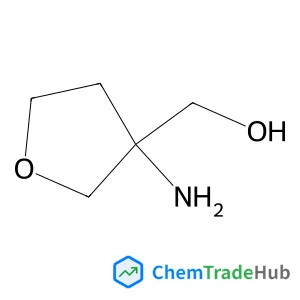
![1H-Imidazo[4,5-c]pyridine-7-carboxylic acid structure](https://cnstatic.chemtradehub.com/structs/123/1234616-39-7-1344.webp "1H-Imidazo[4,5-c]pyridine-7-carboxylic acid structure")
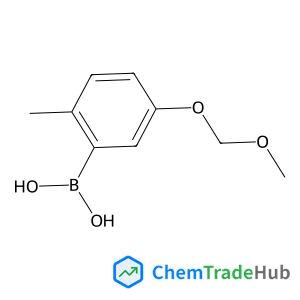
![1-Benzyl-1,7-diazaspiro[4.4]nonane dihydrochloride structure](https://cnstatic.chemtradehub.com/structs/115/1159822-71-5-0320.webp "1-Benzyl-1,7-diazaspiro[4.4]nonane dihydrochloride structure")
推荐供应商







免责声明
本页面提供的学术期刊信息仅供参考和研究使用。我们与任何期刊出版商均无关联,也不处理投稿事宜。如有投稿相关咨询,请直接联系相关期刊出版商。
如发现页面信息有误,请发送邮件至 support@chemtradehub.com 联系我们。我们将及时核实并处理您的问题。