


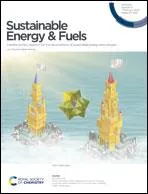
Life cycle environmental analysis of ‘drop in’ alternative aviation fuels: a review
文献信息
发布日期
2020-03-20
DOI
10.1039/C9SE00788A
影响因子
6.367
作者
Y. Luo, B. Xu, M. M. Maroto-Valer, J. M. Andresen
查看原文
摘要
Alternative aviation fuels possess significant potential to reduce the environmental burdens of the aviation industry. This review critically explores the application of the Life Cycle Assessment Methodology to the assessment of alternative aviation fuels, highlighting critical issues associated with implementing Life Cycle Assessment, such as the regulatory policy, functional unit selection, key system boundaries and the selection of the appropriate allocation methods. Critically distinct from other reviews on aviation fuels, a full, detailed analysis of the 37 Lifecycle Assessment studies currently available is critically evaluated over the past decade, supported by the additional background literature. For the first time, it brings together the assessment of sustainable feedstocks, processes and impact methods on the assessment of the jet fuel fraction. Significantly, the results highlight a lack of assessment into other characterisation factors within the Life Cycle Impact Assessment phase, leading to an over reliance on Global Warming Potentials and high uncertainty during production and combustion of the aircraft at high altitudes. Future perspectives on the next generation of aviation fuels from novel feedstocks are explored, leading to recommendations for applying endpoint damage assessment categories to these studies.
相关文献
Reduced strain mechanochemical activation onset in microstructured materials
Reza Behrou, Bo Cao, Morgan Bassford, Ariana Mendible, Courtney Shaeffer, Nicholas Boechler
2020-01-06
Communication
DOI: 10.1039/C9PY01875A
Preparation of hyperbranched polymers by oxa-Michael addition polymerization
Qimin Jiang, YuanLiang Zhang, Yongzhuang Du, Maotong Tang, Li Jiang, Wenyan Huang, Hongjun Yang, Xiaoqiang Xue
2019-12-09
Paper
DOI: 10.1039/C9PY01686D
Epoxy vitrimers incorporating physical crosslinks produced by self-association of alkyl chains
F. I. Altuna, U. Casado, I. E. dell'Erba, L. Luna, C. E. Hoppe, R. J. J. Williams
2020-01-06
Paper
DOI: 10.1039/C9PY01787A
Self-crosslinkable polymers from furan-functionalized Meldrum's acid and maleimides as effective precursors of free-standing and flexible crosslinked polymer films showing low dielectric constants
Chien-Ho Huang, Ying-Ling Liu
2020-01-07
Paper
DOI: 10.1039/C9PY01709G
Polycondensation of bis(α-diazo-1,3-dicarbonyl) compounds with dicarboxylic acids: an efficient access to functionalized alternating polyesters
Yuanli Ding, Youhua Tao
2020-02-18
Communication
DOI: 10.1039/D0PY00185F
Structural tuning of polycaprolactone based thermadapt shape memory polymer
Wusha Miao, Weike Zou, Yingwu Luo, Ning Zheng, Qiao Zhao, Tao Xie
2020-01-07
Paper
DOI: 10.1039/C9PY01891C
Zwitterionic copolymerization of γ-butyrolactone with 3,3-bis(chloromethyl) oxacyclobutane catalyzed by scandium triflates
2020-01-27
Paper
DOI: 10.1039/C9PY01532A
Mechanically strong and tough hydrogels with pH-triggered self-healing and shape memory properties based on a dual physically crosslinked network
Tao Liu, Shaoshuang Zou, Chen Hang, Jian Li, Xiang Di, Xiaohui Li, Qiang Wu, Fenfen Wang
2020-01-27
Paper
DOI: 10.1039/C9PY01862J
您可能还喜欢
化合物问答
处理2-异丙基-5-羧基-1,3-二氧六环(CAS号:116193-72-7)时应注意哪些实验室安全事项?
处理2-异丙基-5-羧基-1,3-二氧六环时应注意以下安全事项:1. 戴上防护眼镜和手套,避免直接接触皮肤和眼睛。2. 在通风橱中操作,确保空气流通。3. 防止...
116193-72-72-Isopropyl-1,3-diox...
化合物问答
2-Hydroxy-N,N-dimethyl-2-phenylacetamide(CAS号:2019-71-8)的市场或研究趋势如何?
该化合物在制药和精细化工领域具有一定的应用,特别是在药物合成中作为中间体。随着环保意识的提高,市场对更安全、更环保的化学品的需求增加,因此该化合物的研究趋势倾向...
2019-71-82-Hydroxy-N,N-dimeth...
化合物问答
4-(1H-吡唑-3-基)哌啶(CAS号:278798-08-6)应用于哪些行业?
4-(1H-吡唑-3-基)哌啶在医药领域有潜在应用,可用于合成药物中间体。此外,在聚合物和传感器领域也有一定的应用前景,可以作为功能材料的一部分。
278798-08-64-(1H-Pyrazol-3-yl)p...
化合物问答
什么是三氯噻嗪(CAS号:133-67-5)?
三氯噻嗪是一种化学物质,其英文名称为6-Chloro-3-(dichloromethyl)-3,4-dihydro-2H-1,2,4-benzothiadiaz...
133-67-56-Chloro-3-(dichloro...
化合物问答
阿螺旋霉素(CAS号:467214-20-6)通常如何合成?
阿螺旋霉素的合成通常采用生物发酵技术,首先从特定的链霉菌提取前体物质,然后通过一系列化学修饰步骤,如酰胺化、环化等,最终得到阿螺旋霉素。常用的催化剂包括有机酸等...
467214-20-6Alvespimycin Hydroch...
化合物问答
什么是2-(二甲基氨基)-5-硝基苯甲酸(CAS号:4405-28-1)?
2-(二甲基氨基)-5-硝基苯甲酸是一种化学化合物,其分子式为C9H11N2O4。该化合物具有一定的生物活性和化学性质,常用于医药、农药及研究领域。
4405-28-12-(Dimethylamino)-5-...
化合物问答
1-苯基-1H-吡唑-4-甲酸甲酯(CAS号:7188-96-7)应用于哪些行业?
1-苯基-1H-吡唑-4-甲酸甲酯主要应用于医药行业,用作合成其他药物的中间体。此外,它还可能在聚合物、传感器等领域有应用。
7188-96-7Methyl 1-phenyl-1h-p...
化合物问答
1-(三异丙基甲硅烷基氧基)环丙烷羧酸甲酯(CAS号:83010-83-7)应用于哪些行业?
该化合物主要用于有机合成中间体领域,特别是在医药合成中作为关键中间体。它也可用于聚合物合成和传感器材料制备。由于其特殊的环丙烷结构和甲硅烷基氧基团,它在半导体材...
83010-83-77-Methoxy-8-nitroqui...
215319-47-4Balanophonin, (+)-
化合物问答
如何处理含有对甲苯氧基乙酸肼(CAS号:36304-39-9)的废料?
含有对甲苯氧基乙酸肼的废料应首先通过中和或沉淀等方法进行预处理,以降低其毒性。然后,可以采用焚烧或交由专业废物处理公司进行安全处置。根据当地法规和环境标准,务必...
36304-39-92-(4-Methylphenoxy)a...
来源期刊
推荐化合物
![5,10-Dihydro-11H-dibenzo[b,e][1,4]diazepin-11-one structure](https://cnstatic.chemtradehub.com/structs/581/5814-41-5-0b01.webp "5,10-Dihydro-11H-dibenzo[b,e][1,4]diazepin-11-one structure")
![(2S)-2-({N-[(2S)-2-Ammonio-4-methylpentanoyl]glycyl}amino)-3-phenylpropanoate structure](https://cnstatic.chemtradehub.com/structs/429/4294-25-1-0842.webp "(2S)-2-({N-[(2S)-2-Ammonio-4-methylpentanoyl]glycyl}amino)-3-phenylpropanoate structure")
推荐供应商



免责声明
本页面提供的学术期刊信息仅供参考和研究使用。我们与任何期刊出版商均无关联,也不处理投稿事宜。如有投稿相关咨询,请直接联系相关期刊出版商。
如发现页面信息有误,请发送邮件至 support@chemtradehub.com 联系我们。我们将及时核实并处理您的问题。