



![Disodium (6R,7R)-7-{[(2R)-2-hydroxy-2-phenylacetyl]amino}-8-oxo-3-({[1-(sulfonatomethyl)-1H-tetrazol-5-yl]sulfanyl}methyl)-5-thia-1-azabicyclo[4.2.0]oct-2-ene-2-carboxylate structure](https://cnstatic.chemtradehub.com/structs/612/61270-78-8-6b58.webp "Disodium (6R,7R)-7-{[(2R)-2-hydroxy-2-phenylacetyl]amino}-8-oxo-3-({[1-(sulfonatomethyl)-1H-tetrazol-5-yl]sulfanyl}methyl)-5-thia-1-azabicyclo[4.2.0]oct-2-ene-2-carboxylate structure")
Detailed chemical composition of an oak biocrude and its hydrotreated product determined by positive atmospheric pressure photoionization Fourier transform ion cyclotron resonance mass spectrometry
文献信息
发布日期
2020-03-11
DOI
10.1039/C9SE00837C
影响因子
6.367
作者
Rebecca L. Ware, Ofei D. Mante, David C. Dayton, Sylvain Verdier, Jostein Gabrielsen
查看原文
摘要
The chemical composition of biomass-derived pyrolysis oils renders them undesirable for replacement of or blending with crude oils. The undesirable constituents result mainly from high oxygen content after pyrolysis, making oxygen the target for removal during subsequent upgrading. Catalytic hydrotreatment is the most common method for oxygen removal and can be performed during or after pyrolysis. The efficient removal of oxygen depends on its interaction with the catalyst, and therefore depends on the chemical composition of the oxygen-containing compounds. Knowledge of the oxygen composition before and after hydrotreatment provides insight into the removal process and possible applications for the upgraded oil. Here, we characterize an oak biocrude and its hydrotreated product by positive atmospheric pressure photoionization Fourier transform ion cyclotron resonance mass spectrometry to establish compositional changes that occur during hydrotreatment. A silica gel fractionation was also applied to enable separate analysis of the saturated and aromatic hydrocarbons from the hydrotreated pyrolysis oil.
期刊推荐
Journal of Asian Natural Products Research
Colloid Journal
Heteroatom Chemistry

Journal of the Indian Institute of Science
Polycyclic Aromatic Compounds
Critical Reviews in Solid State and Materials Sciences
Medicinal Chemistry Research
Atomization and Sprays

Bioorganic & Medicinal Chemistry Letters

NDT & E International
相关文献
An advanced sodium-ion rechargeable battery based on a tin–carbon anode and a layered oxide framework cathode
Seung-Taek Myung, Min-Woo Jang, Jusef Hassoun
2013-01-22
Paper
DOI: 10.1039/C3CP00070B
Naphthalene bisimides asymmetrically and symmetrically N-substituted with triarylamine – comparison of spectroscopic, electrochemical, electronic and self-assembly properties
Renata Rybakiewicz, David Djurado, Robert Nowakowski, Petr Toman, Jiri Pfleger, Jean-Marie Verilhac, Malgorzata Zagorska, Adam Pron
2012-12-14
Paper
DOI: 10.1039/C2CP43505E
Symmetrisation schemes for global optimisation of atomic clusters
Mark T. Oakley, Roy L. Johnston, David J. Wales
2013-01-14
Paper
DOI: 10.1039/C3CP44332A
Dual reaction channels for photocatalytic oxidation of phenylmethanol on anatase
Ye-Fei Li, Zhi-Pan Liu
2012-11-22
Communication
DOI: 10.1039/C2CP44137C
Structure analysis of substrate catalyst complexes in mixtures with ultrafast two-dimensional infrared spectroscopy
Andreas T. Messmer, Katharina M. Lippert, Peter R. Schreiner
2012-11-22
Paper
DOI: 10.1039/C2CP42863F
Understanding the different activities of highly promiscuous MbtI by computational methods
Silvia Ferrer, Sergio Martí, Vicent Moliner, Iñaki Tuñón, Juan Bertrán
2012-01-17
Paper
DOI: 10.1039/C2CP23149B
Revealing local, enhanced optical field characteristics of Au nanoparticle arrays with 10 nm gap using scattering-type scanning near-field optical microscopy
Tian-You Cheng, Hui-Hsien Wang, Sheng Hsiung Chang, Jen-You Chu, Juen-Haw Lee
2013-02-15
Paper
DOI: 10.1039/C3CP43270J
General treatment of the multimode Jahn–Teller effect: study of fullerenecations
Harry Ramanantoanina, Matija Zlatar, Pablo García-Fernández, Claude Daul
2012-11-22
Paper
DOI: 10.1039/C2CP43591H
Hydrogen bonding network of truxenone on a graphite surface studied with scanning tunneling microscopy and theoretical computation
Zhi-Yong Yang, Yuan Tao, Ting Chen, Hui-Juan Yan, Zhi-Xiang Wang
2013-01-03
Paper
DOI: 10.1039/C2CP42828H
您可能还喜欢
化合物问答
4-((4-甲基哌嗪-1-基)甲基)苯硼酸(CAS号:763120-62-3)的市场或研究趋势如何?
随着有机硼化学的发展,该化合物在催化、药物合成、材料科学等领域展现出潜在的应用价值。近年来,其在药物前体合成中的应用越来越受到关注。市场趋势显示,随着科研投入的...
763120-62-3{4-[(4-Methyl-1-pipe...
化合物问答
如何储存2,4,5-三甲基-1-硝基苯(CAS号:610-91-3)?
2,4,5-三甲基-1-硝基苯应储存在阴凉、干燥且通风良好的地方,避免阳光直射。储存在密封的金属容器中,远离火源和热源。储存温度应控制在25°C以下,湿度不宜过...
610-91-31,2,4-Trimethyl-5-ni...
化合物问答
处理2,5-二碘噻吩(CAS号:625-88-7)时应注意哪些实验室安全事项?
在处理2,5-二碘噻吩时,应穿戴适当的个人防护装备(PPE),包括实验室外套、手套和防护眼镜。在通风橱中进行操作以避免吸入蒸气。如果发生泄漏,应立即疏散人员并使...
625-88-72,5-Diiodothiophene
化合物问答
在合成中是否有6-bromo-3-chloro-1H-indole(CAS号:57916-08-2)的替代品?
在合成6-溴-3-氯-1H-吲哚(CAS号:57916-08-2)时,可以考虑使用一些类似的化合物作为替代品,如6-氯-3-氯-1H-吲哚或3-氯-1H-吲哚,...
57916-08-26-bromo-3-chloro-1H-...
化合物问答
在合成中是否有(R)-(-)-1-(1-萘基)乙基异氰酸酯(CAS号:42340-98-7)的替代品?
可以考虑使用类似结构的化合物,如1-[(1R)-1-(2-氨基乙基)萘-1-基]乙基异氰酸酯作为替代品。此外,还可以寻找其他类型的异氰酸酯衍生物,如苯基异氰酸酯...
42340-98-71-[(1R)-1-Isocyanato...
化合物问答
3-氨基苯甲酰苯胺(CAS号:14315-16-3)适用哪些法规指南?
3-氨基苯甲酰苯胺适用于多项法规指南,包括但不限于GHS(全球化学品统一分类和标签制度)分类为皮肤腐蚀/刺激类别2,以及潜在的皮肤过敏性类别1。在欧盟地区,它受...
14315-16-33-Amino-N-phenylbenz...
化合物问答
β-环柠檬醛-D5(CAS号:26309-95-5)通常如何合成?
β-环柠檬醛-D5可通过不对称合成方法获得。常见的合成路线包括以环己酮为原料,经过选择性氧化、还原、保护基引入等步骤,最终得到目标化合物。该合成过程中通常使用多...
26309-95-5[(2,2-Dimethylpropan...
34915-68-9Bunitrolol
化合物问答
如何处理含有BIO-1211(CAS号:187735-94-0)的废料?
对于含有BIO-1211(CAS号:187735-94-0)的废料,首先应进行分类收集,确保符合环保要求。然后,可以考虑通过焚烧或其他专业处理方法进行处置。在处...
187735-94-0BIO-1211
化合物问答
如何处理含有4-氯-2-氟-3-甲基苯酚(CAS号:1351668-24-0)的废料?
含有该化合物的废液应收集至专用容器中,避免与其他化学品混合。可采用焚烧或送交专业废弃物处理公司处理。处理过程中需遵守当地环保法规,确保不产生二次污染。处理前应进...
1351668-24-04-Chloro-2-fluoro-3-...
来源期刊
推荐化合物
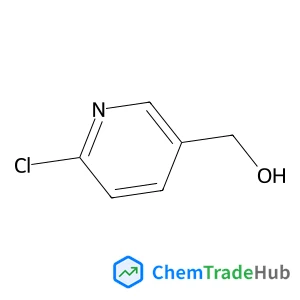
![Sodium 4-{[(2R,3R)-2-[(dichloroacetyl)amino]-3-hydroxy-3-(4-nitrophenyl)propyl]oxy}-4-oxobutanoate structure](https://cnstatic.chemtradehub.com/structs/982/982-57-0-e747.webp "Sodium 4-{[(2R,3R)-2-[(dichloroacetyl)amino]-3-hydroxy-3-(4-nitrophenyl)propyl]oxy}-4-oxobutanoate structure")
![[4-(Hydroxymethyl)phenyl]acetic acid structure](https://cnstatic.chemtradehub.com/structs/734/73401-74-8-5a54.webp "[4-(Hydroxymethyl)phenyl]acetic acid structure")
推荐供应商





免责声明
本页面提供的学术期刊信息仅供参考和研究使用。我们与任何期刊出版商均无关联,也不处理投稿事宜。如有投稿相关咨询,请直接联系相关期刊出版商。
如发现页面信息有误,请发送邮件至 support@chemtradehub.com 联系我们。我们将及时核实并处理您的问题。