


Heteronuclear DNP of 1H and 19F nuclei using BDPA as a polarizing agent
文献信息
发布日期
2020-03-31
DOI
10.1039/D0CP00892C
影响因子
3.676
作者
Antonio Gennaro, Alexander Karabanov, Alexey Potapov, Walter Köckenberger
查看原文
摘要
This work explores the dynamic nuclear polarization (DNP) of 1H and 19F nuclei in a sample of 25/75 (% v/v) fluorobenzene/toluene containing the radical 1,3-bisphenylene-2-phenylallyl radical (BDPA) as a polarizing agent. Previously, heteronuclear effects in DNP were studied by analysing the shapes of DNP spectra, or by observing cross-relaxation between nuclei of different types. In this work, we report a rather specific DNP spectrum, where 1H and 19F nuclei obtain polarizations of opposite signs upon microwave (MW) irradiation. In order to explain this observation, we introduce a novel mechanism called heteronuclear thermal mixing (hn-TM). Within this mechanism the spectra of opposite signs can then be explained due to the presence of four-spin systems, involving a pair of dipolar coupled electron spins and hyperfine coupled nuclear spins of 1H and 19F, such that a condition relating their Larmor frequencies |ω1e − ω2e| ≈ ωH − ωF is satisfied. Under this condition, a strong mixing of electron and nuclear states takes place, enabling simultaneous four-spin flip-flops. Irradiation of electron spin transitions with MW followed by such four-spin flip-flops produces non-equilibrium populations of |αHβF〉 and |βHαF〉 states, thus leading to the enhancements of opposite signs for 1H and 19F. Signal enhancements, build-up times and DNP-spectra as a function of MW power and polarizing agent concentration, all provide additional support for assigning the observed DNP mechanism as hn-TM and distinguishing it from other possible mechanisms. We also develop a quantum mechanical model of hn-TM based on averaging of spin Hamiltonians. Simulations based on this model show very good qualitative agreement with experimental data. In addition, the system exhibits cross-relaxation between 1H and 19F induced by the presence of BDPA, which was detected by measuring the 19F signal build-up upon saturation of 1H nuclei with a train of radio-frequency pulses. We demonstrate that such cross-relaxation most likely originates due to the same electron and nuclear states mixing in the four-spin systems.
期刊推荐

Green Chemistry
Journal of Medical Biochemistry

Advanced Engineering Materials
Photochemical & Photobiological Sciences
Current Pharmaceutical Biotechnology
Angewandte Chemie International Edition
Nature Reviews Drug Discovery
Journal of Enzyme inhibition and Medicinal Chemistry
Foundations of Chemistry
CrystEngComm
相关文献
Conformationally-restricted bicarbazoles with phenylene bridges displaying deep-blue emission and high triplet energies: systematic structure–property relationships
Andrei S. Batsanov, Andrew P. Monkman, Martin R. Bryce
2018-04-17
Paper
DOI: 10.1039/C8CP01636D
Effect of GCAA stabilizing loops on three- and four-way intramolecular junctions
Carolyn E. Carr, Luis A. Marky
2018-01-25
Paper
DOI: 10.1039/C7CP08329G
Nanoscale thermal diffusion during the laser interference ablation using femto-, pico-, and nanosecond pulses in silicon
Mindaugas Gedvilas, Simonas Indrišiūnas, Evaldas Stankevičius, Algirdas Selskis, Gediminas Račiukaitis
2018-04-13
Paper
DOI: 10.1039/C7CP08458G
Mechanistic insights into the interaction between energetic oxygen ions and nanosized ZnFe2O4: XAS-XMCD investigations
Jitendra Pal Singh, Baljeet Kaur, Aditya Sharma, So Hee Kim, Sanjeev Gautam, Ramesh Chandra Srivastava, Navdeep Goyal, Weol Cheol Lim, H.-J. Lin, J. M. Chen, K. Asokan, D. Kanjilal, Sung Ok Won, Ik-Jae Lee, Keun Hwa Chae
2018-04-03
Paper
DOI: 10.1039/C8CP00368H
Surface modification effects on defect-related photoluminescence in colloidal CdS quantum dots
TaeGi Lee, Kunio Shimura, DaeGwi Kim
2018-04-13
Paper
DOI: 10.1039/C7CP07812A
Ab initio calculations and kinetic modeling of thermal conversion of methyl chloride: implications for gasification of biomass
Morten Lund Rasmussen, Hamid Hashemi, Hao Wu, Peter Glarborg, Matteo Pelucchi, Tiziano Faravelli, Paul Marshall
2018-01-18
Paper
DOI: 10.1039/C7CP07552A
Electron-density distributions in selected ferrocenyl-pyrazolyl late transition-metal complexes
M. A. Peck, G. R. Hearne, C. Obuah, J. Darkwa
2018-03-27
Paper
DOI: 10.1039/C8CP01135D
Accurate theoretical characterization of dioxygen difluoride: a problem resolved
Alexander Alijah, Thibaud Cours, Nejm-Eddine Jaidane, Najoua Derbel
2018-04-06
Paper
DOI: 10.1039/C7CP08659H
Kinetics in the real world: linking molecules, processes, and systems
Katharina Kohse-Höinghaus, Jürgen Troe, Jens-Uwe Grabow, Matthias Olzmann, Gernot Friedrichs, Klaus-Dieter Hungenberg
2018-04-04
Editorial
DOI: 10.1039/C8CP90054J
Alloy-composition-dependent oxygen reduction reaction activity and electrochemical stability of Pt-based bimetallic systems: a model electrocatalyst study of Pt/PtxNi100−x(111)
Naoto Todoroki, Ryutaro Kawamura, Masato Asano, Ren Sasakawa, Shuntaro Takahashi, Toshimasa Wadayama
2018-04-03
Paper
DOI: 10.1039/C8CP01217B
您可能还喜欢
化合物问答
3 - (二氟甲基)-1 -氟苯(CAS号:26029-52-7)适用哪些法规指南?
3 - (二氟甲基)-1 -氟苯需遵循联合国全球化学品统一分类和标签制度(GHS),包括急性毒性、皮肤腐蚀/刺激、严重眼损伤/眼刺激等分类。同时,该化合物还需符...
26029-52-71-(Difluoromethyl)-3...
化合物问答
3,5-二甲基苯胺(CAS号:108-69-0)通常如何合成?
3,5-二甲基苯胺通常通过乙苯的氨解反应合成。反应中使用硫酸作为催化剂,反应温度为120-130°C。乙苯在硫酸存在下与氨反应,生成3,5-二甲基苯胺和苯胺副产...
108-69-03,5-Dimethylaniline
化合物问答
3-甲基异噻唑-5-胺(CAS号:24340-76-9)安全吗?
3-甲基异噻唑-5-胺在适当使用和储存条件下是相对安全的,但在操作时应注意防护措施。应避免吸入粉尘,避免与皮肤和眼睛直接接触。在操作过程中,应穿戴适当的防护装备...
24340-76-93-Methyl-1,2-thiazol...
化合物问答
3-(1,3-Thiazol-2-yl)-1H-indole(CAS号:135531-86-1)通常如何合成?
3-(1,3-噻唑-2-基)-1H-吲哚通常通过多步合成方法制备。首先,由噻唑-2-基溴化物和吲哚进行偶联反应,得到中间体。然后,通过还原反应将中间体转化为所需...
135531-86-13-(1,3-Thiazol-2-yl)...
化合物问答
4-溴-2-氟苯甲基氯(CAS号:85510-82-3)的主要用途是什么?
4-溴-2-氟苯甲基氯主要用于有机合成中间体,特别是在医药、农药和染料等领域。作为一种具有特定结构的化合物,它在合成复杂有机分子时扮演重要角色。
85510-82-34-Bromo-1-(chloromet...
化合物问答
处理Fmoc-β-(3-噻吩基)-D-Ala-OH(CAS号:220497-90-5)时应注意哪些实验室安全事项?
处理Fmoc-β-(3-噻吩基)-D-Ala-OH时,应佩戴防护手套、护目镜和实验服。操作应在通风橱内进行。如发生泄露,应立即用大量水冲洗,并通知实验室管理人员...
220497-90-5N-[(9H-Fluoren-9-ylm...
化合物问答
氮化硅(CAS号:12033-89-5)通常如何合成?
氮化硅通常通过氮化硅的直接反应合成,即在高温下将四氯化硅与氨气反应。具体步骤是将四氯化硅和氨气混合并加热至1300-1700℃,在该条件下,四氯化硅与氨气反应生...
12033-89-5Trisilicon tetranitr...
化合物问答
Cetirizine EP Impurity B DiHCl(CAS号:1000690-91-4)通常如何合成?
Cetirizine EP Impurity B DiHCl通常通过一锅法合成,首先将4-氯苯基-苯甲基氯甲酸酯与1-哌嗪乙酸反应,生成相应的酸,然后与盐酸反应...
1000690-91-4{4-[(4-Chlorophenyl)...
化合物问答
如何储存1-哌啶-4-基丁-1-酮(CAS号:3509-15-7)?
1-哌啶-4-基丁-1-酮应储存在阴凉、干燥的地方,避免阳光直射。存储容器应密封,并确保通风良好。建议储存温度不超过25℃,湿度保持在相对较低的水平。
3509-15-71-Piperidin-4-ylbuta...
化合物问答
如何处理含有VORUCICLIB(CAS号:1000023-04-0)的废料?
含有VORUCICLIB的废料应进行专业的收集和处理,包括使用适当的容器进行隔离,避免与其他化学品接触。处理方法通常包括化学中和、沉淀反应或吸附过程,随后进行焚...
1000023-04-02-[2-Chloro-4-(trifl...
来源期刊
Physical Chemistry Chemical Physics

CiteScore:
5.5
自引率:
10.3%
年发文量:
3036
Physical Chemistry Chemical Physics (PCCP) is an international journal co-owned by 19 physical chemistry and physics societies from around the world. This journal publishes original, cutting-edge research in physical chemistry, chemical physics and biophysical chemistry. To be suitable for publication in PCCP, articles must include significant innovation and/or insight into physical chemistry; this is the most important criterion that reviewers and Editors will judge against when evaluating submissions. The journal has a broad scope and welcomes contributions spanning experiment, theory, computation and data science. Topical coverage includes spectroscopy, dynamics, kinetics, statistical mechanics, thermodynamics, electrochemistry, catalysis, surface science, quantum mechanics, quantum computing and machine learning. Interdisciplinary research areas such as polymers and soft matter, materials, nanoscience, energy, surfaces/interfaces, and biophysical chemistry are welcomed if they demonstrate significant innovation and/or insight into physical chemistry. Joined experimental/theoretical studies are particularly appreciated when complementary and based on up-to-date approaches.
推荐化合物
![4-Chloro-3-(trifluoromethyl)-1H-pyrrolo[2,3-b]pyridine structure](https://cnstatic.chemtradehub.com/structs/869/869335-75-1-a9d0.webp "4-Chloro-3-(trifluoromethyl)-1H-pyrrolo[2,3-b]pyridine structure")
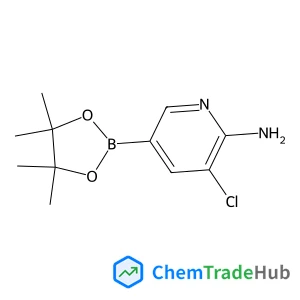
3-Chloro-5-(4,4,5,5-tetramethyl-1,3,2-dioxaborolan-2-yl)-2-pyridinamine
CAS号:
1032758-99-8
分子式:
C11H16BClN2O2
![1-[3-(4-Morpholinylsulfonyl)phenyl]methanamine structure](https://cnstatic.chemtradehub.com/structs/933/933989-32-3-51af.webp "1-[3-(4-Morpholinylsulfonyl)phenyl]methanamine structure")
推荐供应商





免责声明
本页面提供的学术期刊信息仅供参考和研究使用。我们与任何期刊出版商均无关联,也不处理投稿事宜。如有投稿相关咨询,请直接联系相关期刊出版商。
如发现页面信息有误,请发送邮件至 support@chemtradehub.com 联系我们。我们将及时核实并处理您的问题。