


C–H⋯S interaction exhibits all the characteristics of conventional hydrogen bonds
文献信息
发布日期
2020-05-22
DOI
10.1039/D0CP01508C
影响因子
3.676
作者
Sanjay Wategaonkar
查看原文
摘要
This is a tale of a pair of a hydrogen bond donor and acceptor, namely the CH donor and sulphur acceptor, neither of which is a conventional hydrogen bond participant. Sulfur (S), being less electronegative (2.58) compared to its first row analogue oxygen (3.44), has not been considered as a potential HB acceptor for a long time. The C–H⋯Y (Y = HB acceptor) interaction has its own history of exhibiting omnidirectional shifts in the CH stretching frequency upon complex formation. Therefore, a systematic investigation of the C–H⋯S interaction was the primary goal of the work presented here. Together with gas-phase vibrational spectroscopy and ab initio quantum chemical calculations, the nature and strength of the C–H⋯S hydrogen bond (HB) have been investigated in the complexes of 1,2,4,5-tetracyanobenzene (TCNB) with various sulfur containing solvents. Despite the unconventional nature of both HB donor and HB acceptor (C–H and S, respectively), it was found that the C–H⋯S hydrogen bond exhibits all the characteristics of the conventional hydrogen bond. The binding strength of the C–H⋯S H-bond in these complexes was found to be comparable to that of the conventional hydrogen bonds. The unusual stabilities of these HBs have been mainly attributed to the attractive dispersion interaction.
期刊推荐
Journal of Medicinal Chemistry
Journal of Organometallic Chemistry
Organic Preparations and Procedures International
Proceedings of the National Academy of Sciences of the United States of America
Pure and Applied Chemistry
Russian Chemical Reviews
Fibre Chemistry
Helvetica Chimica Acta
Israel Journal of Chemistry
Molecular Pharmacology
相关文献
The unusual volume phase transition behavior of the poly(N-isopropylacrylamide)–poly(2-hydroxyethyl methacrylate) interpenetrating polymer network microgel: different roles in different stages
Bo Zhang, Hui Tang, Peiyi Wu
2014-06-19
Paper
DOI: 10.1039/C4PY00653D
Enhanced drug toxicity by conjugation of platinum drugs to polymers with guanidine containing zwitterionic functional groups that mimic cell-penetrating peptides
Robert H. Utama, Hongxu Lu, Martina H. Stenzel
2014-08-07
Paper
DOI: 10.1039/C4PY00802B
Six-membered-ring photocyclization in phenyl-substituted p-phenylenevinylene derivatives: a potential factor of instability in conjugated polymers
Linlin Liu, Hongcheng Gao, Yupeng Li, Muddasir Hanif, Chuan Li, Yu Gao, Bing Yang, Zengqi Xie, Yuguang Ma
2016-04-25
Communication
DOI: 10.1039/C6PY00180G
Modular segmented hyperbranched copolymers
Patricia R. Bachler, Kaitlyn E. Forry, Chelsea A. Sparks, Michael D. Schulz, Kenneth B. Wagener, Brent S. Sumerlin
2016-06-06
Communication
DOI: 10.1039/C6PY00819D
Chain-growth cationic polymerization of 2-halogenated thiophenes promoted by Brønsted acids
Arumugam Balasubramanian, Ting-Chia Ku, Hong-Pin Shih, Alishetty Suman, Huang-Jyun Lin, Ting-Wen Shih, Chien-Chung Han
2014-06-16
Paper
DOI: 10.1039/C4PY00521J
Bespoke cationic nano-objects via RAFT aqueous dispersion polymerisation
M. Williams, N. J. W. Penfold, J. R. Lovett, N. J. Warren, C. W. I. Douglas, N. Doroshenko, P. Verstraete, J. Smets, S. P. Armes
2016-05-12
Paper
DOI: 10.1039/C6PY00696E
Glycopeptides derived from glucosaminic acid
Ester Abtew, Abraham J. Domb, Arijit Basu
2016-06-07
Communication
DOI: 10.1039/C6PY00858E
您可能还喜欢
化合物问答
4,5-二甲基-2-硝基苯甲酸(CAS号:4315-14-4)的市场或研究趋势如何?
4,5-二甲基-2-硝基苯甲酸主要应用于制药、染料和农药等行业。由于其潜在的毒性,其市场趋势可能受到法规限制和环保考量的影响,推动了替代产品的研发。在研究领域,...
4315-14-44,5-Dimethyl-2-nitro...
化合物问答
处理直接黑22(CAS号:6473-13-8)时应注意哪些实验室安全事项?
处理直接黑22时应穿戴适当的个人防护装备(PPE),包括实验服、手套、护目镜和口罩。操作应在通风橱内进行,以避免吸入有害气体。如果发生泄漏,应立即清理,并使用大...
6473-13-82-Naphthalenesulfoni...
化合物问答
处理2,1,3-苯并噻二唑-4-基异氰酸酯(CAS号:342411-14-7)时应注意哪些实验室安全事项?
处理2,1,3-苯并噻二唑-4-基异氰酸酯时应注意以下安全事项:穿戴个人防护装备,如实验室外套、防护眼镜和手套;在通风橱中操作,确保良好的通风;保持实验室环境干...
342411-14-74-Isocyanato-2,1,3-b...
化合物问答
如何处理含有Δ-8,9-脱氢雌酮(CAS号:204077-66-7)的废料?
含有Δ-8,9-脱氢雌酮的废料需要进行适当的处理以确保环境和人体安全。首先,收集废液并存放于密封容器中,避免泄漏。其次,可以考虑将其转化为无害物质或通过专业处理...
204077-66-7Thioquinapiperifil d...
化合物问答
如何储存5-溴戊酸(CAS号:2067-33-6)?
5-溴戊酸应储存在阴凉、干燥、通风良好的环境中,避免阳光直射。建议在室温(约15-25°C)下保存,保持相对湿度低于60%。应使用密封的玻璃或塑料容器,并远离热...
2067-33-65-Bromopentanoic aci...
化合物问答
4-(甲基亚磺酰基)苯胺(CAS号:22865-62-9)应用于哪些行业?
4-(甲基亚磺酰基)苯胺在医药、聚合物和传感器等领域有一定的应用。在医药方面,它可以用作合成药物的中间体;在聚合物领域,可以作为合成特殊性能高分子材料的单体;在...
22865-62-94-Methylsulfinylanil...
化合物问答
什么是1-(2-FLUOROPHENYL)-5-METHYL-1H-PYRAZOLE-4-CARBOHYDRAZIDE(CAS号:618092-58-3)?
1-(2-氟苯基)-5-甲基-1H-吡唑-4-亚甲基肼是一种有机化合物,其分子式为C9H9FN3O。该化合物具有特定的物理化学性质,如熔点、沸点等,但具体值需查...
618092-58-31-(2-Fluorophenyl)-5...
化合物问答
Dauricumine(CAS号:345641-00-1)通常如何合成?
Dauricumine通常通过复杂的合成路线制备,涉及多个步骤,包括环化、氧化、卤化等反应。合成过程中使用了多种催化剂和试剂,例如金属催化剂、氧化剂等。产率通常...
345641-00-1(1R,1'S,5R,6'S,8'S)-...
化合物问答
5-氰基苯酞(CAS号:82104-74-3)安全吗?
5-氰基苯酞在正常使用条件下相对安全,但其具有一定的毒性,需谨慎操作。在实验或工业应用中,应采取适当的防护措施,如佩戴防护手套、护目镜和实验服,确保通风良好。误...
82104-74-31-Oxo-1,3-dihydro-2-...
化合物问答
2-Methyl-1-(phenylsulfonyl)-1H-pyrrolo[2,3-b]pyridin-5-amine(CAS号:1186502-59-9)安全吗?
该化合物在使用时需要谨慎操作。虽然其毒性和健康风险尚未完全明确,但建议在通风良好的环境中操作,并穿戴适当的个人防护装备,如手套和防护眼镜。
1186502-59-92-Methyl-1-(phenylsu...
来源期刊
Physical Chemistry Chemical Physics

CiteScore:
5.5
自引率:
10.3%
年发文量:
3036
Physical Chemistry Chemical Physics (PCCP) is an international journal co-owned by 19 physical chemistry and physics societies from around the world. This journal publishes original, cutting-edge research in physical chemistry, chemical physics and biophysical chemistry. To be suitable for publication in PCCP, articles must include significant innovation and/or insight into physical chemistry; this is the most important criterion that reviewers and Editors will judge against when evaluating submissions. The journal has a broad scope and welcomes contributions spanning experiment, theory, computation and data science. Topical coverage includes spectroscopy, dynamics, kinetics, statistical mechanics, thermodynamics, electrochemistry, catalysis, surface science, quantum mechanics, quantum computing and machine learning. Interdisciplinary research areas such as polymers and soft matter, materials, nanoscience, energy, surfaces/interfaces, and biophysical chemistry are welcomed if they demonstrate significant innovation and/or insight into physical chemistry. Joined experimental/theoretical studies are particularly appreciated when complementary and based on up-to-date approaches.
推荐化合物
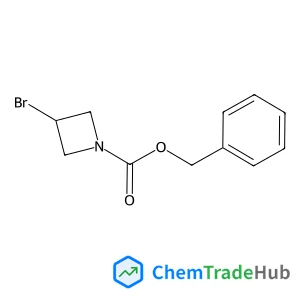
推荐供应商






免责声明
本页面提供的学术期刊信息仅供参考和研究使用。我们与任何期刊出版商均无关联,也不处理投稿事宜。如有投稿相关咨询,请直接联系相关期刊出版商。
如发现页面信息有误,请发送邮件至 support@chemtradehub.com 联系我们。我们将及时核实并处理您的问题。