







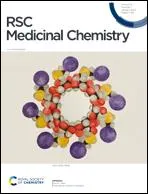
Collaborative virtual screening to elaborate an imidazo[1,2-a]pyridine hit series for visceral leishmaniasis
文献信息
发布日期
2021-01-21
DOI
10.1039/D0MD00353K
影响因子
0
作者
Yuichiro Akao, Stacie Canan, Yafeng Cao, Kevin Condroski, Ola Engkvist, Sachiko Itono, Rina Kaki, Chiaki Kimura, Thierry Kogej, Kazuya Nagaoka, Akira Naito, Hiromi Nakai, Garry Pairaudeau, Constantin Radu, Ieuan Roberts, Mitsuyuki Shimada, David Shum, Nao-aki Watanabe, Huanxu Xie, Shuji Yonezawa, Osamu Yoshida, Ryu Yoshida, Charles Mowbray, Benjamin Perry
查看原文
摘要
An innovative pre-competitive virtual screening collaboration was engaged to validate and subsequently explore an imidazo[1,2-a]pyridine screening hit for visceral leishmaniasis. In silico probing of five proprietary pharmaceutical company libraries enabled rapid expansion of the hit chemotype, alleviating initial concerns about the core chemical structure while simultaneously improving antiparasitic activity and selectivity index relative to the background cell line. Subsequent hit optimization informed by the structure–activity relationship enabled by this virtual screening allowed thorough investigation of the pharmacophore, opening avenues for further improvement and optimization of the chemical series.
相关文献
Fluorescence spectroscopy of individual semiconductor nanoparticles in different ethylene glycols
Sandra Flessau, Christopher Wolter, Elmar Pöselt, Elvira Kröger, Alf Mews, Tobias Kipp
2014-04-15
Paper
DOI: 10.1039/C4CP00443D
Studies of protein folding and dynamics using single molecule fluorescence spectroscopy
Sujit Basak, Krishnananda Chattopadhyay
2014-03-17
Perspective
DOI: 10.1039/C3CP55219E
Charge carrier mobility in organic molecular materials probed by electromagnetic waves
Shu Seki, Akinori Saeki, Tsuneaki Sakurai, Daisuke Sakamaki
2014-04-08
Perspective
DOI: 10.1039/C4CP00473F
Strain engineering the properties of graphene and other two-dimensional crystals
Mark A. Bissett, Masaharu Tsuji, Hiroki Ago
2014-04-25
Perspective
DOI: 10.1039/C3CP55443K
Triplet–triplet annihilation photon-upconversion: towards solar energy applications
Victor Gray, Damir Dzebo, Maria Abrahamsson, Bo Albinsson, Kasper Moth-Poulsen
2014-04-08
Perspective
DOI: 10.1039/C4CP00744A
Electronic structure and spectra of (Cu2O)n–H2O complexes
Jerry Whitten
2014-11-07
Paper
DOI: 10.1039/C4CP04303K
Nanoporous dual-electrodes with millimetre extensions: parallelized fabrication and area effects on redox cycling
Martin Hüske
2014-04-17
Paper
DOI: 10.1039/C4CP01027B
The effect of nitrogen doping on mercury oxidation/chemical adsorption on the CuCo2O4(110) surface: a molecular-level description
Zhijian Mei, Ruiqing Zhang, Zhemin Shen, Wenhua Wang
2014-05-23
Paper
DOI: 10.1039/C4CP01362J
Dissolution of cellulose in ionic liquids: an ab initio molecular dynamics simulation study
Rajdeep Singh Payal, Sundaram Balasubramanian
2014-07-03
Paper
DOI: 10.1039/C4CP02219J
Length dependence of electron transport through molecular wires – a first principles perspective
2014-11-12
Perspective
DOI: 10.1039/C4CP05006A
您可能还喜欢
化合物问答
3 - (二氟甲基)-1 -氟苯(CAS号:26029-52-7)适用哪些法规指南?
3 - (二氟甲基)-1 -氟苯需遵循联合国全球化学品统一分类和标签制度(GHS),包括急性毒性、皮肤腐蚀/刺激、严重眼损伤/眼刺激等分类。同时,该化合物还需符...
26029-52-71-(Difluoromethyl)-3...
化合物问答
3,5-二甲基苯胺(CAS号:108-69-0)通常如何合成?
3,5-二甲基苯胺通常通过乙苯的氨解反应合成。反应中使用硫酸作为催化剂,反应温度为120-130°C。乙苯在硫酸存在下与氨反应,生成3,5-二甲基苯胺和苯胺副产...
108-69-03,5-Dimethylaniline
化合物问答
3-甲基异噻唑-5-胺(CAS号:24340-76-9)安全吗?
3-甲基异噻唑-5-胺在适当使用和储存条件下是相对安全的,但在操作时应注意防护措施。应避免吸入粉尘,避免与皮肤和眼睛直接接触。在操作过程中,应穿戴适当的防护装备...
24340-76-93-Methyl-1,2-thiazol...
化合物问答
3-(1,3-Thiazol-2-yl)-1H-indole(CAS号:135531-86-1)通常如何合成?
3-(1,3-噻唑-2-基)-1H-吲哚通常通过多步合成方法制备。首先,由噻唑-2-基溴化物和吲哚进行偶联反应,得到中间体。然后,通过还原反应将中间体转化为所需...
135531-86-13-(1,3-Thiazol-2-yl)...
化合物问答
4-溴-2-氟苯甲基氯(CAS号:85510-82-3)的主要用途是什么?
4-溴-2-氟苯甲基氯主要用于有机合成中间体,特别是在医药、农药和染料等领域。作为一种具有特定结构的化合物,它在合成复杂有机分子时扮演重要角色。
85510-82-34-Bromo-1-(chloromet...
化合物问答
处理Fmoc-β-(3-噻吩基)-D-Ala-OH(CAS号:220497-90-5)时应注意哪些实验室安全事项?
处理Fmoc-β-(3-噻吩基)-D-Ala-OH时,应佩戴防护手套、护目镜和实验服。操作应在通风橱内进行。如发生泄露,应立即用大量水冲洗,并通知实验室管理人员...
220497-90-5N-[(9H-Fluoren-9-ylm...
化合物问答
氮化硅(CAS号:12033-89-5)通常如何合成?
氮化硅通常通过氮化硅的直接反应合成,即在高温下将四氯化硅与氨气反应。具体步骤是将四氯化硅和氨气混合并加热至1300-1700℃,在该条件下,四氯化硅与氨气反应生...
12033-89-5Trisilicon tetranitr...
化合物问答
Cetirizine EP Impurity B DiHCl(CAS号:1000690-91-4)通常如何合成?
Cetirizine EP Impurity B DiHCl通常通过一锅法合成,首先将4-氯苯基-苯甲基氯甲酸酯与1-哌嗪乙酸反应,生成相应的酸,然后与盐酸反应...
1000690-91-4{4-[(4-Chlorophenyl)...
化合物问答
如何储存1-哌啶-4-基丁-1-酮(CAS号:3509-15-7)?
1-哌啶-4-基丁-1-酮应储存在阴凉、干燥的地方,避免阳光直射。存储容器应密封,并确保通风良好。建议储存温度不超过25℃,湿度保持在相对较低的水平。
3509-15-71-Piperidin-4-ylbuta...
化合物问答
如何处理含有VORUCICLIB(CAS号:1000023-04-0)的废料?
含有VORUCICLIB的废料应进行专业的收集和处理,包括使用适当的容器进行隔离,避免与其他化学品接触。处理方法通常包括化学中和、沉淀反应或吸附过程,随后进行焚...
1000023-04-02-[2-Chloro-4-(trifl...
来源期刊
推荐化合物
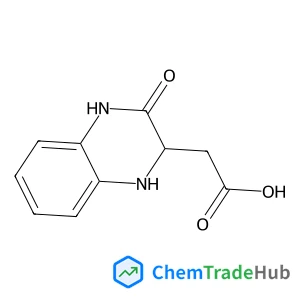
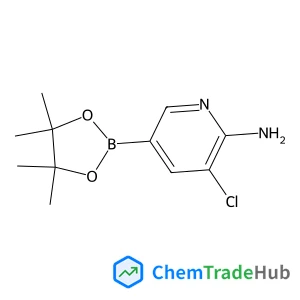
3-Chloro-5-(4,4,5,5-tetramethyl-1,3,2-dioxaborolan-2-yl)-2-pyridinamine
CAS号:
1032758-99-8
分子式:
C11H16BClN2O2
![Methyl 4-({[(2-methyl-2-propanyl)oxy]carbonyl}amino)bicyclo[2.2.2]octane-1-carboxylate structure](https://cnstatic.chemtradehub.com/structs/943/943845-74-7-b7e5.webp "Methyl 4-({[(2-methyl-2-propanyl)oxy]carbonyl}amino)bicyclo[2.2.2]octane-1-carboxylate structure")
推荐供应商


免责声明
本页面提供的学术期刊信息仅供参考和研究使用。我们与任何期刊出版商均无关联,也不处理投稿事宜。如有投稿相关咨询,请直接联系相关期刊出版商。
如发现页面信息有误,请发送邮件至 support@chemtradehub.com 联系我们。我们将及时核实并处理您的问题。