











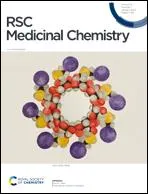
Generation of reactive oxygen species is the primary mode of action and cause of survivin suppression by sepantronium bromide (YM155)
文献信息
发布日期
2021-02-15
DOI
10.1039/D0MD00383B
影响因子
0
作者
Tasaduq Hussain Wani, Goutam Chowdhury, Anindita Chakrabarty
查看原文
摘要
Survivin is a lucrative broad-spectrum drug target for different cancer types, including triple negative breast cancer (TNBC). Sepantronium bromide (YM155) is the first of its class of survivin suppressants and was found to be quite effective in pre-clinical models of TNBC. However, in clinical trials when given in combination with docetaxel, YM55 failed to provide any added advantage. To understand if the clinical outcome is due to YM155 being ineffective or due to an inappropriate choice of combination, we need to elucidate its true mode of action. Hence, to explain the unexpected and unexplained observations pertaining to YM155 biology and its mode of action, we developed isogenic pairs of YM155-sensitive and -resistant TNBC cell lines and characterized them in detail by various biochemical assays. We found that YM155 generates reactive oxygen species (ROS) in the mitochondria in addition to the previously discovered redox cycling pathway. Both survivin suppression and DNA damage are secondary effects resulting from the ROS which contribute to the drug's cytotoxic effects on TNBC cells. Indeed, adaptation to both these pathways was important in conferring YM155 resistance. Finally, we uncovered a unique connection between the ROS and control of survivin expression involving a ROS/AKT/FoxO/survivin axis in TNBC cells. Together, by deciphering the true mode of action of YM155, we present a possible explanation for its poor clinical efficacy when used in combination with docetaxel. The results and conclusions presented here provide the information needed to effectively use YM155 in combination therapy.
相关文献
Screening of DNA G-quadruplex stabilizing ligands by nano differential scanning fluorimetry
Bruno Pagano, Nunzia Iaccarino, Anna Di Porzio, Antonio Randazzo, Jussara Amato
2019-10-07
Communication
DOI: 10.1039/C9AN01463B
An in vivo quantitative Raman-pH sensor of arterial blood based on laser trapping of erythrocytes
Manman Lin, Bin Xu, Huilu Yao, Aiguo Shen, Jiming Hu
2016-03-23
Paper
DOI: 10.1039/C5AN02315G
Fluorescence array-based sensing of nitroaromatics using conjugated polyelectrolytes
Yu Zong Chen
2016-05-03
Communication
DOI: 10.1039/C6AN00678G
Ultrasensitive enrichment of phosphopeptides with Ti4+ immobilized SiO2 graphene-like multilayer nanosheets
Dongpo Xu, Mingxia Gao, Chunhui Deng, Xiangmin Zhang
2016-04-18
Paper
DOI: 10.1039/C6AN00361C
A new label-free fluorescent sensor for human immunodeficiency virus detection based on exonuclease III-assisted quadratic recycling amplification and DNA-scaffolded silver nanoclusters
Wen Yang, Jianniao Tian, Lijun Wang, Shui Fu, Hongyun Huang, Yanchun Zhao, Shulin Zhao
2016-03-23
Paper
DOI: 10.1039/C6AN00184J
Metabolomics for improved treatment monitoring of phenylketonuria: urinary biomarkers for non-invasive assessment of dietary adherence and nutritional deficiencies
Jennifer Wild, Meera Shanmuganathan, Mika Hayashi, Murray Potter
2019-10-03
Paper
DOI: 10.1039/C9AN01642B
Synthesis of a CdS-decorated Eu-MOF nanocomposite for the construction of a self-powered photoelectrochemical aptasensor
Jie Gao, Yingxu Chen, Weihao Ji, Zhonghong Gao, Jingdong Zhang
2019-09-25
Paper
DOI: 10.1039/C9AN01606F
Surface-enhanced Raman spectroscopy (SERS) characterisation of abasic sites in DNA duplexes
Luca Guerrini
2019-11-05
Communication
DOI: 10.1039/C9AN02040C
An intramolecular charge transfer and excited state intramolecular proton transfer based fluorescent probe for highly selective detection and imaging of formaldehyde in living cells
Wen Chen, Mei Yang, Na Luo, Fenglin Wang, Ru-Qin Yu, Jian-Hui Jiang
2019-10-03
Paper
DOI: 10.1039/C9AN01778J
Approaches towards molecular amplification for sensing
Sean Goggins, Christopher G. Frost
2016-04-14
Critical Review
DOI: 10.1039/C6AN00348F
您可能还喜欢
化合物问答
什么是2-氨基戊烷(CAS号:63493-28-7)?
2-氨基戊烷,又名pentan-2-amine,是一种有机化合物,分子式为C5H11NH2。它是一种无色透明液体,有氨味。该化合物在工业和研究中有一定的应用。
63493-28-7pentan-2-amine
化合物问答
反式-4-[4-[[[5-[(3,4-二氟苯基)氨基]-1,3,4-恶二唑-2-基]羰基]氨基]苯基]环己烷乙酸(CAS号:892489-52-0)的物理化学性质是什么?
该化合物为白色固体,分子量为552.31 g/mol。它在水中溶解度较低,在有机溶剂如乙腈、乙酸乙酯中有较好的溶解性。该化合物具有较高的化学稳定性,对酸和碱具有...
892489-52-0Trans-4-[4-[[[5-[(3,...
化合物问答
如何处理含有Pyrotinib dimaleate(CAS号:1397922-61-0)的废料?
处理含有Pyrotinib dimaleate 的废料时,应遵循当地的法规要求。首先,收集废料并进行分类,确保没有与其他化学品混合。然后,采取适当的物理和化学处...
1397922-61-0(2E)-N-(4-{[3-Chloro...
化合物问答
在合成中是否有4-(5-5-乙基-1,2,4-噁二唑-3-基)苯甲酸乙酯(CAS号:1166756-79-1)的替代品?
在合成过程中,可以考虑使用其他结构类似的化合物作为替代品,例如苯甲酸酯类化合物,如2-乙基-5-甲基噁二唑基苯甲酸乙酯等。这些替代品可能具有相似的化学性质,但在...
1166756-79-1Ethyl 4-(5-ethyl-1,2...
化合物问答
如何处理含有1-((叔丁氧基羰基)氨基)环丁烷甲酸甲酯(CAS号:880166-10-9)的废料?
处理含有该化合物的废液时,应先确保其完全反应并转化为无害物质。对于未反应的化合物,建议采用中和处理后进行蒸馏回收,剩余物可使用化学氧化法或焚烧法进行无害化处理。...
880166-10-9Methyl 1-({[(2-methy...
化合物问答
2-({[3,5-二(三氟甲基)苯基]磺酰基}氨基)-4-(甲基硫代)丁酸甲酯(CAS号:175202-21-8)的市场或研究趋势如何?
目前该化合物主要应用于药物合成领域,尤其在开发新型抗癌药物方面具有潜在应用。随着制药行业的持续发展,对于高效、低毒的合成中间体需求增加,预计该化合物的研究和应用...
175202-21-8Methyl N-{[3,5-bis(t...
化合物问答
N,N-乙烯双(碘乙酰胺)(CAS号:7250-43-3)的物理化学性质是什么?
N,N-乙烯双(碘乙酰胺)是一种白色或类白色固体,易溶于乙醇、丙酮等有机溶剂,但在水中溶解度较低。该化合物具有较高的反应活性,可以与其他含有活性氢的化合物发生酰...
7250-43-3N,N'-1,2-Ethanediylb...
化合物问答
7-Fluoro-1H-spiro[furo[3,4-c]pyridine-3,4'-piperidine](CAS号:1283090-73-2)通常如何合成?
该化合物可以通过环合反应合成,首先合成吡啶和哌啶的衍生物,然后在合适的条件下进行环合反应得到目标化合物。常用的催化剂包括某些金属盐类,产率一般在70%-90%之...
1283090-73-27-Fluoro-1H-spiro[fu...
化合物问答
处理3-乙酰滇乌碱(CAS号:80787-51-5)时应注意哪些实验室安全事项?
在处理3-乙酰滇乌碱时,应穿戴适当的个人防护装备(PPE),如实验服、手套(丁腈手套或PVC手套)、护目镜和口罩。实验应在通风橱中进行,以减少吸入或皮肤接触的风...
80787-51-54-Methylaconitane-1,...
化合物问答
如何储存2-溴-5-硝基-4-羧酸(CAS号:1053655-82-5)?
2-溴-5-硝基-4-羧酸应存放在阴凉、干燥、通风良好的地方,远离火源和热源。避免与还原剂、碱性物质接触。储存容器应密封,防止吸湿。
1053655-82-52-Bromo-5-nitropyrid...
来源期刊
推荐化合物
推荐供应商





免责声明
本页面提供的学术期刊信息仅供参考和研究使用。我们与任何期刊出版商均无关联,也不处理投稿事宜。如有投稿相关咨询,请直接联系相关期刊出版商。
如发现页面信息有误,请发送邮件至 support@chemtradehub.com 联系我们。我们将及时核实并处理您的问题。